Men's NCAA Tournament: What Makes a March Madness Cinderella Team? Who Could Be This Year's?


It's finally here. The first round of the men's NCAA Tournament, affectionately dubbed as March Madness, will begin on Thursday, March 19.
The 87th annual edition of the tournament will see the usual suspects try and win the national championship. But what truly makes the tournament special is how often we see smaller schools and underdogs make incredible runs, which is what really causes the madness. These underdogs are often called Cinderella teams, with fans trying to pick them out each year ahead of the tournament.
But what characteristics make up a Cinderella? And are there similarities among all the past ones?
FOX Sports Research dove into the data and identified several traits that comprise a Cinderella. First, we've highlighted a few notable Cinderella teams in recent memory to set up our analysis. Let's take a look.
This page may contain affiliate links to legal sports betting partners. If you sign up or place a wager, FOX Sports may be compensated. Read more about Sports Betting on FOX Sports.
Notable runs over the past 15 years
All the teams below made it to at least the Elite Eight and were double-digit seeds in the tournament:
2024 NC State (No. 11 seed)
It's not often you see a team go 9-11 in conference play and then go on to make the tournament— let alone go dancing all the way to the Final Four. But that's just what the 2023-24 NC State team did, only making the field of 64 because it somehow won the ACC Tournament. For perspective, the Wolfpack were 50-1 to win the conference tourney, taking down the pre-tournament favorite North Carolina Tar Heels in the final. They took down a 6-seed in Texas Tech in the opening round and went on to beat (14) Oakland, (2) Marquette and (4) Duke before losing to (10) Purdue in the Final Four.
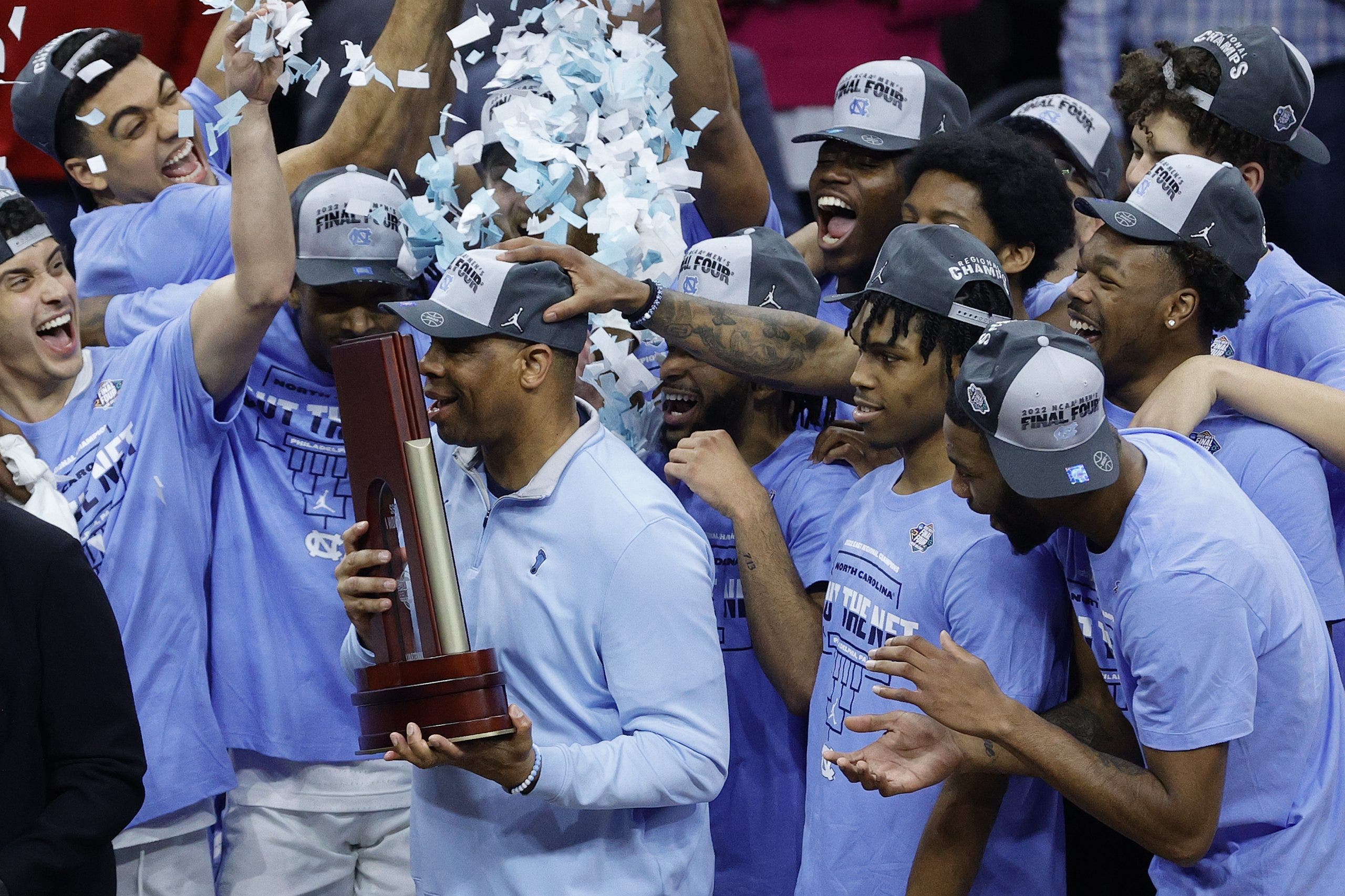
(Photo by Tim Nwachukwu/Getty Images)
2022 Saint Peter's (No. 15 seed)
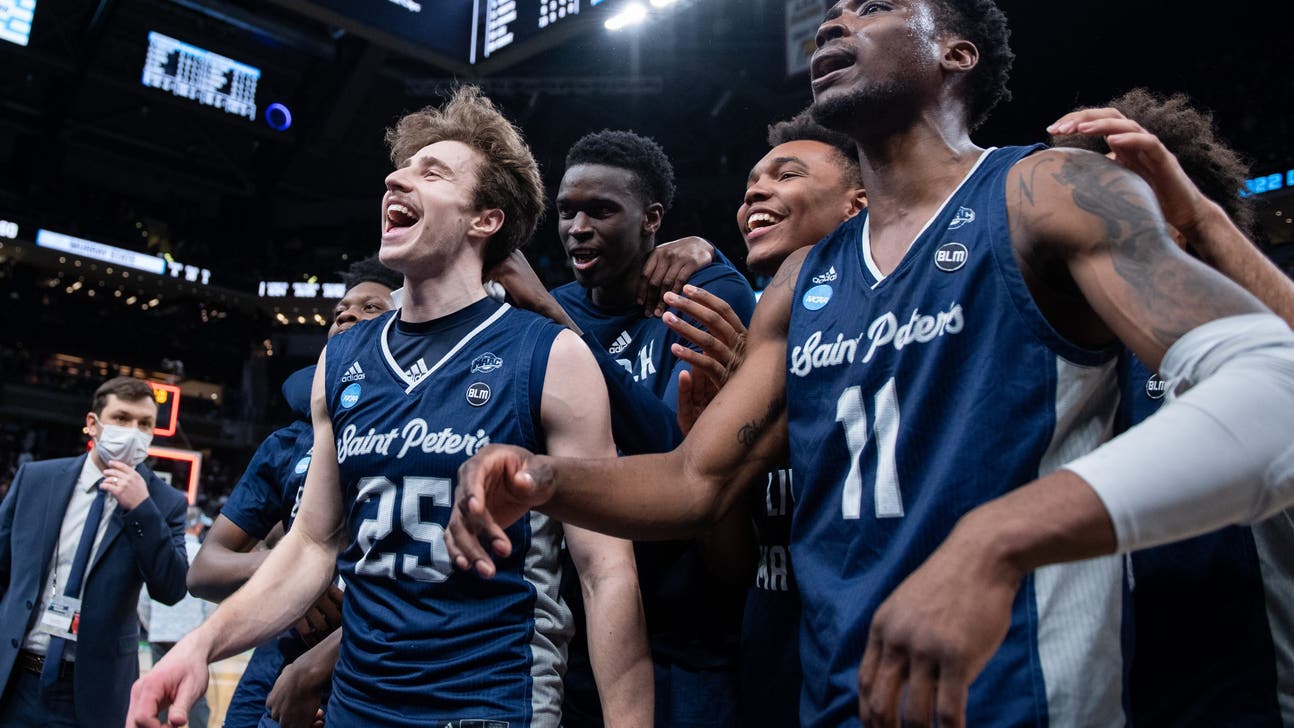
There might not be a more magical run than this 2022 Saint Peter's squad, which miraculously became the first 15-seed ever to make the Elite Eight. After winning the Metro Atlantic Athletic Conference Tournament, the Peacocks opened the dance with a huge upset win over second-seeded Kentucky. John Calipari entered that game 19-1 all-time in the Round of 64. After defeating the Wildcats, Saint Peter's took down (7) Murray State and (3) Purdue before losing to (8) North Carolina.
[NCAA ODDS: Latest Men's March Madness Odds, Favorites]
2021 UCLA (No. 11 seed)
UCLA, a Cinderella? In the 2021 season, it absolutely was. The Bruins barely made the tournament, entering the field as a First Four participant after going 22-10 in the regular season. After beating Michigan State in overtime in that game, Mick Cronin & Co. would go on to rattle off four straight wins against (6) BYU, (14) Abilene Christian, (2) Alabama in overtime and (1) Michigan before losing to Gonzaga on a half-court buzzer-beater by Jalen Suggs. Had that shot not fallen, UCLA would have been the first team to make the national title game after starting the tournament in the First Four.
2018 Loyola Chicago (No. 11 seed)
No one can forget the Ramblers' run in 2018. After winning the Missouri Valley Conference Tournament, Porter Moser led a talented group all the way to the Final Four. In the first round, they took down (6) Miami and subsequently beat (3) Tennessee, (7) Nevada and 9 (Kansas State) before losing to (3) Michigan in the semifinals. They'd finish the season with a 32-6 record and go on to make the Sweet 16 in 2021. Loyola Chicago and Wichita State are the only Missouri Valley schools to have ever made the Final Four.
2014 Dayton (No. 11 seed)
The Flyers didn't even win the Atlantic 10 Tournament in 2014 but still qualified for the tournament as an 11-seed. Archie Miller would take them all the way to the Elite Eight, opening up the tournament with a victory over (6) Ohio State. In the next round, they took down (3) Syracuse in a two-point barn-burner before eventually beating (10) Stanford in the Sweet 16. They'd lose to (1) Florida by ten points but are still just the sixth Atlantic 10 program to make the Elite Eight since 1985 (Temple, UMass, Rhode Island, Saint Joseph's, Xavier) — as well as the most recent.
2011 VCU (No. 11 seed)
Before 2024 UCLA, there was 2011 VCU. Despite losing to Old Dominion in the championship game of the Colonial Athletic Association Tournament, VCU made the big dance as a First Four team. This was also the first year in which the round was introduced, and VCU took advantage of it — going all the way to the Final Four after defeating (11) USC for one of the four final spots in the tournament. The Rams would go on to take down (6) Georgetown in the opening round, followed by (3) Purdue, (10) Florida State and (1) Kansas — before ultimately losing to (8) Butler in the semifinals. They are one of two CAA teams to make the Final Four, along with 2006 George Mason.
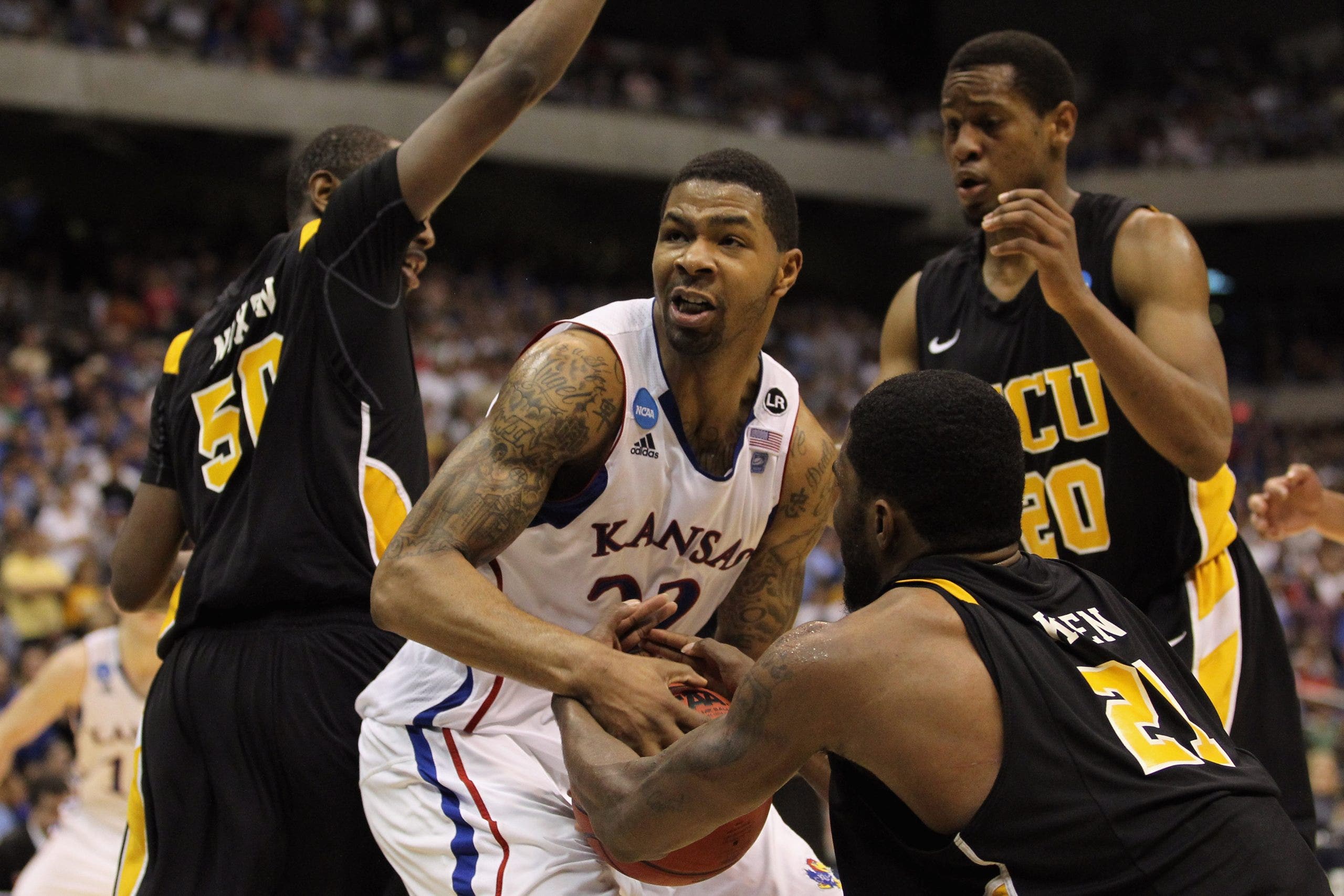
(Photo by Ronald Martinez/Getty Images)
[MEN'S TOURNEY: 1 Thing To Know About Every Men's Team]
The Dynamic Duo
Cinderellas are always led by a pair of players who shift into a different gear in tournament play. From Jason Richards and Steph Curry for Davidson in 2008 to Bryce Drew and Zoran Viskovic for Valparaiso in 1998, a dynamic duo has become a common theme among teams to make a Cinderella run. Below, we've listed the duo for each of the six teams we mentioned earlier, along with their statistical averages in each respective NCAA Tournament appearance. While some of the numbers might seem low for a few players, keep in mind that all of these individuals played between four and six games — as everyone on the list made it to at least the Elite Eight.
- DJ Burns Jr. (2024 NC State): 16.2 PPG, 4.2 RPG, 3.6 APG, 63% FG PCT
- DJ Horne (2024 NC State): 17.2 PPG, 5.4 RPG, 2.4 APG
- Daryl Banks (2022 Saint Peter's): 13.5 PPG, 2.5 RPG, 39% 3-pt FG PCT
- Doug Edert (2022 Saint Peter's): 11.3 PPG, 3.5 RPG, 40% 3-pt FG PCT
- Johnny Juzang (2021 UCLA): 22.8 PPG, 4.0 RPG, 51 % FG PCT, 38% 3-pt FG PCT
- Jaime Jaquez Jr. (2021 UCLA): 15.0 PPG, 6.3 RPG, 3.0 APG, 1.5 SPG, 45% 3-pt FG PCT
- Clayton Custer (2018 Loyola Chicago): 12.2 PPG, 3.2 APG, 56% FG PCT, 53% 3-pt FG PCT
- Cameron Krutwig (2018 Loyola Chicago): 10.4 PPG, 4.8 RPG, 58% FG PCT
- Dyshawn Pierre (2014 Dayton): 12.5 PPG, 5.0 RPG, 2.5 APG, 52% FG PCT, 56% 3-pt FG PCT
- Devin Oliver (2014 Dayton): 10.5 PPG, 6.8 RPG, 2.0 APG, 1.0 SPG, 43% 3-pt FG PCT
- Jamie Skeen (2011 VCU): 17.5 PPG, 6.7 RPG, 55% 3-pt FG PCT
- Bradford Burgess (2011 VCU): 15.7 PPG, 7.0 RPG, 2.3 APG, 1.7 SPG, 1.2 BPG, 59% 3-pt FG PCT
How conference tournament play factors in
Momentum and getting hot at the right time always play a factor in Cinderella runs during March Madness, which is why how a team performs in its conference tournament is so important. Of the six teams mentioned above, half of them won the conference championship and four of them at least made the title game. Furthermore, since 2005, 19 teams have been a double-digit seed in the NCAA Tournament, not played in a major conference (Power 5, Big East) and made the Sweet 16.
Of those 19 teams, a whopping 13 of them won their conference championship and that number jumps to 16 when including teams that lost in the final (2006 George Mason, 2013 La Salle, 2014 Dayton were the lone teams to make Sweet 16 outside these criteria). Conference tournaments serve as a strong indicator for tournament success in general, as no team has ever lost its first conference tournament game and then won a national title — along with 15 of the past 27 national champions having won their conference tournament.
What KenPom says
KenPom has been a widely used and respected source for college basketball analytics, using metrics to analyze a team's performance on the court. For example, 23 of the last 24 national champions have ranked in the top 21 of KenPom's adjusted offensive efficiency (AOE) metric with 21 of those 24 also ranking in the top 31 of its adjusted defensive efficiency (ADE) metric (using pre-tournament KenPom data).
The last 24 national champions ranked in the top 25 of KenPom's adjusted efficiency margin (AEM), which factors in both metrics along with other statistical categories. Since 2001 — which is also as far back as KenPom pre-tournament data goes — 25 teams have made it to make the Sweet 16 as a double-digit seed while not playing in a major conference.
We looked at the KenPom numbers for those 25 teams and calculated the average rank for the aforementioned efficiencies within Division I, along with adjusted tempo (AT) — also known as pace of play. Keep in mind that between 2001 and 2025, the number of teams in Division I play has hovered between 321 and 364.
- Adjusted offensive efficiency rank: 63.48
- Adjusted defensive efficiency rank: 79.76
- Adjusted efficiency margin rank: 55.08
- Adjusted tempo rank: 168.16
Possible Cinderellas in this year's tournament
So now that we've gone over several criteria that make up a Cinderella, we've identified a few possible candidates in this year's tournament that fit the bill or come close to.
No. 7 seed Saint Mary's
- Record: 27-5
- Duo: Paulius Murauskas (18.8 PPG, 7.7 RPG), Joshua Dent (13.0 PPG, 5.7 APG, 1.6 SPG)
- Conference tournament finish: Lost to Santa Clara in semifinals of the West Coast Conference Tournament
- KenPom ranks: AOE: 43rd, AOD: 19th, AEM: 24th, AT: 297th
- Fact to know: This will be Saint Mary's fifth straight NCAA Tournament appearance under Randy Bennett, with the Gaels having advanced to the second round in three of the previous four instances.
No. 9 seed Saint Louis
- Record: 28-5
- Duo: Robbie Avila (12.9 PPG, 4.5 RPG, 4.1 APG), Dion Brown (11.1 PPG, 5.5 RPG)
- Conference tournament finish: Lost to Dayton in semifinals of Atlantic 10 Tournament
- KenPom ranks: AOE: 51st, AOD: 42nd, AEM: 41st, AT: 21st
- Fact to know: Robbie Avila, also known as "College Jokić", is the only player in D-I averaging at least four assists per game.
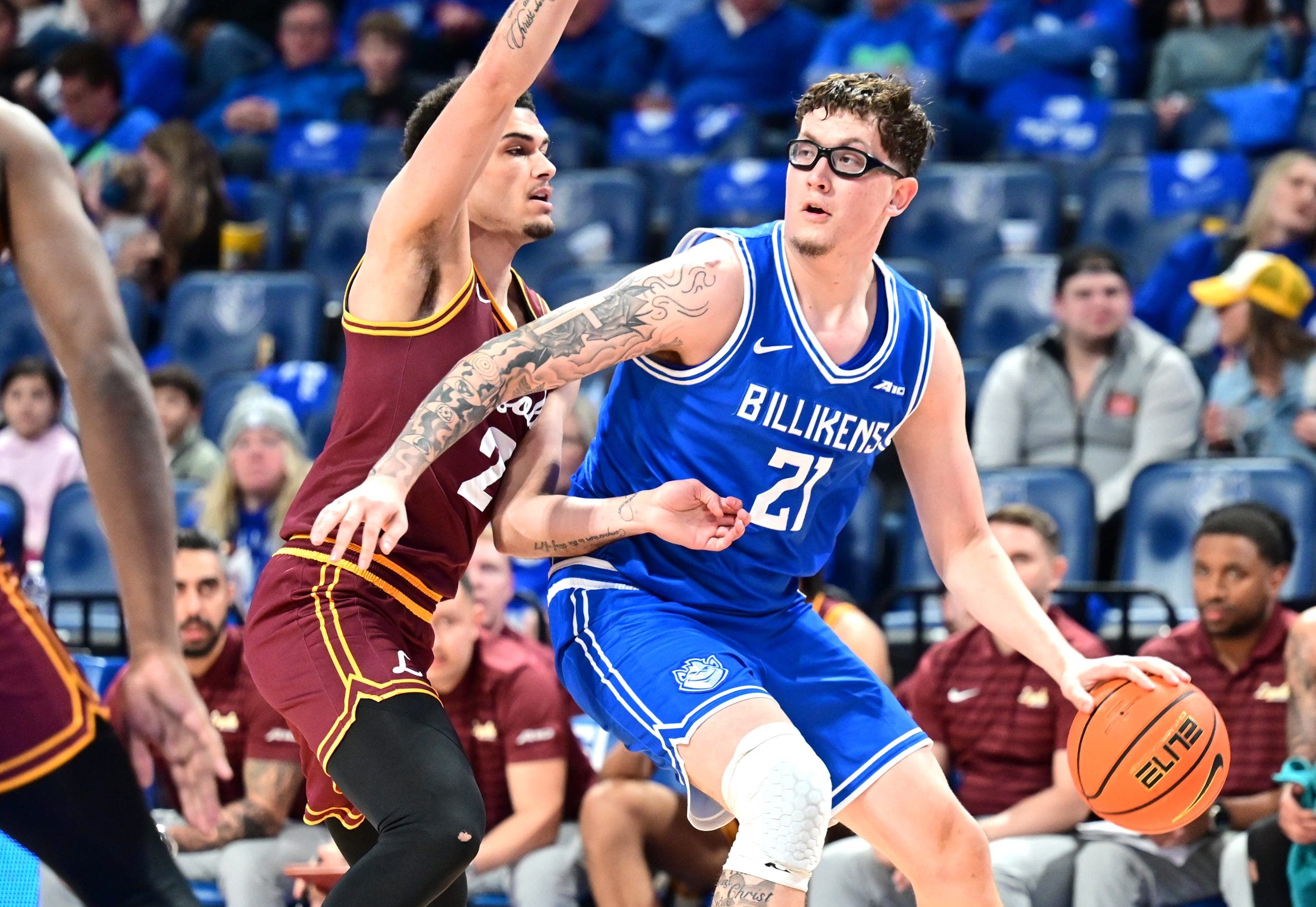
Robbie Avila of the Saint Louis Billikens. (Photo by Keith Gillett/Icon Sportswire via Getty Images)
No. 9 seed Utah State
- Record: 28-6
- Duo: Mason Falslev (16.1 PPG, 5.8 RPG, 3.1 APG), MJ Collins Jr. (17.6 PPG, 2.4 RPG)
- Conference tournament finish: Won Mountain West Tournament
- KenPom ranks: AOE: 28th, AOD: 45th, AEM: 30th, AT: 158th
- Fact to know: The Aggies are making their fourth straight NCAA Tournament appearance and boast the Mountain West Player of the Year in Falslev.
No. 10 seed Santa Clara
- Record: 26-8
- Duo: Christian Hammond (15.8 PPG, 2.9 RPG, 2.4 APG), Elijah Mahi (13.9 PPG, 4.7 RPG)
- Conference tournament finish: Lost to Gonzaga in the championship game of the West Coast Conference Tournament
- KenPom ranks: AOE: 23rd, AOD: 82nd, AEM: 35th, AT: 82nd
- Fact to know: The Broncos are returning to the NCAA Tournament for the first time since 1996, when Steve Nash led them to a first-round upset against Maryland.
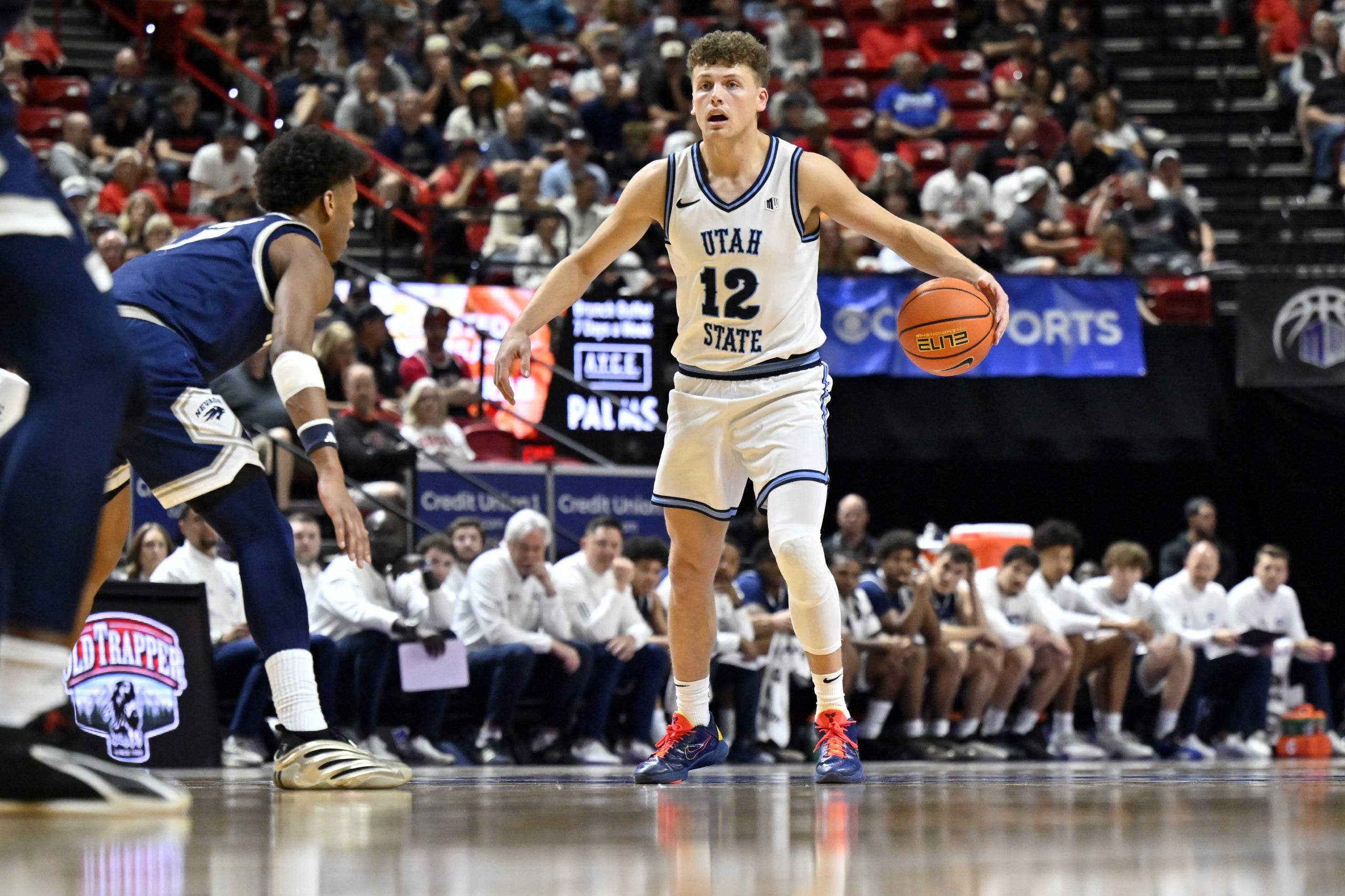
Mason Falslev of the Utah State Aggies. (Photo by David Becker/Getty Images)
No. 11 seed VCU
- Record: 27-7
- Duo: Terrence Hill Jr. (14.4 PPG, 2.8 APG, 2.5 RPG), Lazar Djokovic (13.5 PPG, 5.4 RPG)
- Conference tournament finish: Won Atlantic 10 Tournament
- KenPom ranks: AOE: 46th, AOD: 60th, AEM: 45th, AT: 116th
- Fact to know: The Rams are coached by Phil Martelli Jr., who made two NCAA Tournament appearances as a player with Saint Josephs and also took Bryant to the tournament in his second year with the program last season.
No. 11 seed South Florida
- Record: 25-8
- Duo: Wes Enis (16.8 PPG, 3.6 RPG, 2.5 APG), Izaiyah Nelson (15.7 PPG, 9.6 RPG)
- Conference tournament finish: Won American Conference Tournament
- KenPom ranks: AOE: 61st, AOD: 40th, AEM: 47th, AT: 15th
- Fact to know: Izaiyah Nelson won the American Conference Player of the Year, Defensive Player of the Year and Newcomer of the Year awards; Wes Enis is one of 11 players in D-I to have made more than 105 three-pointers and 70 free throws this season.
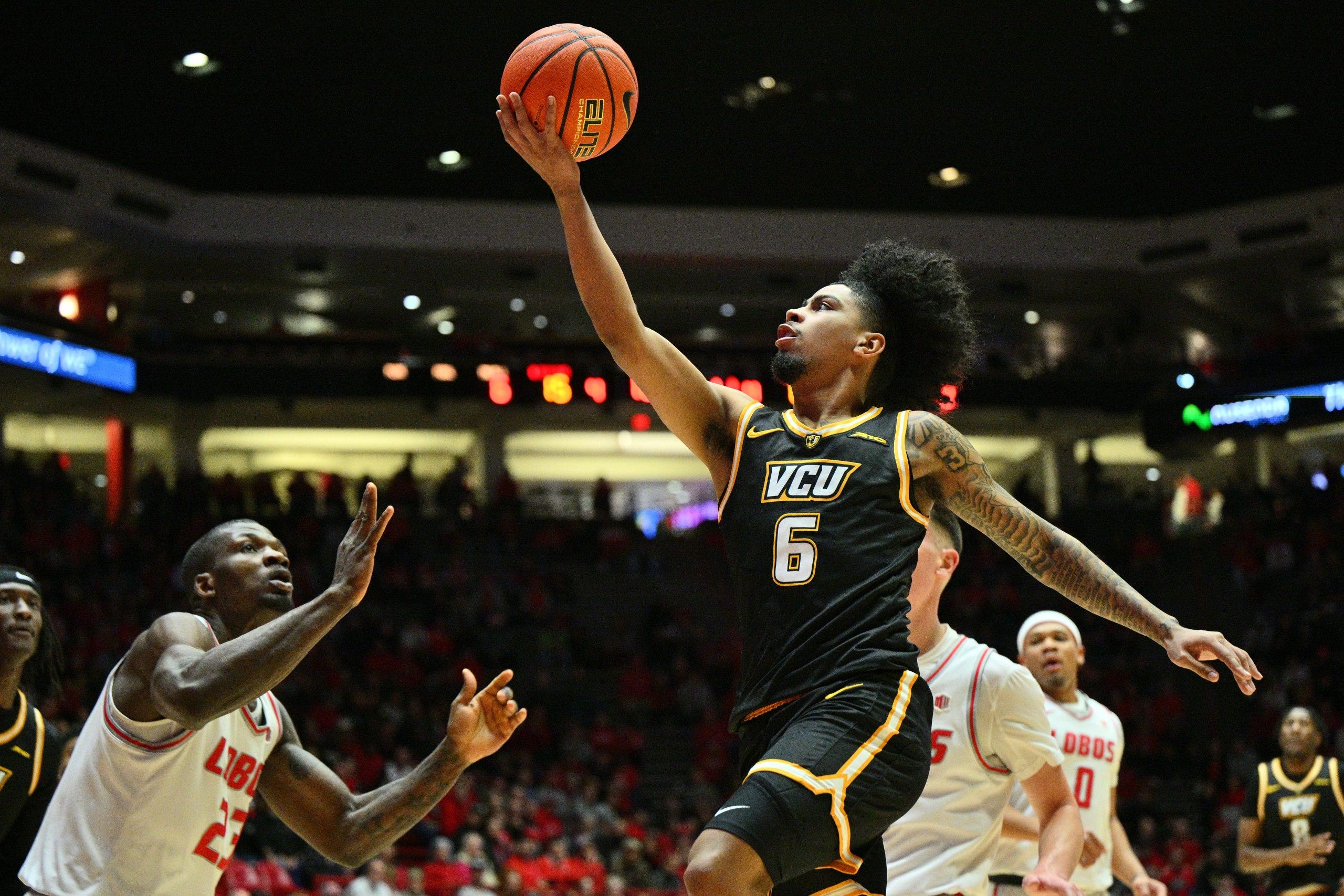
Terrence Hill Jr. of the VCU Rams. (Photo by Sam Wasson/Getty Images)




 Your Privacy Choices | Closed Captioning


