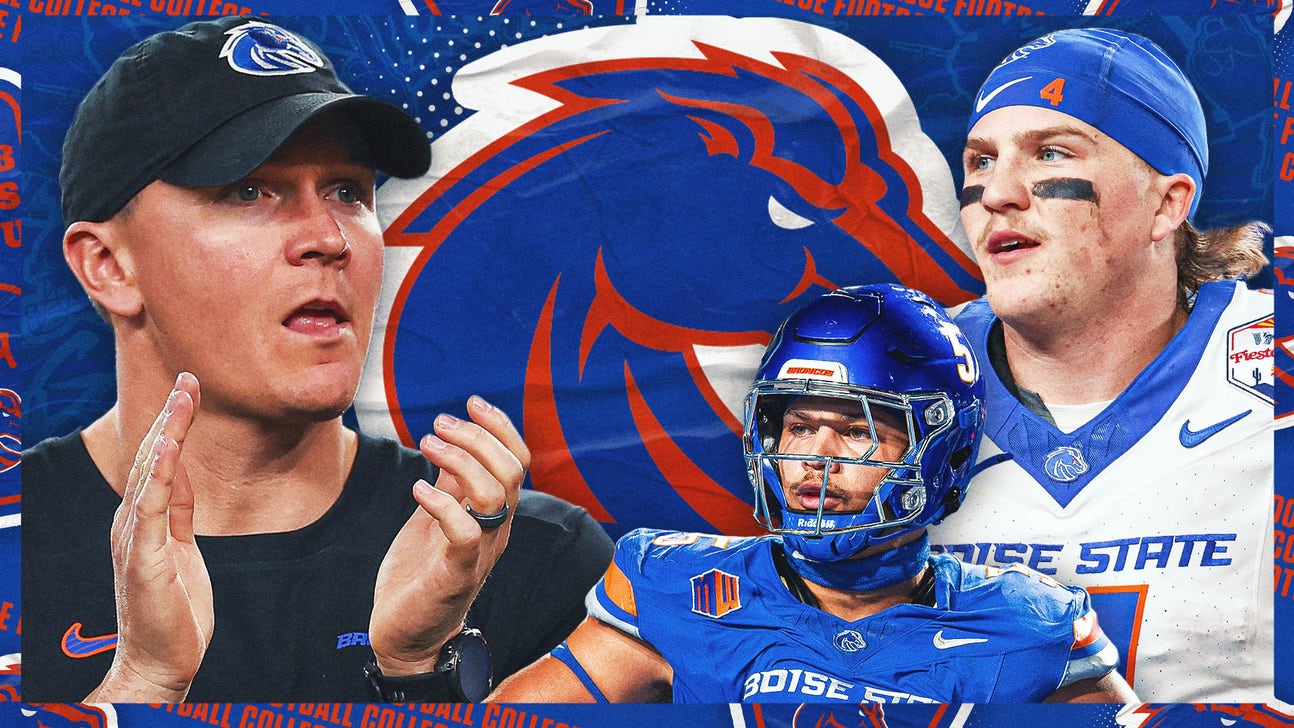
Boise State Returned A Championship Roster. Can The Group of Six Still Compete?


The smile said it all.
Gathered in a conference room just outside Boise State head coach Spencer Danielson’s office, offensive coordinator Bush Hamdan, athletics director Jeramiah Dickey and Danielson made their pitch to star tailback Ashton Jeanty.
The opportunity. The legacy. The paycheck. All of it was part of the equation.
"We love you, Ash. We know you love this place," Dickey said. "Where are you at?"
Jeanty looked up and smirked.
"I’m a Bronco," he said.
It’s been almost three years since Jeanty reaffirmed his commitment to Boise State for the 2024 season. Almost every program in America hoped the eventual Heisman Trophy runner-up would depart the school that landed him as an under-recruited running back out of Texas.
The world has since changed. Dramatically. College football spending has ballooned, and the financial pressures on schools outside the Power Four have never been more exacerbated.
But around these parts, on the blue turf and within a program Danielson has been part of for nearly a decade, that history set a precedent for a team fixated on a second College Football Playoff berth in three years.
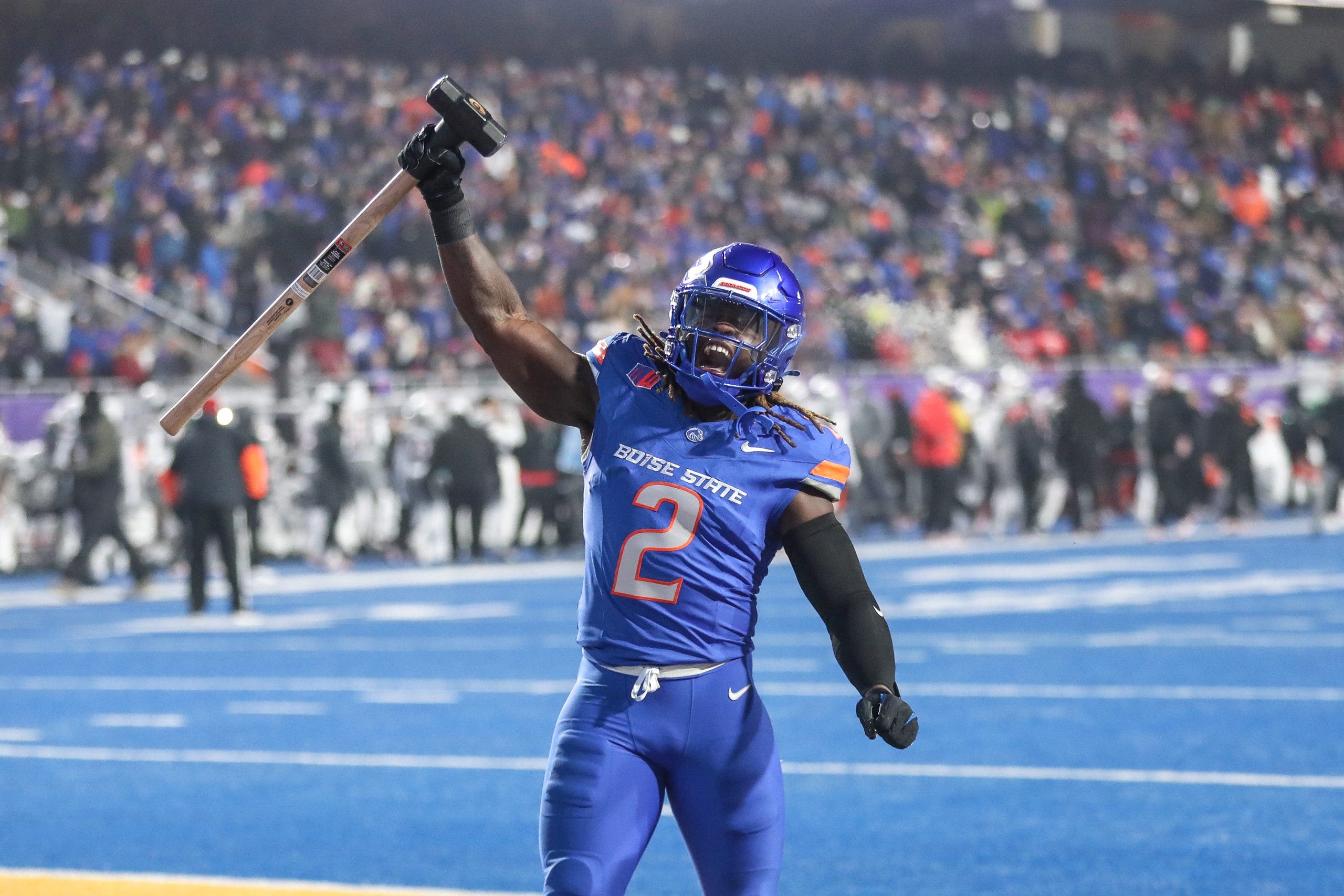
Ashton Jeanty in 2024 on Boise State's blue field. The Broncos won the last three Mountain West titles before jumping to the new Pac-12 this season. (Photo by Loren Orr/Getty Images
The Broncos return a pair of All-Pac-12 candidate tailbacks in Sire Gaines and Dylan Riley. Quarterback Maddux Madsen is headed for his third consecutive year as a starter. Defensive end Jayden Virgin-Morgan spurned outside interest to return for a chance at another postseason run.
Those hopes start on Saturday against No. 3 Oregon, boasting one of the costliest rosters in America — and one that is likely more than three times more than the $13 million Boise State is spending in revenue share across its entire athletics department.
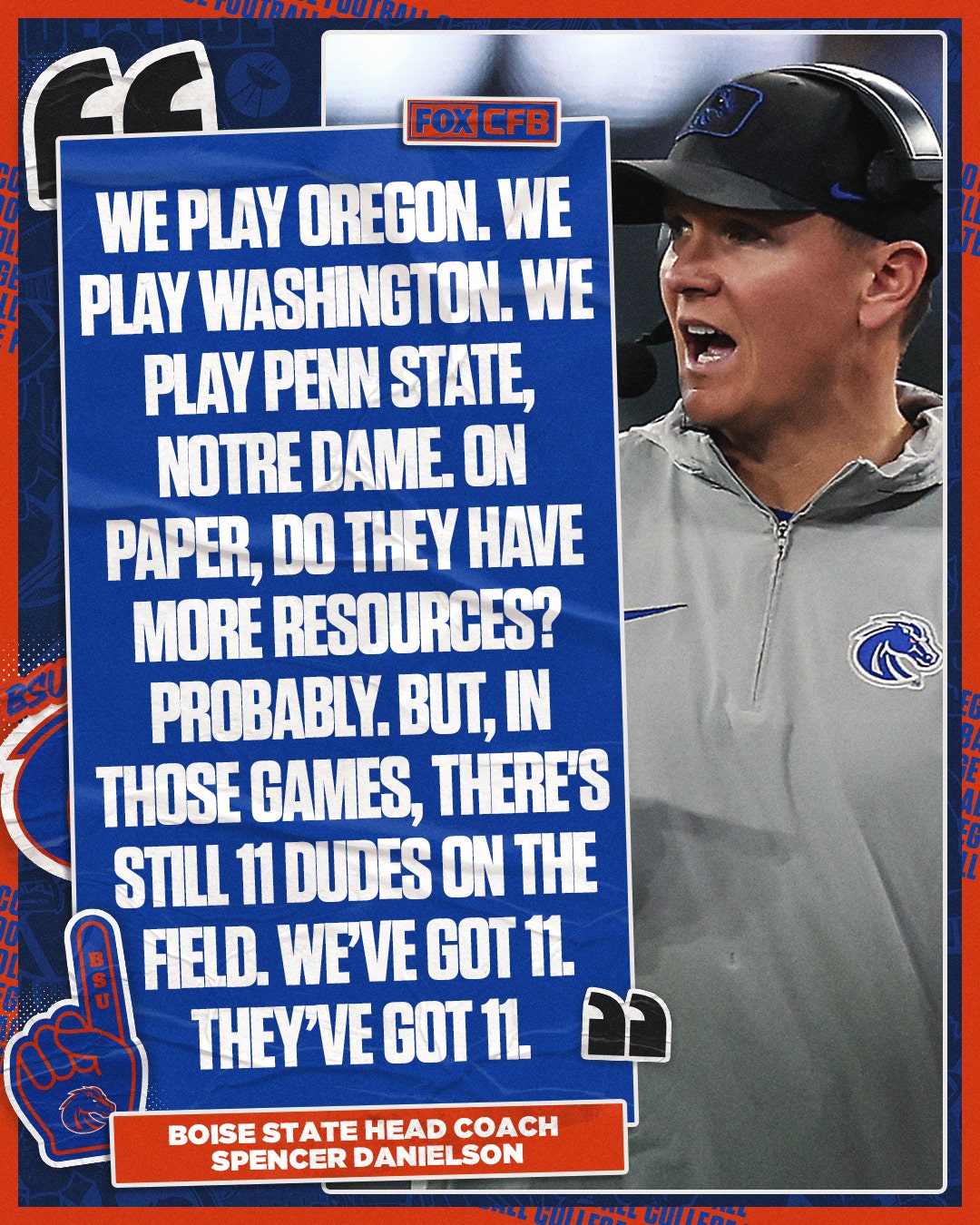
"Do we have what everybody else has? No, but I do know we have more than enough," Danielson told me." … We play Oregon. We play Washington. We play Penn State, Notre Dame. On paper, do they have more resources? Probably. But, in those games, there's still 11 dudes on the field. We’ve got 11. They’ve got 11 — and there’s not going to be any excuses made from us."
There is no long-term planning in college football these days.
Administrators quip strategic initiatives have shrunk from a decade to six months. Coaches are worried about the 10 or 11 months in front of them, rather than developing talent over the course of four years.
Stockpiling talent? That’s reserved for the biggest brands in college football. But even those with endless pockets are rebooting their rosters by the offseason as player acquisition prices seemingly double each winter.
Those realities have been magnified tenfold in the Group of Six, where stalwarts like Boise State have become staunch outliers in their ability to retain and recruit talent, while mitigating outside factors that have made retention an outsized and unfortunate lesson in capitalism.
There are, however, a handful of programs that have managed to pitch culture, development and, when possible, cash to ensure the diamonds they discovered continue playing in the rough.
"We're choosing to be here," Dickey told me. "You burn the boats, right? We’re all in on this, and it's worth fighting for these kids, what our industry represents, and, specifically, what our brand and department represents."
"We Know That We're Gonna Have To Recruit Him Again"
New Mexico’s Jason Eck almost starts to chuckle as he thinks back to his last Idaho team.
The Vandals took Oregon to the brink in 2024, falling by 10 points in Eugene before the Ducks rolled to a 13-1 record and the No. 1 overall seed in the College Football Playoff.
Three of Eck’s sophomores that fall earned All-Big Sky honors. Two will suit up for Power Four programs this fall: Andrew Marshall at Nebraska and Dallas Afalava at Wake Forest.
The only one that followed Eck to New Mexico? That’d be his son, Jaxton.
"Thankfully, it's my son," Jason told me, tongue-in-cheek. "If he wasn't my son, he probably would be at a Power Four school as well."
Every Group of Six coach has a similar story.
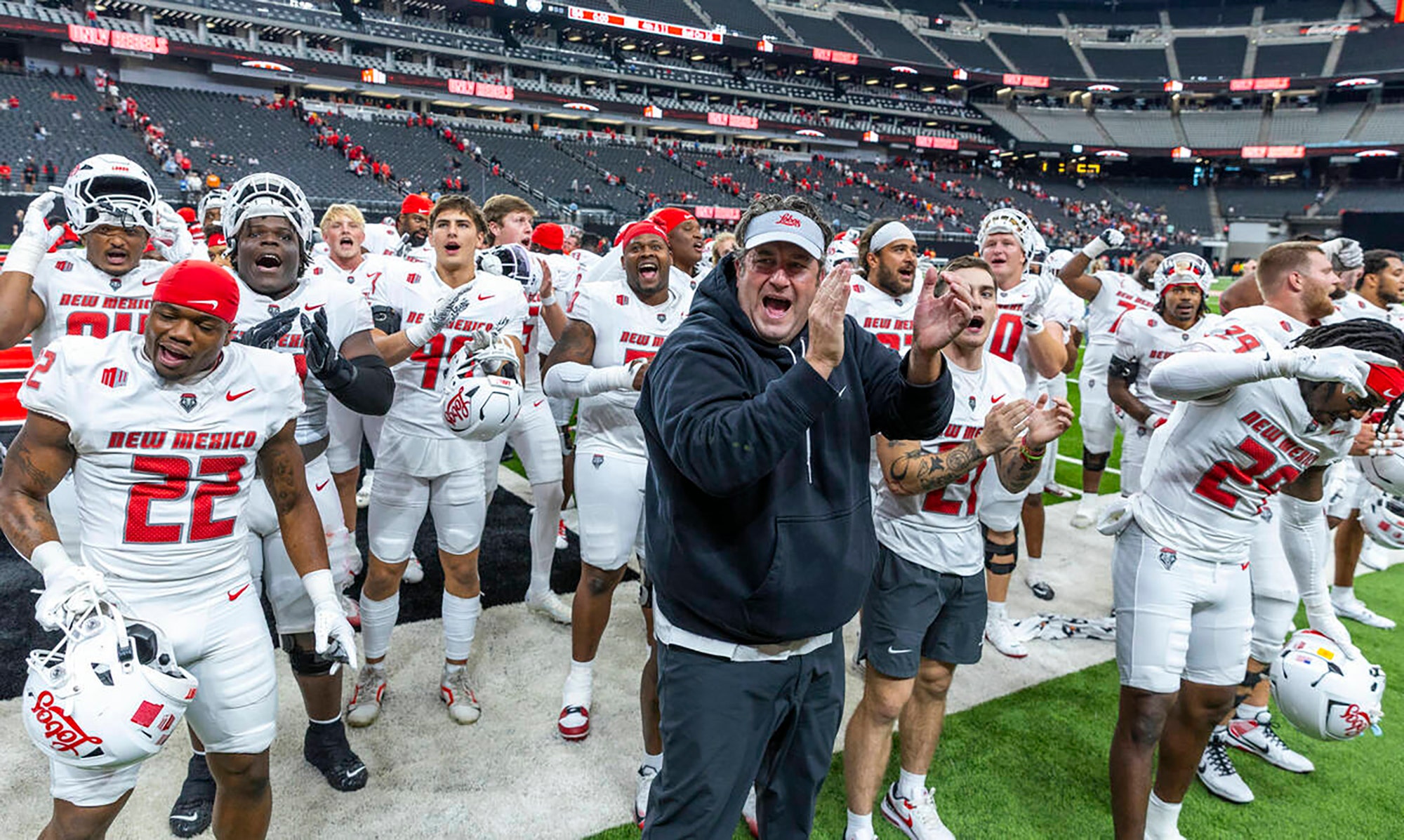
Jason Eck and New Mexico players celebrate beating UNLV last season. (L.E. Baskow/Las Vegas Review-Journal/Tribune News Service via Getty Images)
Tulsa’s Tre Lamb saw a linebacker head to Texas A&M, while his tight end will play for Louisville — decisions that were made related to offers well into the six figures.
Boise State — the poster child for stability within the Group of Six over the last decade — watched its top cornerback, Ty Benefield, leave for LSU.
Eck, too, had a tight end leave for Cal, a punter depart for Florida State and a long snapper dip for Texas. All three decisions, he said, were motivated by cash.
But for each player that walked out the door, there are those programs — few and far between as they might be at the Group of Six level — who’ve been able to steady their rosters amid wayward seas.
"I think everybody in this era just kind of assumes the best players are looking to leave all the time," said Delaware head coach Ryan Carty, who returns as much production as any school in the country after a 7-6 debut season in FBS. "Our players, most of them, do recognize that they might already have what other players are searching for."
There’s a broad belief among coaches that Power Four programs’ reliance on the portal has opened up more talented high school options for the Group of Six.
That change has put more of an onus on evaluation. Schools outside the Power Four are working judiciously to occupy not only talent they can sign, but that they might be able to keep.
"[Bigger programs] go off the measurables," New Mexico general manager Beau Davidson told me. "I almost go backward. Let me find the good football players, then I'm gonna pick the one with the better measurables.
"Just look at our roster — we're not gonna win any games getting off the bus, that's for damn sure."
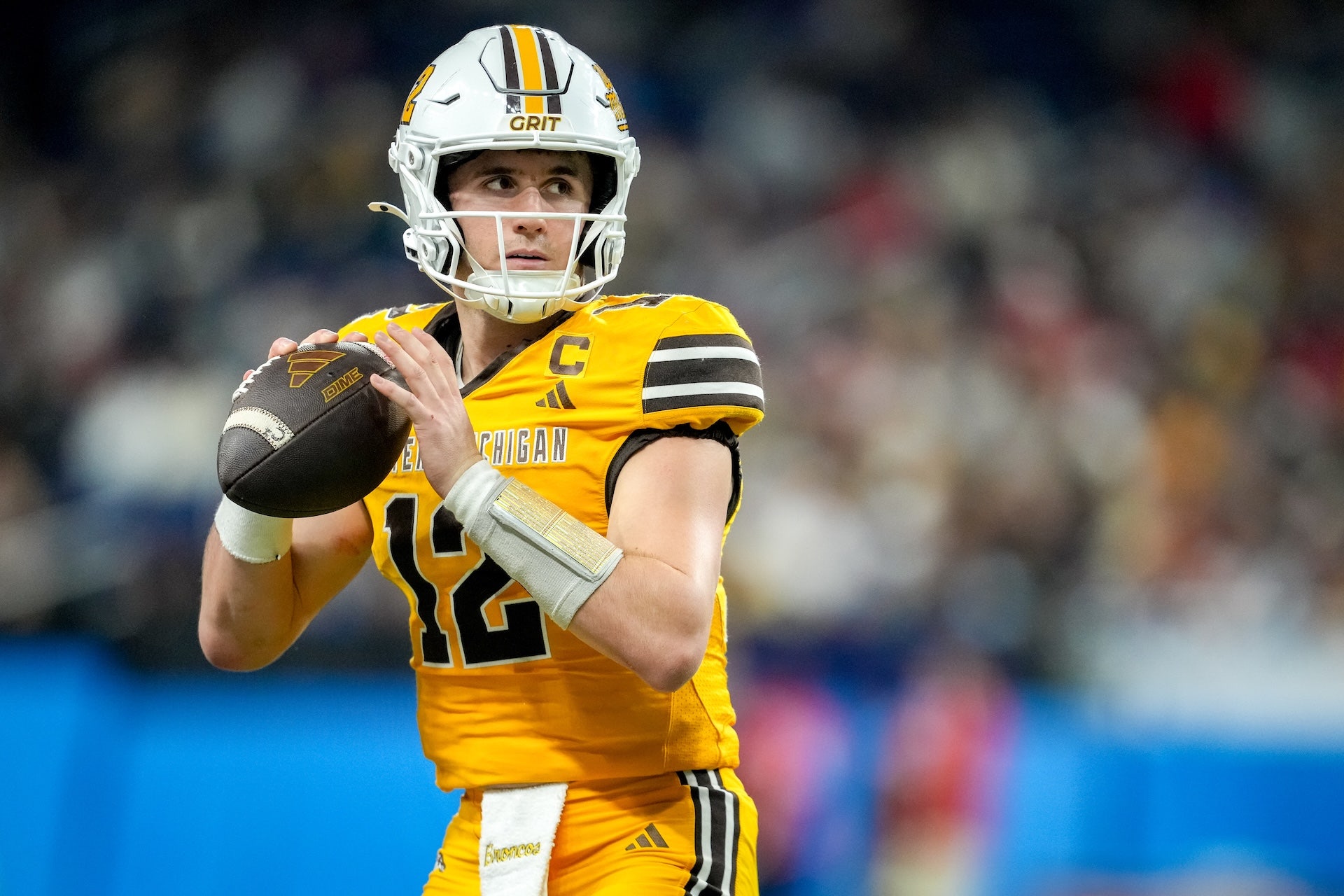
Broc Lowry led Western Michigan to the 2025 MAC championship and is back with the Broncos this season. (Photo by Nic Antaya/Getty Images)
Schools have also had to be more pointed in their spending, while working ahead of time to address players who might be poaching targets.
Two years ago, the market for Western Michigan quarterback Broc Lowry was nonexistent.
The one-time Indiana signal-caller had been cast off by the staff in Bloomington after just a season. Outgoing Hoosiers offensive coordinator Walt Bell eventually landed at Western Michigan, providing enough comfort and familiarity for Lowry to follow.
Lowry took over the starting spot four games into last season. He never relented, finishing the year with more than 1,800 yards and nine touchdowns, while adding just shy of 1,000 yards rushing and scoring 14 times on the ground.
The conversations between Lowry and the Western Michigan staff started early. Head coach Lance Taylor recognized the ex-Big Ten passer might have options. But keeping Lowry in Kalamazoo, Michigan meant stability — and the potential for others to follow suit.
The staff took time between its win over Miami (Ohio) in the MAC title game and the Myrtle Beach Bowl to communicate with agents, parents and others involved in the re-signing process across the roster.
Lowry was among the first to recommit to the program. Then came the avalanche.
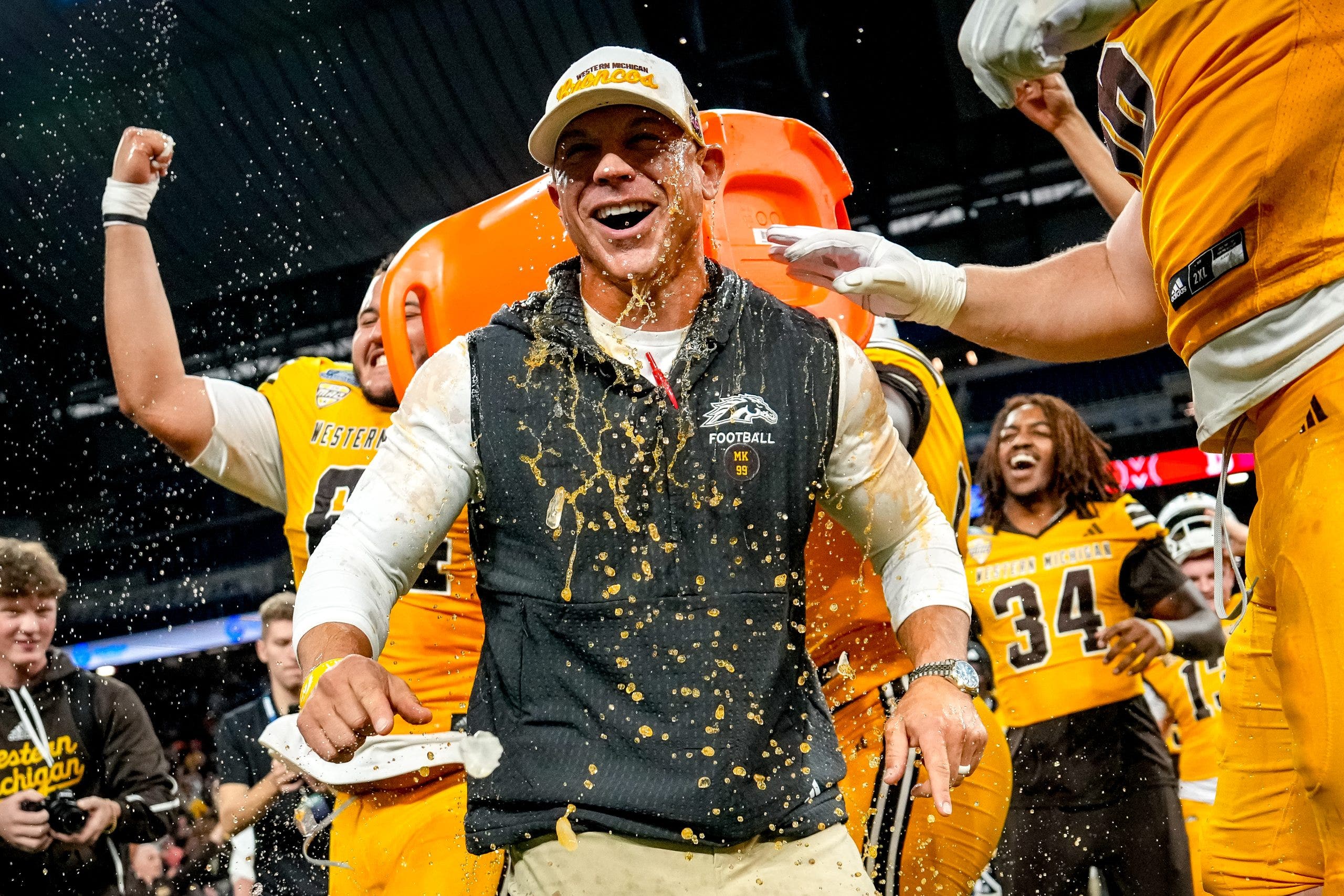
Lance Taylor celebrates Western Michigan winning the 2025 MAC title game against Miami. (Photo by Nic Antaya/Getty Images)
Taylor said the program retained 26 of 27 players it hoped to keep. The only departee — long-snapper RJ Todd — landed at Oregon.
Lowry, meanwhile, becomes the first MAC Offensive Player of the Year with eligibility remaining to return to the league since Northern Illinois’ Jordan Lynch won the honor back-to-back years in 2012 and 2013.
But next season also looms.
"Absolutely we're already thinking about it," Taylor conceded. "... Being able to bring him back and knowing he has two years of eligibility was really neat to be able to do. But looking into the crystal ball, we know we're gonna have to recruit him again."
How Corporate Partners Bolster College Football Programs
The conversations started at the top, months ago. Before a sudden death. Before the corporate world around Memphis stood still.
Tigers athletics director Ed Scott’s pitch to FedEx founder and chairman Fred Smith — who died in June 2025 — was simple: Why put your name on a building when you could get an international commercial for three hours every Saturday during the fall?
"If you name a stadium, most of the people that see the name of the stadium are the people who are local," Scott said at the time. "But if you look at our football field, anywhere that football is within 100 yards, you will see the word ‘FedEx.’"
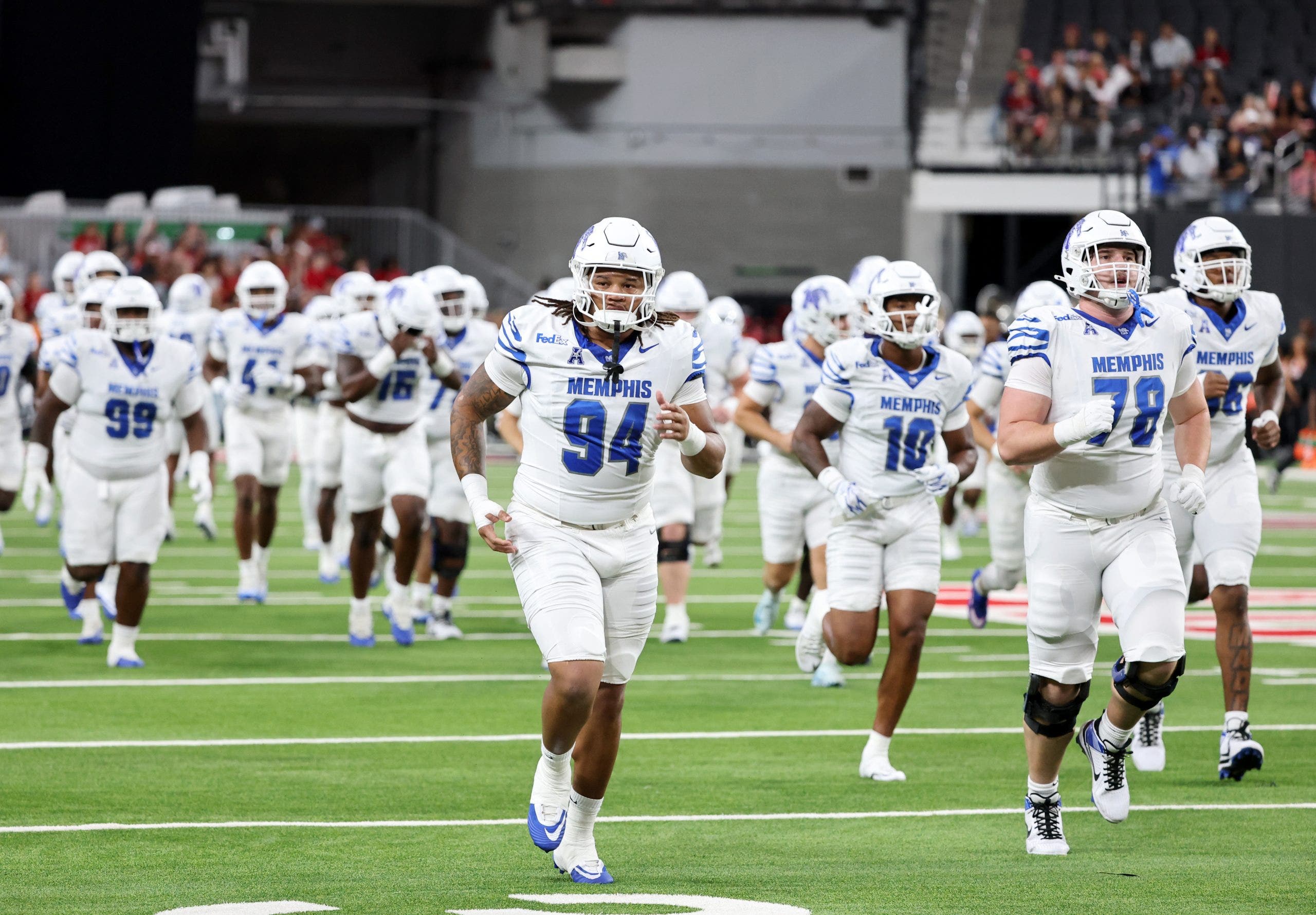
J'mari Monette and Riley McGehee lead the Memphis Tigers onto the field before their Week 0 win over UNLV, 27-21. (Photo by Ethan Miller/Getty Images)
Memphis has been among those non-Power Four programs that have pushed beyond preconceived financial restraints. It’s believed to be among the biggest spenders in the Group of Six, while Scott said in an interview with local radio this summer the plan is to grow its football revenue share allocation to $10 million by 2027. (It’s spending almost that much on men’s basketball as well.)
That growth in resources has correlated directly to varying commercial initiatives the school has taken on over the last two years.
Memphis is slated to open a roughly $225 million renovation of the Liberty Bowl that includes the construction of a new tower of suites on the west side, LED board and logo boxes this weekend. The end zones, too, will be branded with FedEx’s logo, while it has agreed to a significant deal with Lowe’s.
The school has also seen an uptick in fundraising from $20-plus million prior to Scott’s arrival to $35.3 million in 2025, while it’s on pace to bring in around $100 million in revenue this year.
"$78 million of that comes from revenue that we create personally," Scott explained to me. "That's better than a lot of Power Four schools, right? … If I had another $40 million — I'm not even talking SEC, Big Ten numbers — we’d become extremely formidable right away."
That schools are capitalizing on corporate opportunities has spread far beyond the American Conference as athletics departments look to offset the growing cost of roster retention and construction.
Pac-12 membership has seen massive commercial growth across its schools in recent months.
Utah State landed a slew of gifts ranging from $750,000 to a pair at $2.5 million. Fresno State is already pushing $750,000 ahead of its sponsorship goals, while San Diego State is on track to set a school record in fundraising this year.
The Mountain West, too, leads all FBS conferences with seven schools that have agreed to corporate jersey patch deals — including UNLV, which inked the nation’s first such agreement with Acesso Biologics.
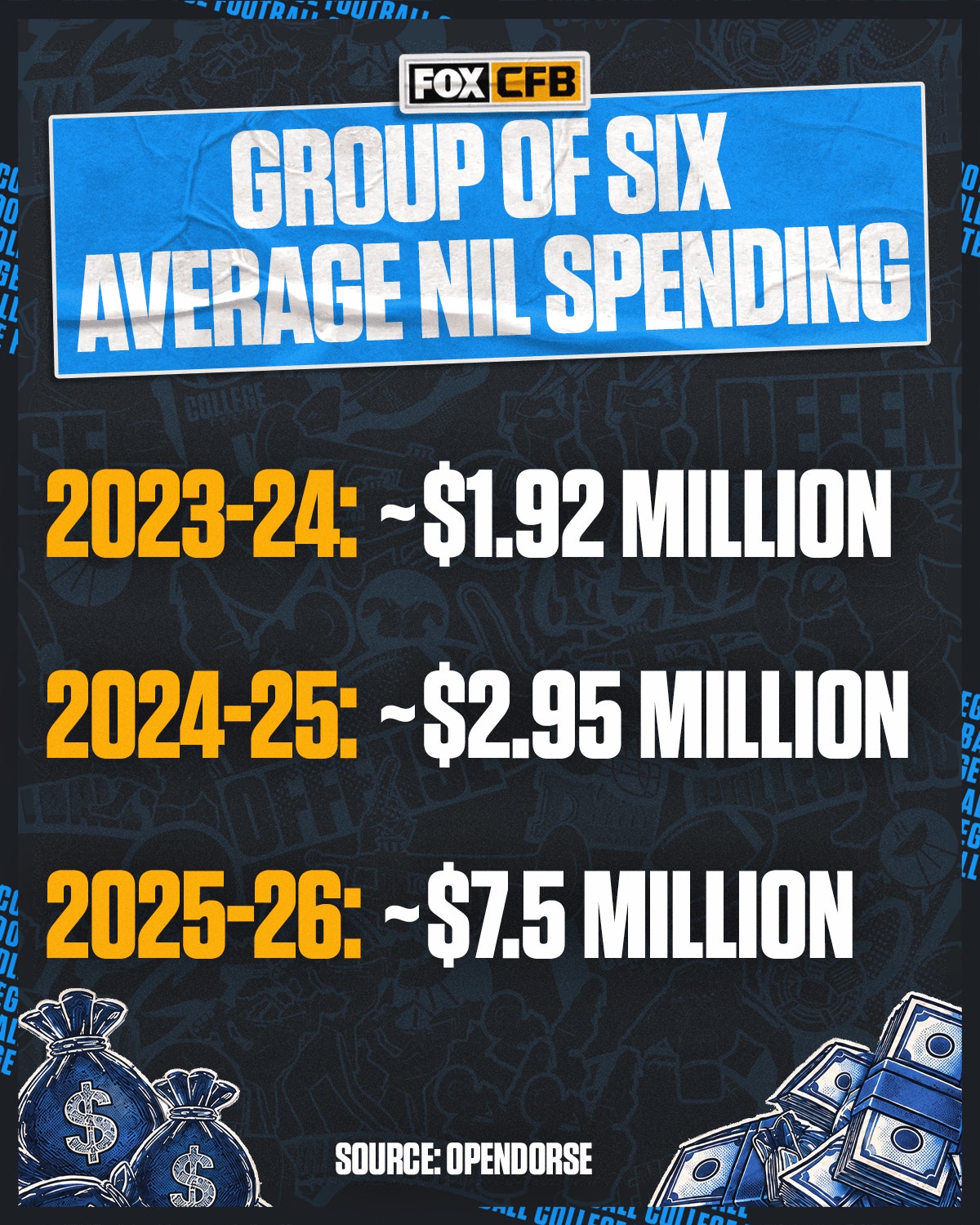
More broadly, data provided by NIL deal platform Opendorse showed average Group of Six NIL spending jumped from $1.9 million to $7.5 million over the last two years.
"The team with the most money doesn't guarantee you that you will win or doesn't guarantee that you will get all the players," said Tulsa athletics director Justin Moore, a former football operations staffer at Texas A&M and Houston. "But not being in the ballpark guarantees that you won’t."
Visiting with a friend on the Colorado State staff ahead of the 2024 Arizona Bowl, Miami (Ohio) head coach Chuck Martin and his old pal traded insights on their respective spending.
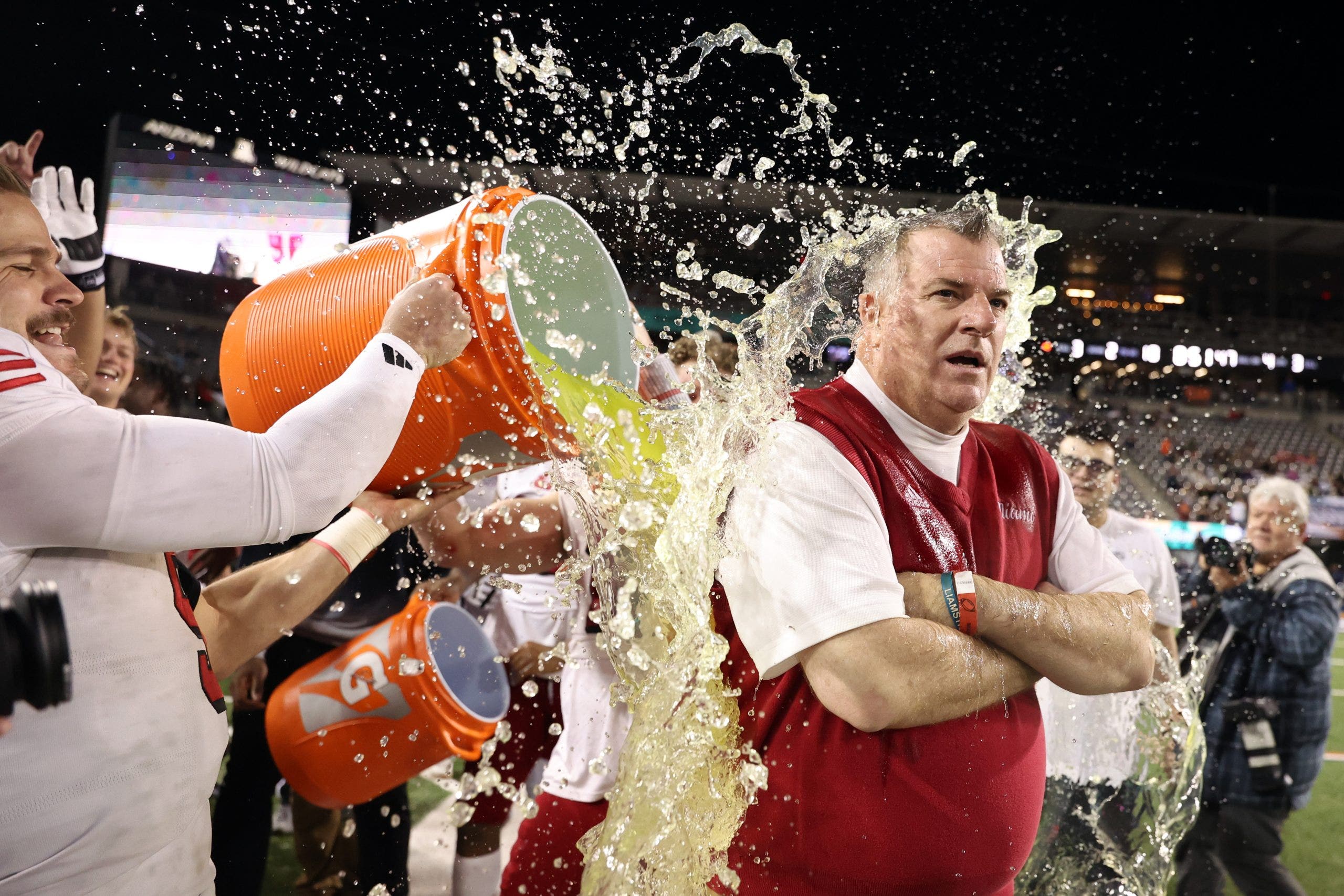
Quarterback Brett Gabbert dumps sports drink on head coach Chuck Martin after Miami beat Colorado State in the 2024 Snoop Dogg Arizona Bowl. (Photo by Chris Coduto/Getty Images)
Colorado State, the colleague revealed sheepishly, had just $2.5 million and would hopefully get up to $5 million the following season. Martin grinned.
"I’ve got three guys on my roster getting paid," he told me. "One guy's at $40,000, and two guys at $20,000. That's it.’"
Times have changed.
Martin declined to share exact specifics, but the RedHawks are expected to be among the most resourced programs in the MAC this fall.
"I retained 14 guys that played a ton of football," he said. "... If I had the money I had before, I would have retained none of them — like, zero."
Will The Group Of Six Benefit From CFP Expansion? Maybe…
There’s a popular refrain in college football circles these days: For all the money that has flooded into the system, the postseason should reflect as much.
Expansion discussions between the 10 FBS commissioners and Notre Dame’s athletics director have remained stagnant for months. The SEC and Big Ten still reside on opposite sides of the former’s preference to expand to 24 teams. That’s unlikely to change in the immediate future.
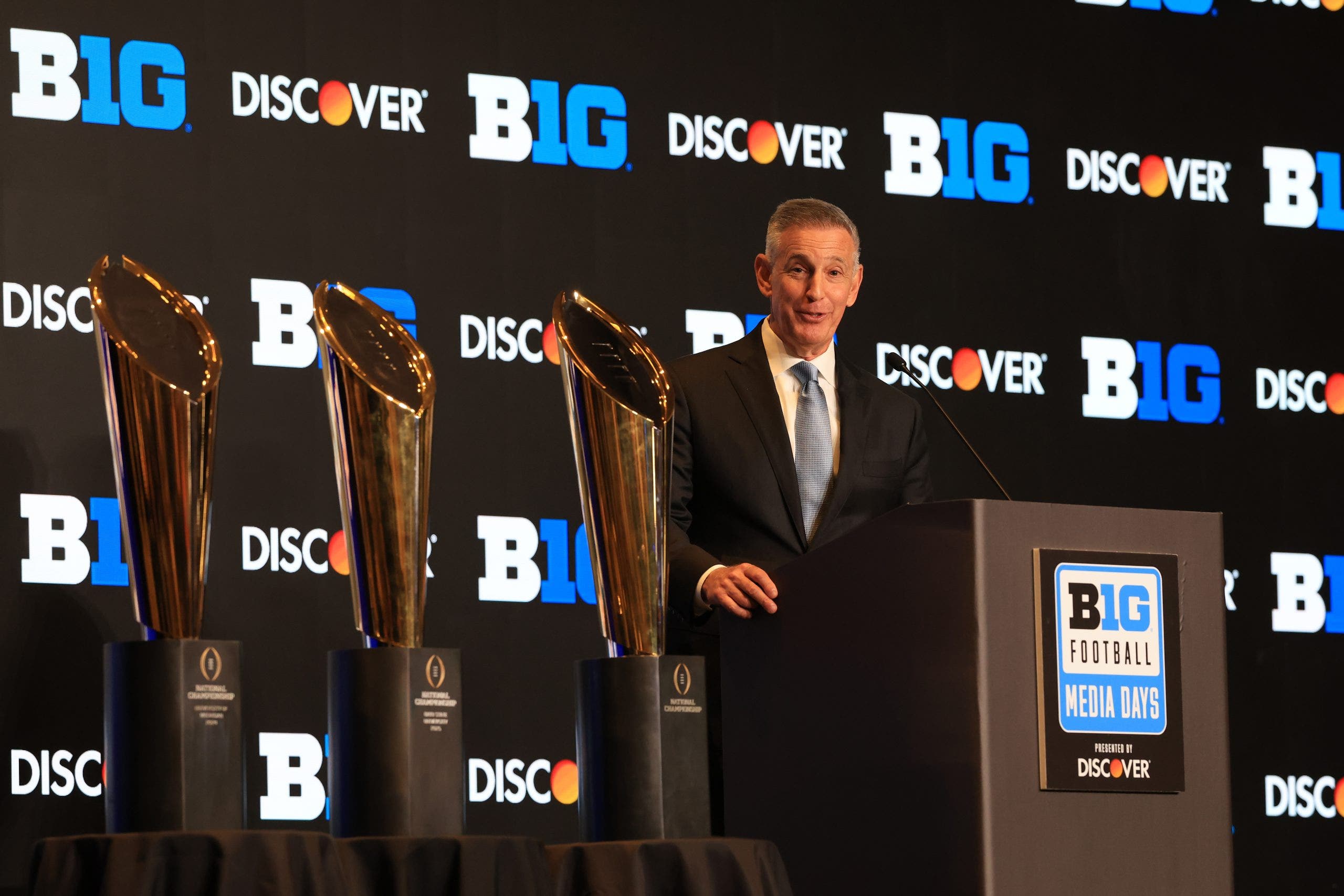
Big Ten commissioner Tony Petitti at media days this summer with three College Football Playoff trophies next to him. (Photo by Justin Casterline/Getty Images)
That said, as expansion has been contemplated, stakeholders across the Group of Six have been quietly pushing for an additional spot for non-Power Four programs to be guaranteed as part of a 24-team field.
"We're supportive of an expanded playoff so long as it provides more access for every conference," said American Commissioner Tim Pernetti, who has been a leading voice in such conversations. "... I feel strongly that it should double in size for everyone, including the Group of Six."
"We have multiple teams in our conference that absolutely could be in a position to vie for a CFP spot," Pac-12 Commissioner Teresa Gould told me. "And we shouldn't be limited by the format or by the structure. We should have that opportunity."
"If you're not playing for something, you're not playing for anything," echoed Mountain West Commissioner Gloria Nevarez. "Having that access point has always been a priority, and, if the field expands, I would 100 percent favor more access for the Group of Six."
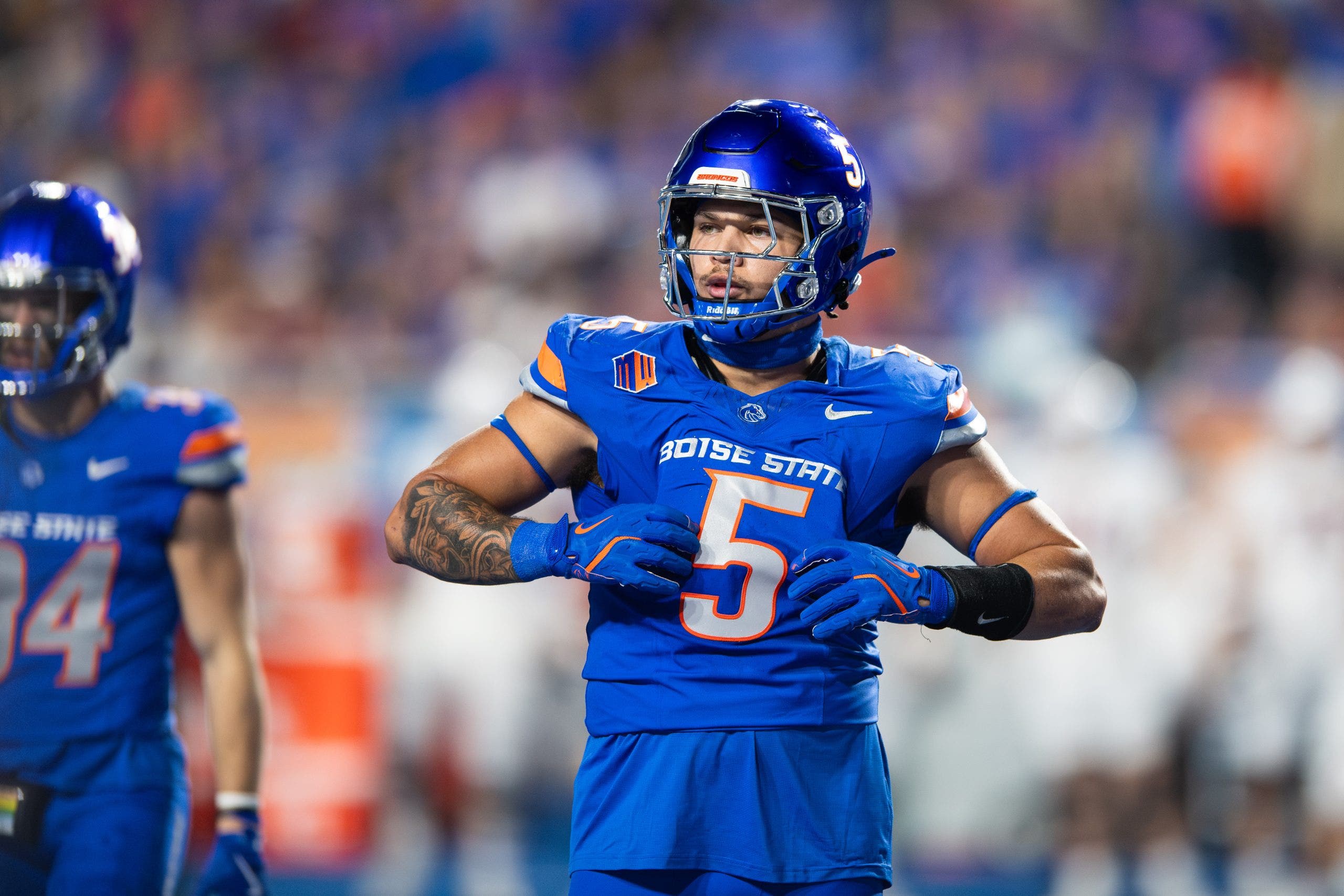
Defensive end Jayden Virgin-Morgan during a 2024 game against Washington State. (Photo by Tyler Ingham/Icon Sportswire via Getty Images)
This, of course, doesn’t quell the issues that persist at a player-level.
Virgin-Morgan was among those sought by Power Four programs in recent offseasons.
He stopped those conversations before they even started.
Contacting his trainers back home in Southern California, Virgin-Morgan communicated that, no matter who reached out, he wasn’t interested in leaving Boise State. He also generally stayed off social media to avoid more direct overtures.
"I've seen a lot of guys that think that the grass is going to be greener when they transfer, and it just doesn't work out, and it ends up kind of messing up their career," Virgin-Morgan told me. "I love it here, and I feel like the culture just fits the type of player and the type of person that I am."
Saturday, he’ll lead Boise State into Eugene for a matchup with an Oregon team that Jeanty narrowly missed upsetting two years ago — the type of opportunity for which Virgin-Morgan returned.
How many more players might make the same decision even a year from now?
"That’s the million-dollar question," Martin said. "I wish I had the answer."
'Fear Arch Manning' 👀 USC a CFP sleeper, can Indiana repeat as National Champions, Notre Dame | FTF

College Football Rankings: North Dakota State Enters The Mix After Week 0
How to Watch UAB vs. Illinois: TV Channel, Live Stream, Time

2027 NFL Mock Draft: Arch Manning Or Dante Moore At No. 1 Overall?

With SEC Expulsion Threats, Could LSU Really Operate As An Independent?

How to Watch UMass vs. Rutgers: TV Channel, Live Stream, Time
Illinois vs. UAB Prediction, Odds, Pick For College Football Week 1

Luke Fickell Is 1 Win From A Wisconsin Breakthrough, But Notre Dame's In The Way

Deion Sanders, Colorado Odds Ahead of Week 1 Clash With Georgia Tech

SEC Lawsuit Accuses LSU Of 'Coordinated Campaign' To Recruit Former Pro Athletes



.vresize.40.40.medium.0.png)

-
College Football Rankings: North Dakota State Enters The Mix After Week 0
How to Watch UAB vs. Illinois: TV Channel, Live Stream, Time
2027 NFL Mock Draft: Arch Manning Or Dante Moore At No. 1 Overall?
-
With SEC Expulsion Threats, Could LSU Really Operate As An Independent?
How to Watch UMass vs. Rutgers: TV Channel, Live Stream, Time
Illinois vs. UAB Prediction, Odds, Pick For College Football Week 1
-
Luke Fickell Is 1 Win From A Wisconsin Breakthrough, But Notre Dame's In The Way
Deion Sanders, Colorado Odds Ahead of Week 1 Clash With Georgia Tech
SEC Lawsuit Accuses LSU Of 'Coordinated Campaign' To Recruit Former Pro Athletes





 Your Privacy Choices | Closed Captioning


