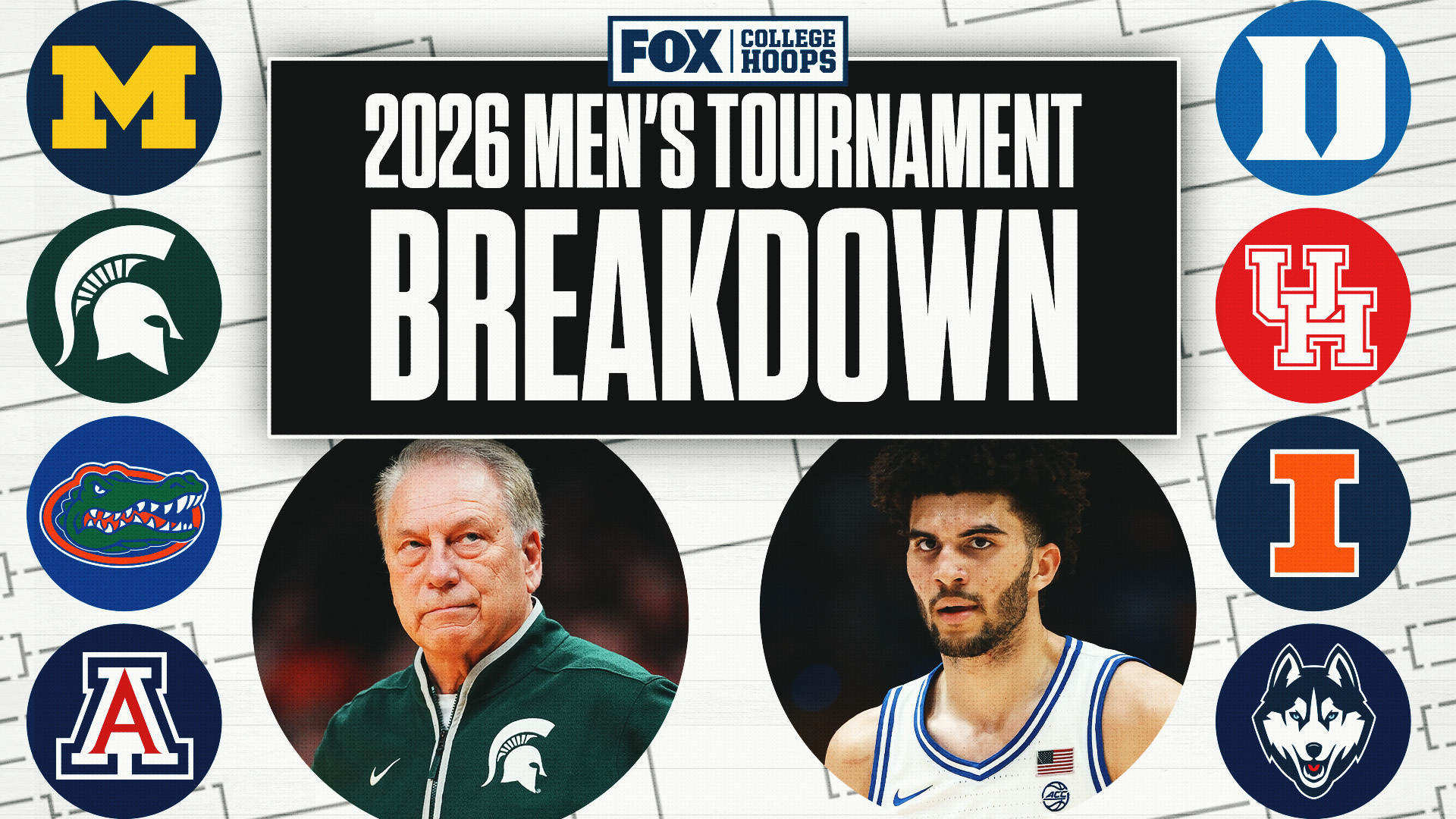
NCAA Men's Basketball Tournament Breakdown: Top Matchups, Upsets, Predictions


At last, the madness is upon us.
Five long months of buildup to Selection Sunday came to an end with another glorious reveal of this year’s NCAA Men's Basketball Tournament bracket.
There are heavyweights at the top in 1-seeds Duke, Arizona, Michigan and Florida. There are newcomers like Queens and California Baptist. And there are more enticing storylines than fans can consume: from Miami (OH) in the First Four to potential No. 1 overall draft picks in BYU’s AJ Dybantsa and Kansas’ Darryn Peterson, from Nebraska seeking the first March Madness win in program history to the all-important health of Duke’s two injured starters.
Without further ado, let’s break down the field:
[MARCH MADNESS: NCAA Men's Basketball Tournament Bracket]
1. Of the No. 1 seeds, which team has the clearest path to the Final Four?
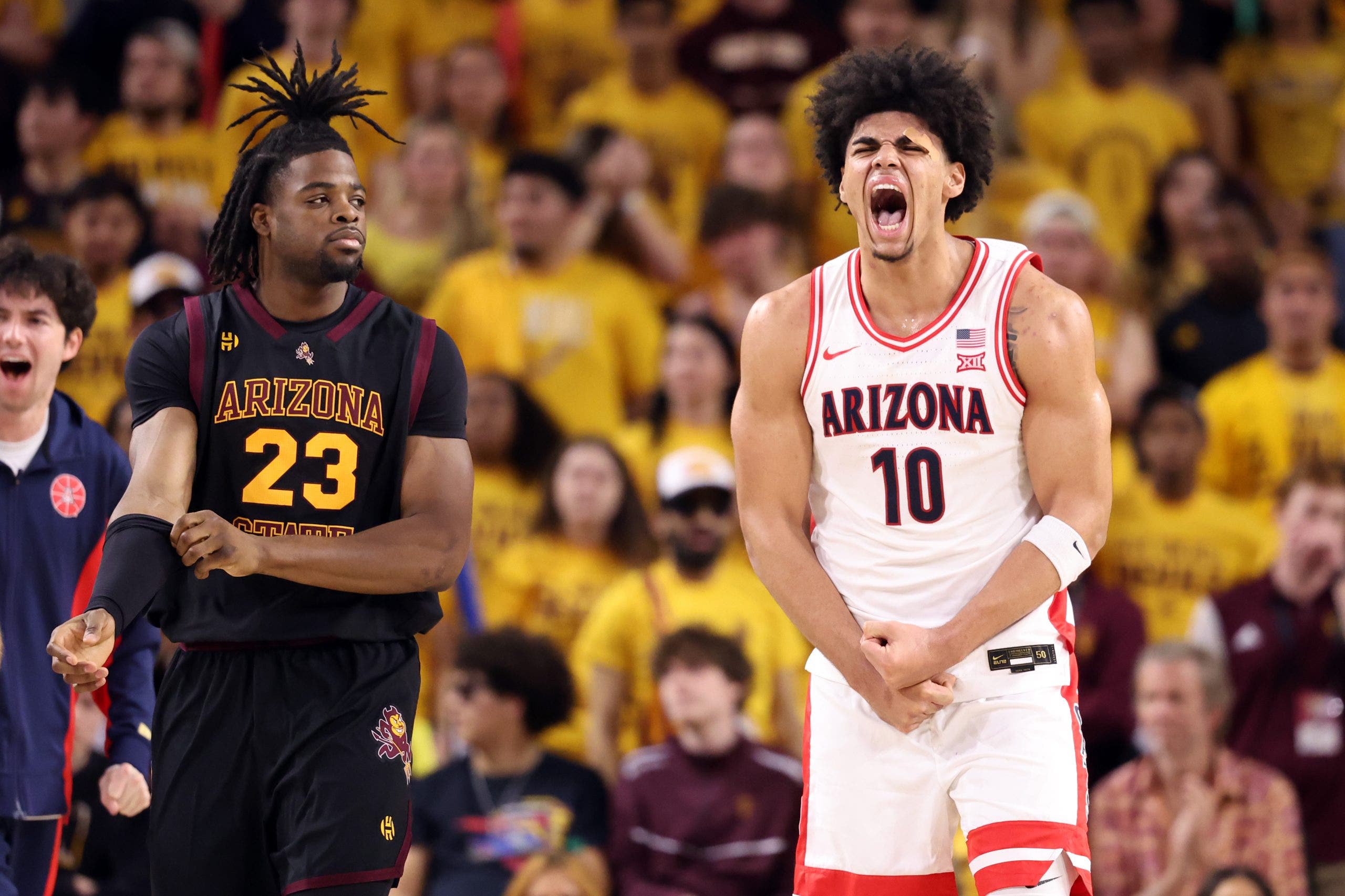
Koa Peat #10 of the Arizona Wildcats reacts in front of Allen Mukeba #23 of the Arizona State Sun Devils. (Photo by Chris Coduto/Getty Images)
Arizona.
Given the legitimate injury questions surrounding Duke, a string of sluggish performances from Michigan in the Big Ten Tournament and a blowout loss by Florida in the SEC Tournament, there’s no question that Arizona enters the Big Dance with the most encouraging trajectory of the top seeds.
The Wildcats are one of only two teams to rank among the top five nationally in both offensive and defensive efficiency at this point, alongside Duke, and they’ve won nine consecutive games ahead of a first-round matchup with No. 16 LIU. A roster littered with future NBA Draft picks, including two likely lottery picks in shooting guard Brayden Burries and power forward Koa Peat, gives head coach Tommy Lloyd his best chance of advancing beyond the Sweet 16 since taking over at Arizona.
The Wildcats' potential path to the Final Four seems relatively friendly, too. Second-seeded Purdue only rose to the 2-line thanks to an upset over Michigan in the Big Ten title game, which means the Boilermakers’ overall profile is more in line with that of a 3-seed. Third-seeded Gonzaga, while talented, is not believed to be on the same level of classic Bulldogs teams under head coach Mark Few. Arkansas and Wisconsin, seeded fourth and fifth, respectively, also needed strong runs in their respective conference tournaments to land on those lines.
The West feels like a region with a handful of overseeded teams trying to take down arguably the strongest 1-seed. It’s worth noting, though, that the Wildcats haven’t reached a Final Four since 2001 — and that will only increase the pressure with each passing game.
2. What is the most intriguing first-round matchup in this year’s tournament and why?
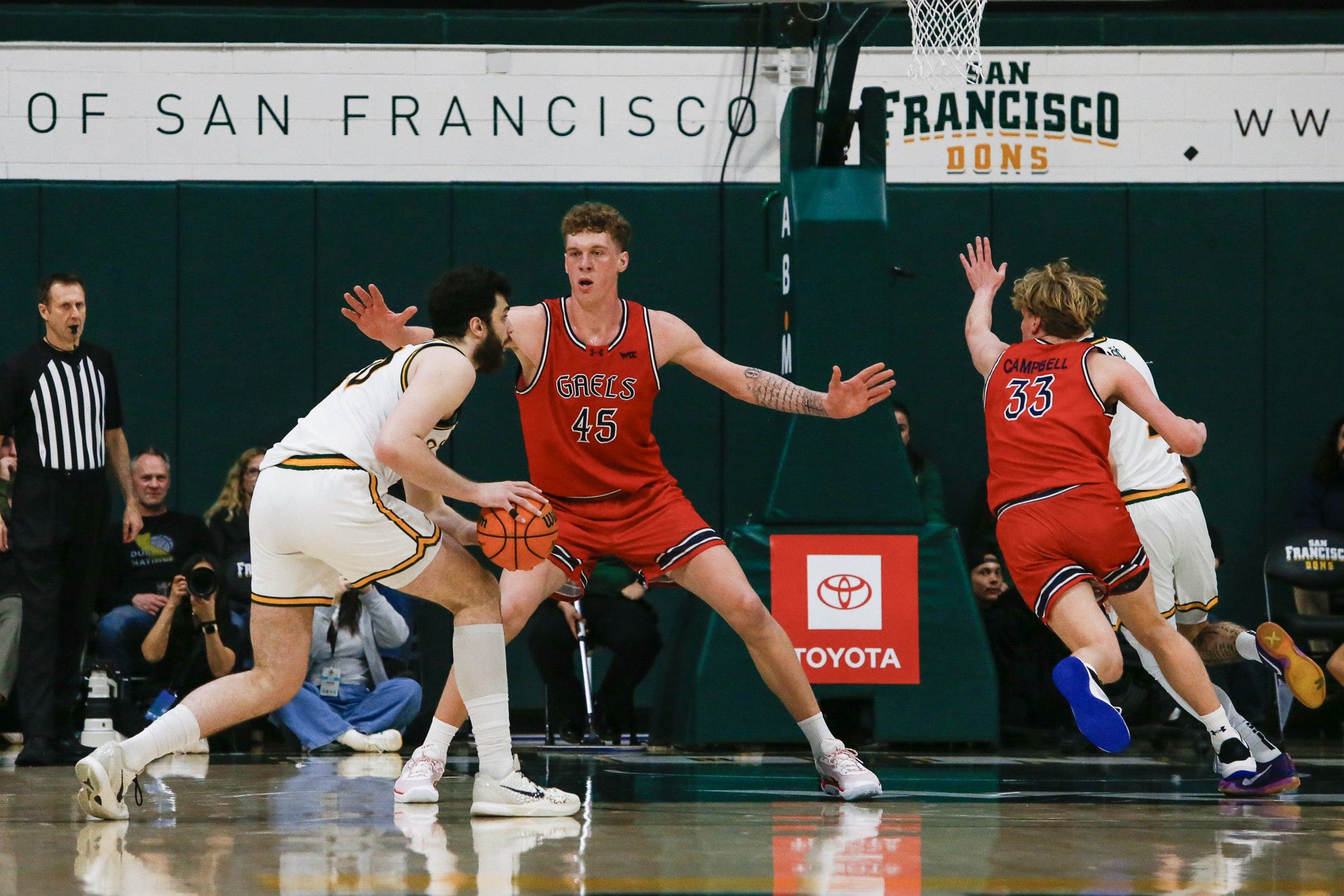
St. Mary's center Andrew McKeever (45) plays defense in a game against San Francisco. (Photo by Larry Placido/Icon Sportswire via Getty Images)
No. 7 Saint Mary’s vs. No. 10 Texas A&M
This is a fascinating stylistic matchup between two coaches and two programs on opposite ends of the spectrum.
Saint Mary’s is led by ultra-respected head coach Randy Bennett, who is in his 25th season leading the Gaels. He’s made 11 NCAA Tournament appearances during that span as the primary rival to Gonzaga in the West Coast Conference, leaning heavily on international prospects to fill his roster. Coaches across the country marvel at the high-quality offense his teams run year in and year out. This particular group ranks among the top 15 nationally in 3-point percentage (38.6%), free-throw percentage (81.1%) and offensive rebound rate (37.4%) — all while operating at a deliberate pace that checks in at 297th in the country. Four of the Gaels’ five losses this year came against fellow NCAA Tournament teams.
On the opposite side, Texas A&M head coach Bucky McMillan is a 42-year-old revolutionary in his first season with the Aggies. McMillan spent the previous five seasons at Samford, one of which included an NCAA Tournament appearance. His teams employ an up-tempo, aggressive style known as "Bucky Ball" that relies heavily on the full-court press and forcing turnovers. The Aggies rank 29th nationally in tempo, which sets the stage for a delightful contrast in approach between these two teams.
3. Who are three under-the-radar players everyone should know entering March Madness?
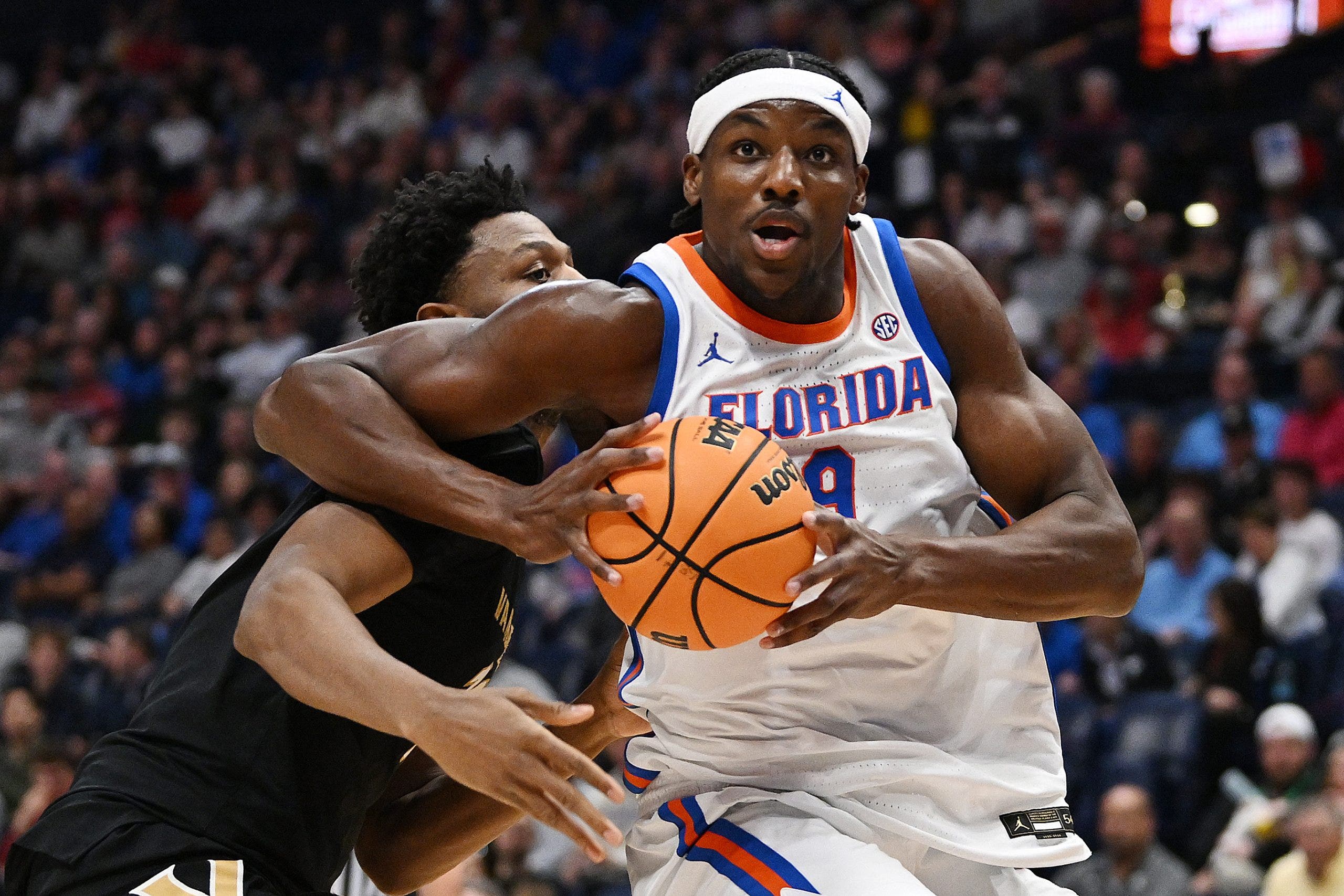
Rueben Chinyelu #9 of the Florida Gators drives into the paint against the Vanderbilt Commodores. (Photo by Carly Mackler/Getty Images)
Donovan Atwell, G, Texas Tech: A torn ACL suffered by Texas Tech power forward JT Toppin, who was averaging 21.8 points and 10.8 rebounds per game, meant the Red Raiders have needed more contributions from their role players in recent weeks. Atwell, a transfer from UNC Greensboro, will enter the NCAA Tournament ranked second nationally in made 3-pointers per game at 3.9, trailing only Jadin Booth (4.2) from Samford. He’s averaging 17.8 points per game since Toppin went down with the season-ending injury and has made at least five 3-pointers in four of his last six games.
Ugonna Onyenso, C, Virginia: Onyenso was a highly coveted four-star prospect and the No. 36 overall player in the 2022 recruiting cycle when he signed with Kentucky out of high school. Two years with the Wildcats and one year with Kansas State have now led him to Virginia, where Onyenso enters March Madness ranked second nationally in blocked shots at 3 per game. Though his season-long statistical output isn’t necessarily eye-catching — he only averages 6.7 points and 5.0 rebounds per game — Onyenso was a force during Virginia’s run to the ACC Tournament title: eight points, six rebounds, eight blocks against NC State; 17 points, five rebounds, four blocks against Miami; six points, eight rebounds nine blocks against Duke.
Rueben Chinyelu, C, Florida: One of the calling cards for Florida under head coach Todd Golden is a team-wide relentlessness on the offensive glass. The Gators ranked fifth nationally in offensive rebound percentage when they won the national title last season and will enter this year’s NCAA Tournament second in the country for that category, grabbing more than 43% of their own misses. Chinyelu, who averages 11.2 points and 11.5 rebounds per game, is the unquestioned leader of that charge. His mark of 4.1 offensive rebounds per game ranks sixth nationally and third among players from the power conferences.
4. What is the most likely first-round upset featuring a 12-seed or higher?
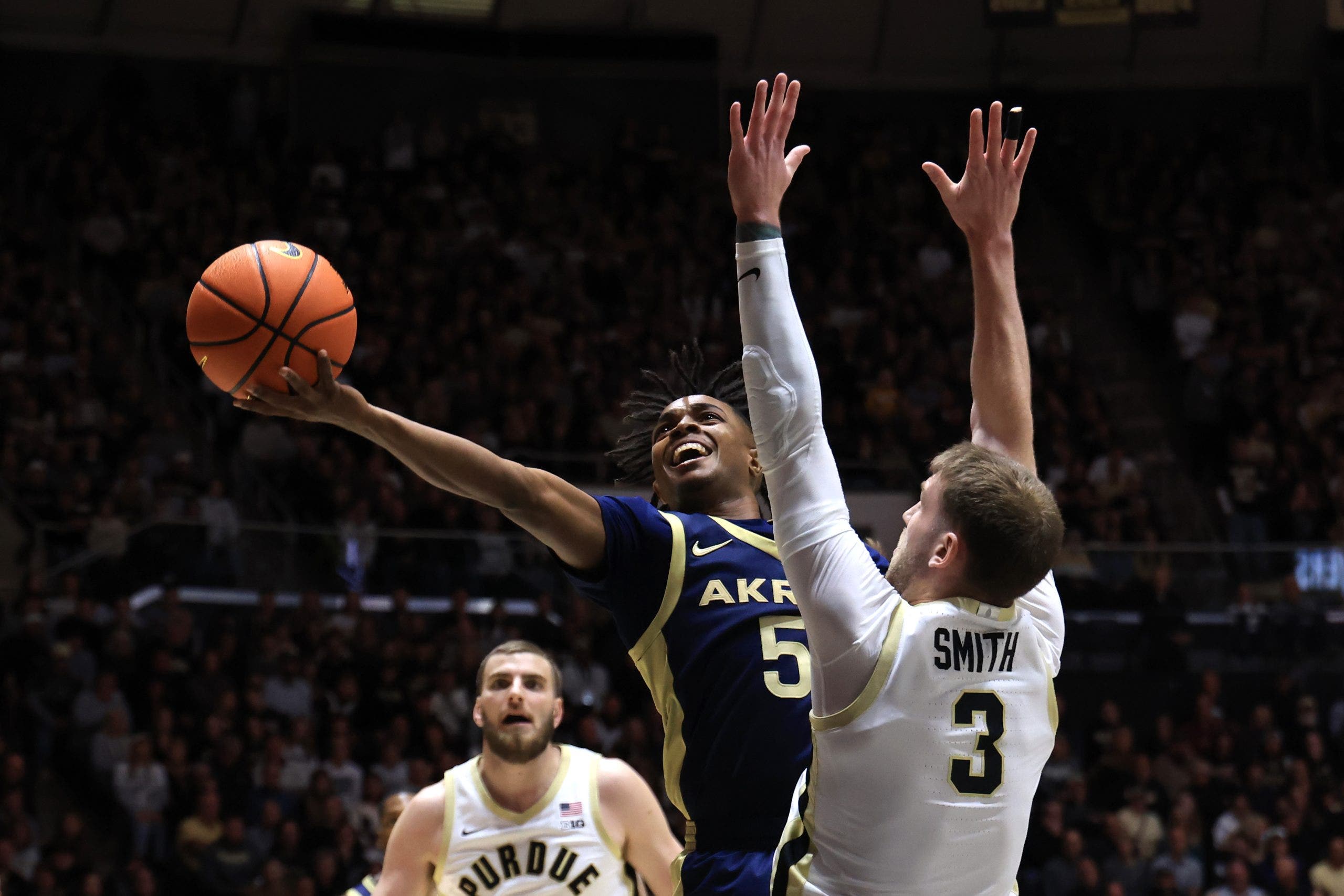
Tavari Johnson #5 of the Akron Zips puts up a shot against the Purdue Boilermakers. (Photo by Justin Casterline/Getty Images)
No. 12 Akron vs. No. 5 Texas Tech
Unfortunately for Texas Tech, the outlook for this season changed quite significantly when Toppin (21.8 points, 10.8 rebounds per game) suffered a torn ACL in mid-February, an injury that will sideline him for the remainder of the year. And while the Red Raiders enjoyed an encouraging response immediately after Toppin went down — winning three straight games over Kansas State, Cincinnati and Iowa State — the momentum soon fizzled.
Head coach Grant McCasland and his team will enter March Madness having dropped three straight to TCU, BYU and Iowa State, which throttled the Red Raiders in the Big 12 Tournament last week. It’s unclear which version of Texas Tech might show up with the season officially on the line.
So, why not Akron? The Zips boast one of the most explosive offenses in the country this season under head coach John Groce, who has now reached the NCAA Tournament in three consecutive years. Akron ranks seventh nationally in scoring at 88.6 points per game and has impressive underlying metrics to validate the top-end production: eighth nationally in effective field goal percentage (58.5%), 14th in 3-point field goal percentage (38.5%) and 12th in 2-point field goal percentage (59.1%).
The Zips have seven players averaging at least 7.0 points per game this season, led by an excellent senior guard in Tavari Johnson (20.1 points, 5 assists per game). If Groce’s team gets hot from beyond the arc, then Texas Tech might be in trouble.
5. Who are your Final Four picks and who wins it all?
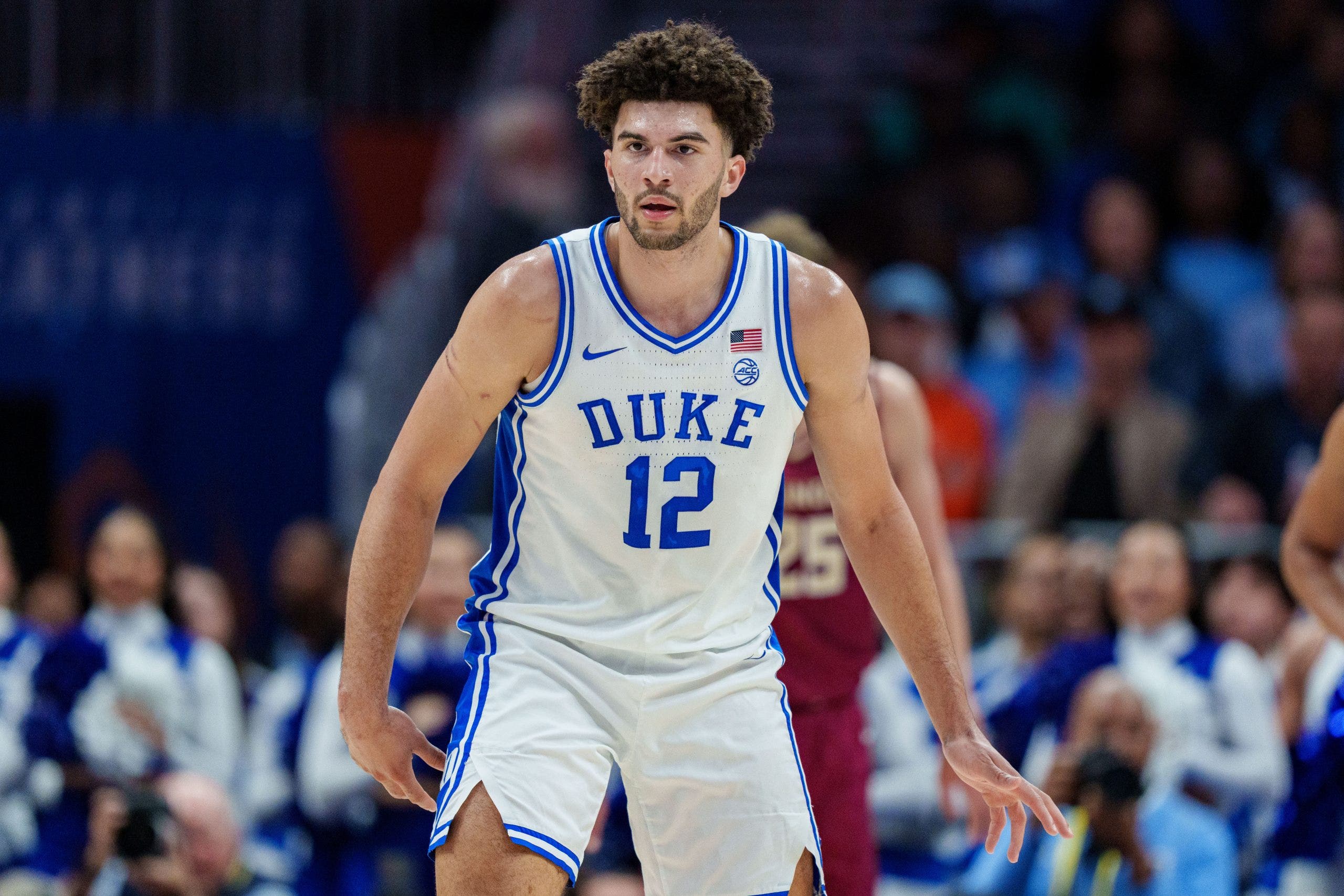
Cameron Boozer #12 of the Duke Blue Devils looks on against Florida State. (Photo by Jacob Kupferman/Getty Images)
Duke: If the Blue Devils could roll through the ACC Tournament without starting point guard Caleb Foster and starting center Patrick Ngongba II, both of whom missed the event due to injury, then there’s no reason to think they can’t navigate the East Region unscathed. That’s especially true if, or when, either player can return to the lineup for head coach Jon Scheyer.
Duke has arguably the single-best player in the country in power forward Cameron Boozer (22.5 points, 10.2 rebounds per game) and a rotation that runs nine deep when everyone is available. The Blue Devils’ two defeats this season came by four combined points to Texas Tech and archrival North Carolina, with the Tar Heels winning on a buzzer beater.
Houston: Even with four defeats over the final month of the season, Houston remains one of the most analytically sound teams in the field under head coach Kelvin Sampson. The Cougars enter the NCAA Tournament as one of only five programs ranked among the top 15 nationally in both offensive and defensive efficiency, placing them in an elite group that includes all four 1-seeds in this year’s field. The Cougars finally have a legitimate difference maker on the offensive end of the floor in freshman guard Kingston Flemings, a likely lottery pick. Flemings has a dozen 20-point games already this season.
Arizona: Not only does Arizona have perhaps the easiest path to the Final Four of any 1-seed in this year’s field, but the Wildcats are also playing better basketball than pretty much anyone in the tournament. Head coach Tommy Lloyd assembled an exceptional roster that includes legitimate size at every position — Arizona’s smallest starter is 6-foot-3 point guard Jaden Bradley — and two bonafide difference makers off the bench in shooting guard Anthony Dell’Orso (10.1 points per game) and center Tobe Awaka (9.4 points, 9.5 rebounds per game). The only things holding Lloyd’s team back from being a prohibitive national championship front-runner are a starting lineup that includes two freshmen and a Final Four drought that spans more than two decades.
Michigan: When the Wolverines traveled to Washington, D.C., for a rare, late-season non-conference matchup with Duke on Feb. 21, it felt like a showdown between the sport’s two best teams. To that point, Michigan had obliterated one opponent after another under the direction of head coach Dusty May, who launched his team to the top of the Big Ten pecking order in just his second year. And while there are a few cracks in the foundation for May and Co. to contend with in the coming weeks — the Wolverines were nearly beaten by Iowa, Ohio State and Wisconsin before falling to Purdue in the Big Ten title game — few rosters across the field will be able to handle Michigan’s unparalleled positional size.
National champion: Duke





5 Candidates Oregon Basketball Could Turn To After Dana Altman's Retirement

Oregon Men's Basketball Coach Dana Altman Announces Retirement After 16 Seasons

Senate Overwhelmingly Passes College Sports Bill Aimed At Player Pay, Transfers

UConn Huskies, Silas Demary Jr. Top Big East Preseason Polls

Ole Miss Set To Drop Nike For New 7-Year Deal With Adidas

Former Celtics, Jazz Player RJ Luis Jr. Cleared By Judge To Play For LSU

Top 25 college athletes with highest NIL valuations

Australian Star Point Guard Luke Paul Commits To Duke For 2027-28 Season

Protect College Sports Act: What It Is And What It Means





 Your Privacy Choices | Closed Captioning


