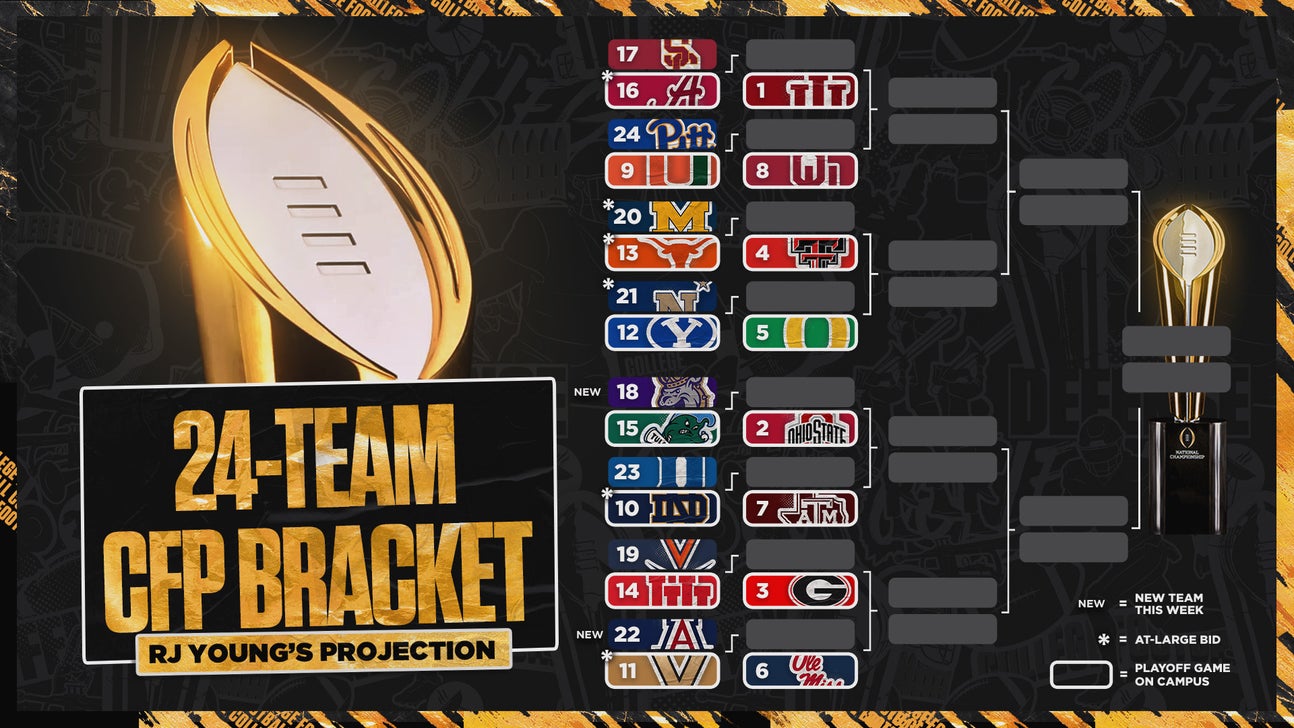
Hypothetical 24-Team College Football Playoff Bracket


It didn't have to be this way.
Upon Notre Dame finding out that it wasn't selected for the 12-team College Football Playoff, Marcus Freeman's squad announced that it was withdrawing from bowl consideration and opting out of the postseason altogether.
The Fighting Irish's disappointment in finding out they weren't one of the selection committee’s at-large picks led to them doing the equivalent of picking up their balls and going home. Because Notre Dame is like a millionaire who elects to mow their own lawn, athletic director Pete Bevecqua can allow the Fighting Irish to make a larger point by choosing not to play football at all in December.
On Monday, Bevecqua shared that the school's relationship with the ACC, with whom Notre Dame has a scheduling arrangement in football and participates as a conference member in other athletics, is now frosty at best.
"I wouldn’t be honest with you if I didn’t say that they have certainly done permanent damage to the relationship between the conference and Notre Dame," he said. "We didn’t appreciate the fact that we were singled out repeatedly and compared to Miami — not by Miami, Miami has every right to do that — but it raised a lot of eyebrows here that the conference was taking shots at us. And you know that’s just not something we chose to do. We wouldn’t choose to do that in the future, and people might disagree with us, but that’s just not something that we’d be comfortable with."
Like BYU, Vanderbilt and Utah — to name three other 10-win teams — Notre Dame has a point. Rather than needing to be compared to a rival in head-to-head competition at the sharp end of the bracket, the Fighting Irish could’ve just been one of those teams selected with an at-large berth and given the chance to host a home CFP game for the second time in as many years.
Instead, damage has been done. Notre Dame is angry. The ACC didn’t even get its conference champion in — though it would’ve in this 24-team format — and, in the eyes of many, the selection committee continues to fumble when it comes to picking the best seven at-large teams for participation in the bracket to determine the national champion.
That's because the 12-team model is outdated, and it’s time to extend the bracket so every team that should be in the national title tournament gets a shot to play for it.
In August, the Big Ten and others began "populating" the idea of an expanded College Football Playoff of 24 or 28 teams. The 24-team model, which seems to have the most support in private circles, would include:
- Four automatic qualifiers from each of the Power 4 conferences (ACC, Big Ten, Big 12, SEC)
- Two automatic qualifiers from the Group of 6 (American, Conference USA, MAC, Mountain West, Sun Belt and Pac-12)
- Six at-large selections to be made by the CFP selection committee — the only selections the committee gets to make
Which begs the question: How would the 24-team CFP look if the tournament began today?
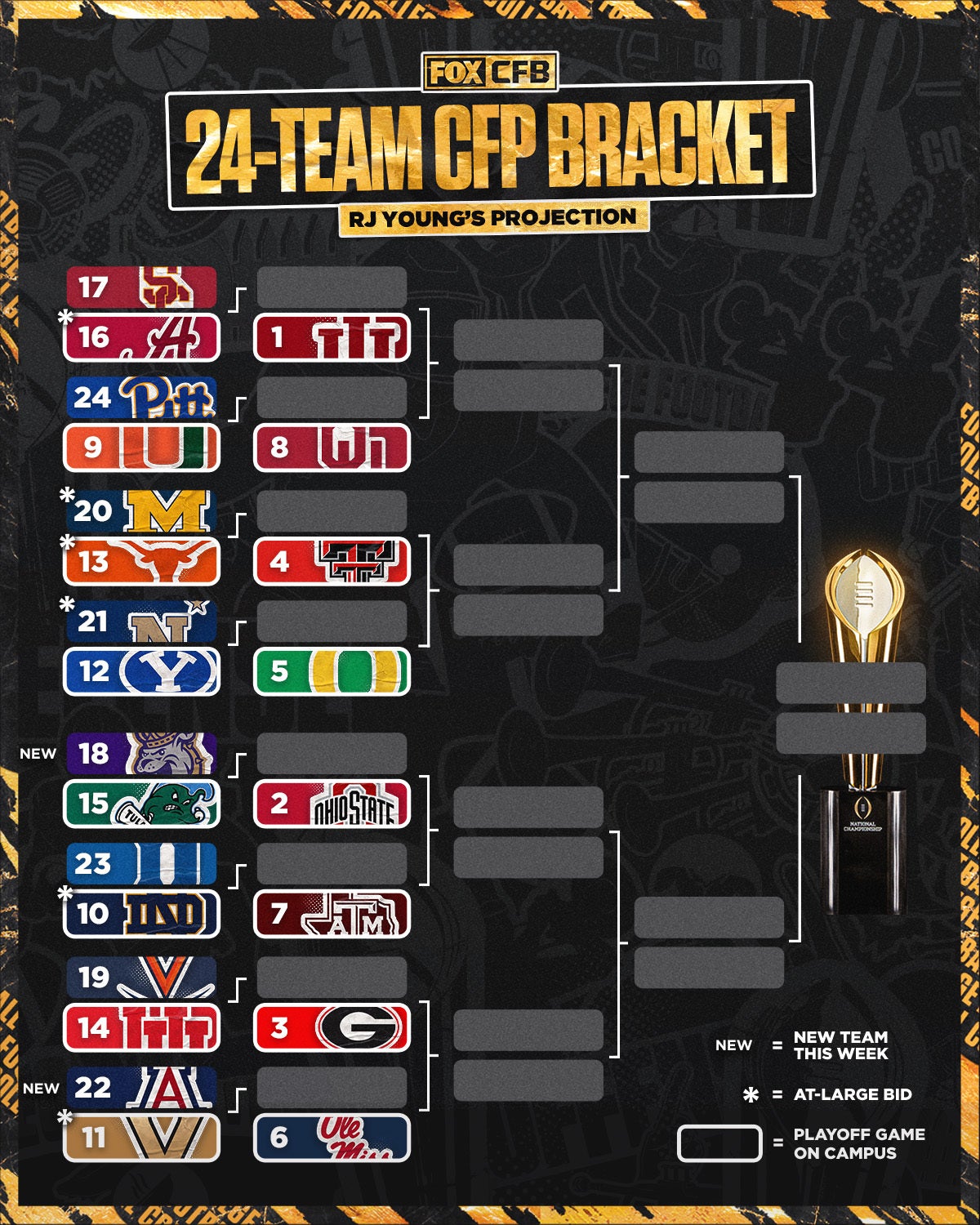
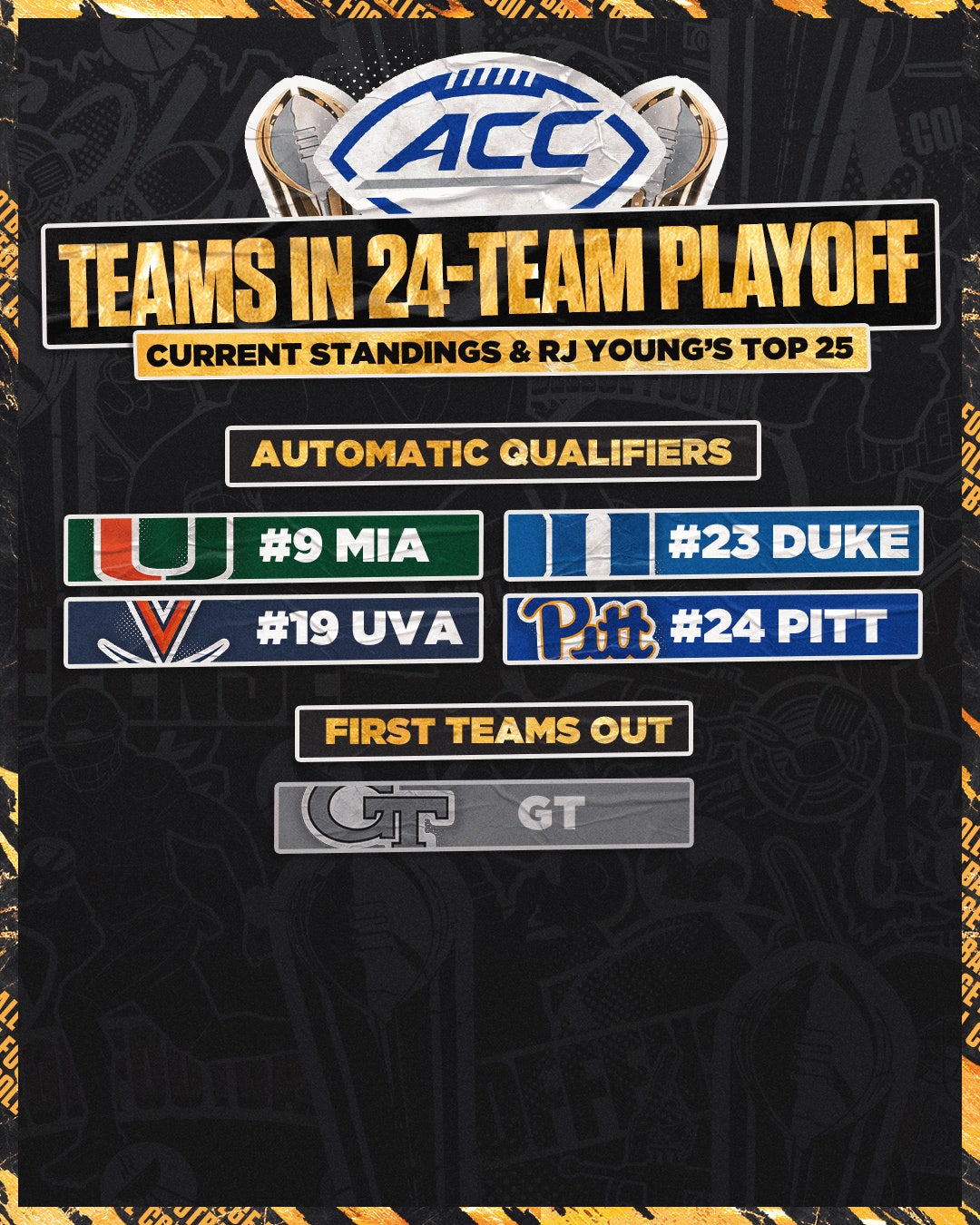
In my analysis of a 24-team format, 26 Power 4 programs — including eight from the SEC, six from the Big 12, six from the Big Ten, and six from the ACC — would still have a path to the postseason. And that’s before factoring in Notre Dame or the Group of 6 contenders.
Heading into conference championship week, teams that have proven themselves in conference play would still have just as much opportunity to win it all as No. 1 Indiana. That’s a huge win for the sport. It creates a more democratic system for determining the best team, with less debate and more certainty.
The scoreboard has more agency.
And fans have the best chance in the sport’s history to see their team play for — and win — a national title.
Here's how it works:
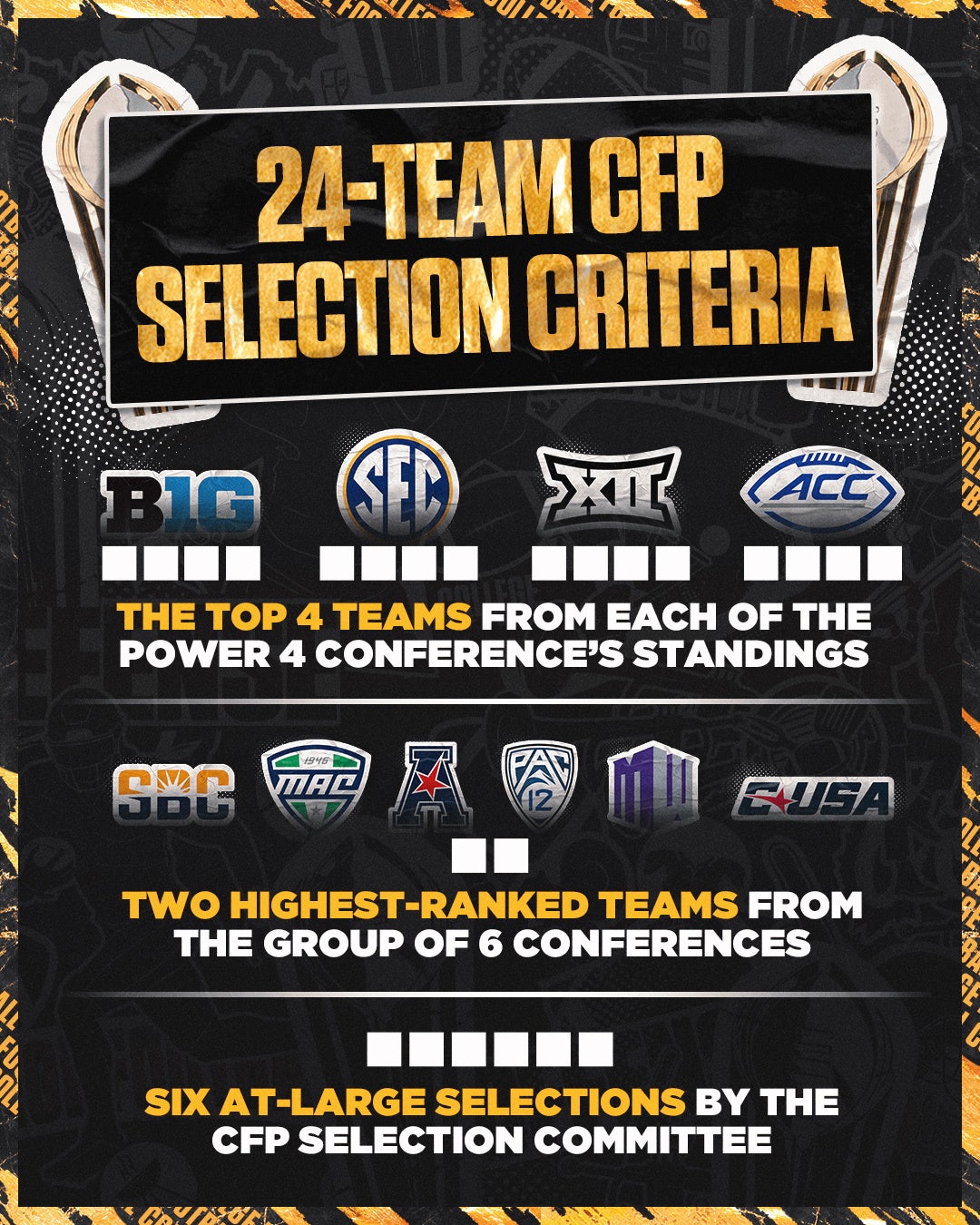
This 24-team format features 18 automatic qualifiers
I’ve set it up to look like what you’ll read below and stand in to represent the CFP selection committee.
The top four teams from each of the Power 4 conferences, based on conference standings, automatically qualify for the CFP. The two highest-ranked Group of 6 teams — not necessarily conference champions — also receive automatic bids. The remaining six at-large spots are filled at the selection committee’s discretion.
Teams are seeded by the selection committee
As the personification of the selection committee, I am encouraged to take into account head-to-head matchups, strength of record, coaching, personnel and quality of out-of-conference play when seeding teams.
Winning a conference championship is a strong indicator for a top-seeded team.
Winning a conference title does not automatically qualify a team for a higher seed than a non-conference champion.
The 24-team CFP’s greatest strength is the addition of two rounds of home games
My top 25, which you can read here, is the basis on which these seedings are assigned.
The first two rounds of a 24-team CFP would feature two rounds of home games. The four teams that advance through the opening rounds will play their next game at a New Year’s Six Bowl in a neutral site semifinal.
Teams seeded No. 1 to No. 8 get a bye and a home game. Teams seeded No. 9 to No. 16 each open the tournament with a home game. Teams seeded No. 17 to No. 24 each must play on the road twice to advance to the neutral site quarterfinals.
I need to summarize this, because it’s the best aspect of the 24-team CFP: 16 different campuses host home playoff games.
With that, here is a look at the latest 24-team CFP bracket:
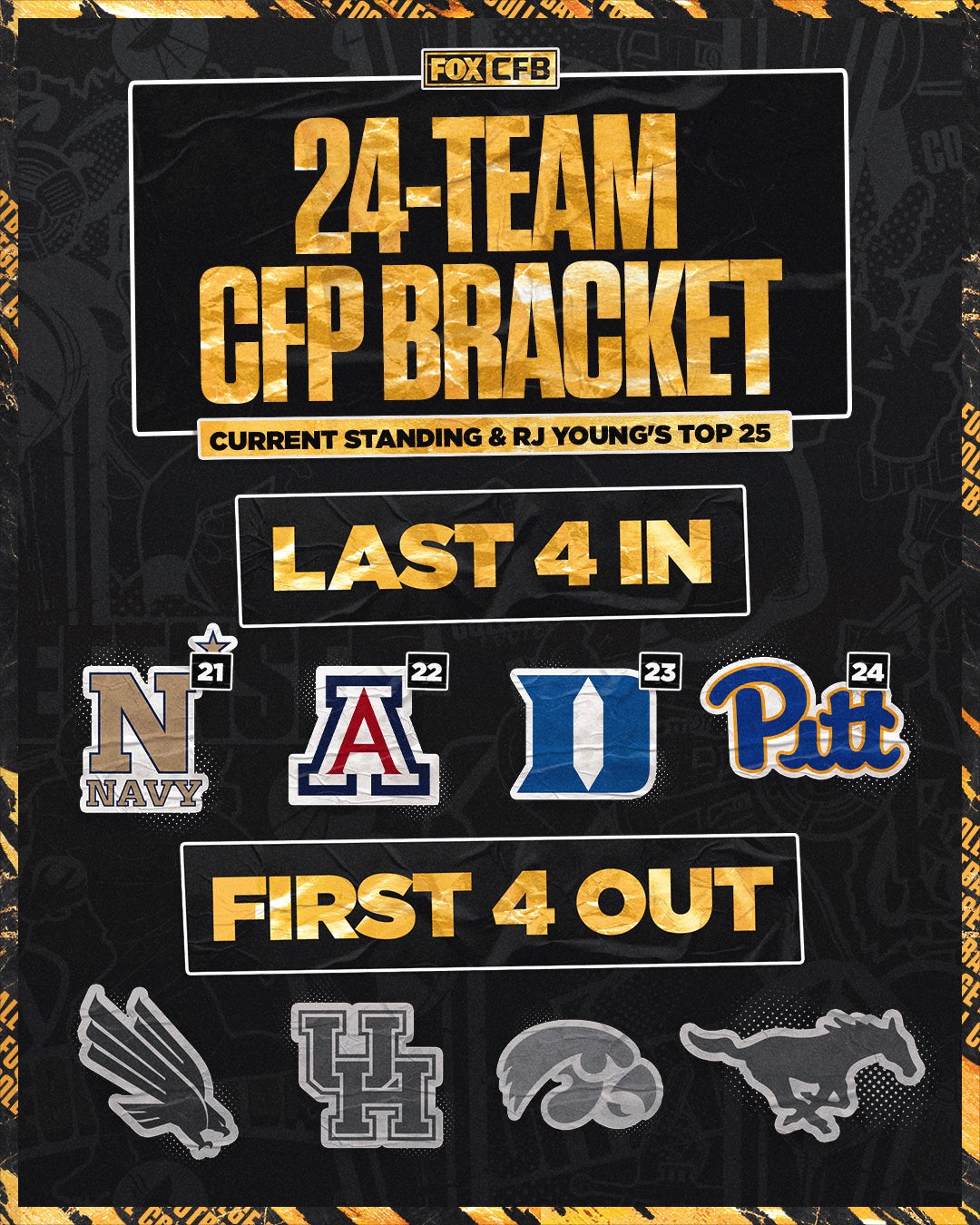
ON THE ROAD
24. Pittsburgh (8-4), ACC, Previously Ranked: 22
Pitt benefits from the criteria that allows entry to the top four teams in each Power 4 conference into the CFP according to league standings, even though the Panthers aren’t among the nation’s top 25 teams.
23. Duke (8-5), ACC, Previously Ranked: 24
It's a shame the ACC champion didn't get invited to the CFP because it had five regular-season losses, even though Duke qualified for the ACC title game by having the league's best winning percentage against conference opponents.
22. Arizona (9-3), Big 12, Previously Ranked: NR
Arizona is another team that benefits from the top four teams in each Power 4 conference getting into the CFP.
21. Navy (9-2), Group of 6, At-Large, Previously Ranked: 20
The Midshipmen have delivered one of the best stories of the past two seasons. Despite matching North Texas and Tulane in conference wins (seven), Navy missed out on the American title game after losing the tiebreaker to UNT. In a 24-team model, Navy likely would have become the first service academy invited to the CFP.
20. Michigan (9-3), Big Ten, At-Large, Previously Ranked: 18
The Wolverines’ impressive nine-win season with a true freshman quarterback ends without a berth in the CFP in a 12-team format, but the selection committee could use one of its at-large selections to grant them entry into the 24-team format, especially as Michigan finished tied with USC in the league standings.
19. Virginia (10-3), ACC, Previously Ranked: 17
Virginia had to defeat Duke to gain entry into the CFP and couldn't get it done in overtime. This means the ACC’s regular-season champion is watching other teams play for the right to compete for a national title.
18. James Madison (12-1), Group of 6, Previously Ranked: NR
JMU boxed out not just the ACC champion but Notre Dame and BYU as well — only because the selection committee ranked them in its top 25. As one of the five highest-ranked champions, they took the 12th and final spot in the CFP.
17. USC (9-3), Big Ten, Previously Ranked: 16
USC has never made the CFP, and a Lincoln Riley team has never beaten a top-10 opponent at USC. In this model, they’d break into the CFP and, with a win, would have the chance to earn Riley’s first victory against a top-10 team.
16. Alabama (10-3), SEC, At-Large, Previously Ranked: 13
It’s hard to imagine a three-loss team making the 12-team CFP, especially one that lost to a 5–7 Florida State team.
FIRST-ROUND HOME GAME
15. Tulane (11-2), Group of 6, Previously Ranked: 21
Tulane managed to wrench a CFP spot away from Notre Dame and/or BYU by being one of the sport's highest-ranked conference champions. The Green Wave will make their first trip to the CFP before brand names like USC, Wisconsin or Florida make theirs — a sign of the times.
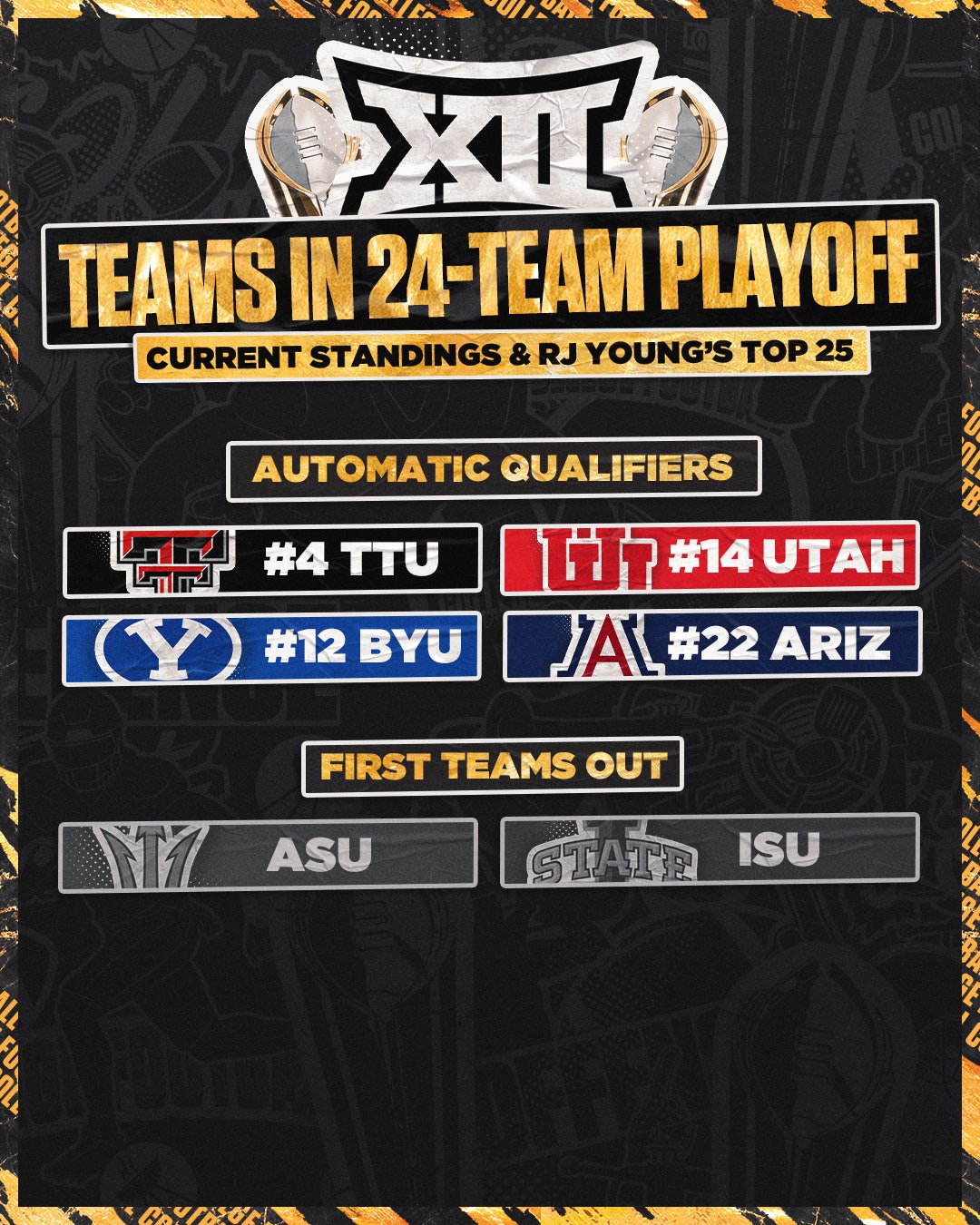
14. Utah (10-2), Big 12, Previously Ranked: 15
Among 10-win Power 4 teams, no program has received less attention than Utah. Even with QB Devon Dampier throwing for more than 2,100 yards and rushing for nearly 700, the Utes won't sniff the CFP in its 12-team format.
13. Texas (9-3), SEC, At-Large, Previously Ranked: 9
With a 3-2 record against top-10 teams and an embarrassing loss to 3-9 Florida, not even a win against previously undefeated Texas A&M could get the Longhorns into the 12-team CFP.
12. BYU (11-2), Big 12, Previously Ranked: 10
Like Notre Dame, BYU has every right to be disgusted with being passed over by the selection committee. The Cougars' 11-1 season featured two losses, including one to the No. 4 team in the country (Texas Tech).
11. Vanderbilt (10-2), SEC, At-Large, Previously Ranked: 14
Vanderbilt, like Miami, is another 10-win team that deserves a shot at the national title. Wins over ranked Missouri and Tennessee, combined with QB Diego Pavia’s remarkable season — more than 3,100 passing yards, 800 rushing yards, and 36 total touchdowns — warrant at least one more opportunity to see just how good the Dores are.

10. Notre Dame (10-2), Independent, At-Large, Previously Ranked: 12
Notre Dame typically benefits tremendously from being independent under most CFP formats, with no conference schedule to navigate and a flexible arrangement — for now — with the ACC. Notre Dame started the season 0-2 before ending the regular season on a 10-game winning streak filled with dominant victories to close out the year strong.
9. Miami (Fla.) (10-2), ACC, Previously Ranked 11
Miami is exactly the kind of team fans want to see in the CFP — and this team has something to prove. The Hurricanes started their season strong before hitting a speed bump mid-season. Losses to Louisville and SMU put their CFP hopes in doubt, until the committee changed its mind at the last minute and decided to put the Canes in over ND.
FIRST-ROUND BYE, SECOND-ROUND HOME GAME
8. Oklahoma (10-2), SEC, Previously Ranked: 7
OU is one of two teams in FBS to have five wins against ranked opponents (Georgia) and is tied with Texas A&M for the most sacks in FBS (41.0).

7. Texas A&M (11-1), SEC, Previously Ranked: 6
Since Week 8, Texas A&M ranks in the top 10 among Power 4 teams in scoring (38.0 PPG), big plays (61), sacks (20.0) and point differential (+87).
6. Ole Miss (11-1), SEC, Previously Ranked: 5
Ole Miss ranks fifth in FBS and third among Power 4 teams in total offense with 5,977 yards. The Rebels have scored 30-plus points in six consecutive games.
5. Oregon (11-1), Big Ten, Previously Ranked: 4
Oregon is one of three Power 4 teams to average more than 38.0 PPG and hold opponents to less than 15.0 PPG (Indiana, Texas Tech). The Ducks have also won 12 consecutive road games, the longest active streak in FBS, and is 17-1 in Big Ten play since joining the conference last season.
4. Texas Tech (12-1), Big 12, Previously Ranked: 8
Texas Tech is second in FBS and first among Power 4 teams in big plays (rushes of 10-plus yards and receptions of 20-plus yards) at 141 and also leads the country in point differential at +410.
3. Georgia (12-1), SEC, Previously Ranked: 3
Georgia is one of three teams to have two wins against teams that are currently ranked in the top 10 of the CFP rankings, having beaten Ole Miss and Alabama; the others are Texas Tech and Indiana.
2. Ohio State (12-1), Big Ten, Previously Ranked: 1
Ohio State is the only team in FBS holding opponents to less than 10.0 points per game at 8.2 and is on pace to become just the third team in the past 35 years to hold opponents to less than 9.0 PPG in a single season.
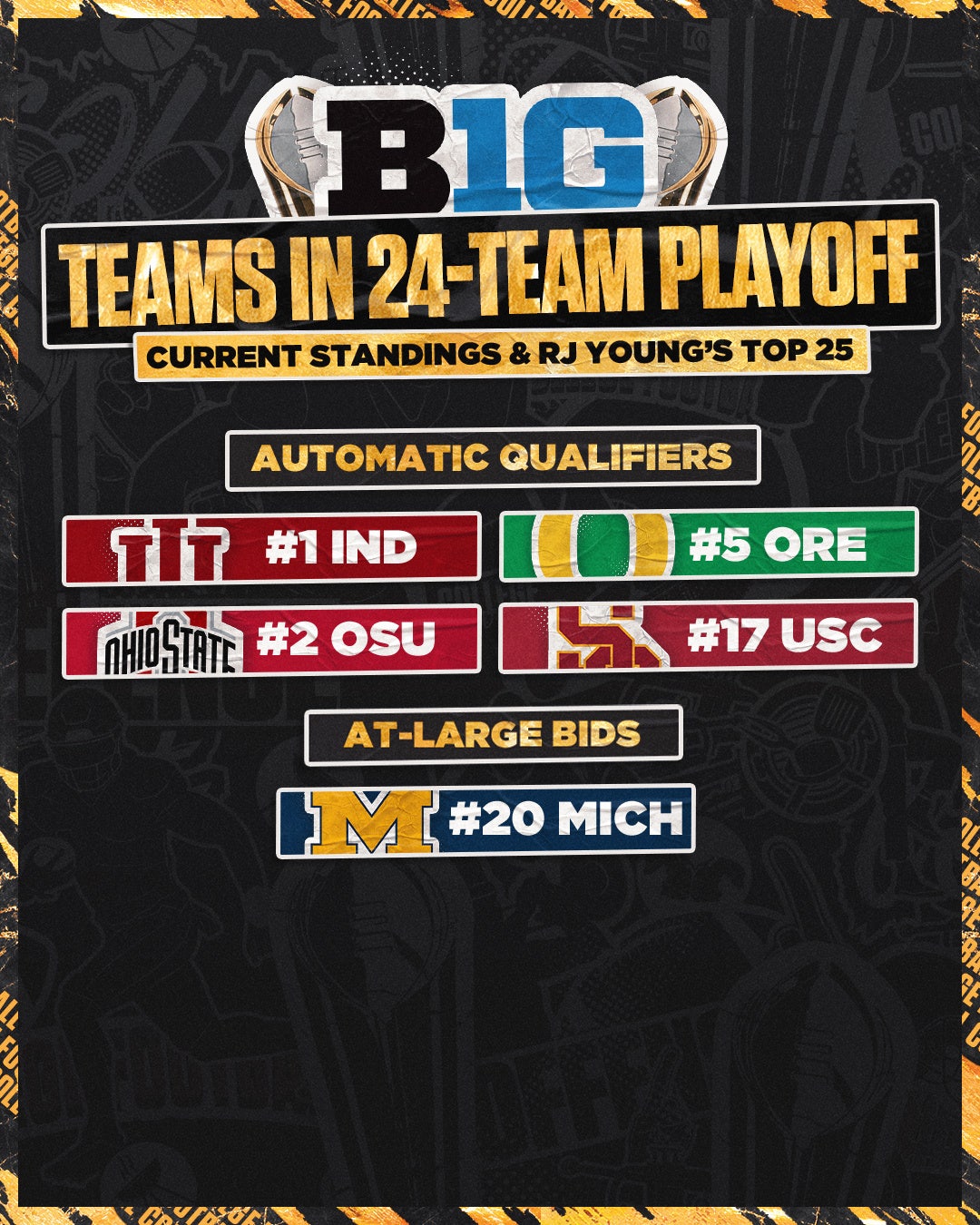
1. Indiana (13-0), Big Ten, Previously Ranked: 2
Indiana now has 13 consecutive wins, which is the longest active win streak in FBS, and is the only undefeated FBS team in the country.
Above is how the CFP would look if it ended today, but there will be changes and teams not included in the bracket still have a chance to earn entry into the tournament.
Teams on the bubble have taken on losses, but not enough for them not to crawl into the top quarter of their conference, and, with 10 or even nine wins in the regular season, could find themselves in an automatic qualifier spot.
Every game matters. Rivalry games matter more.
RJ Young is a national college football writer and analyst for FOX Sports. Follow him @RJ_Young.
Want great stories delivered right to your inbox? Create or log in to your FOX Sports account, follow leagues, teams and players to receive a personalized newsletter daily.

UNC Football Under Investigation By College Sports Commission

Top 25 college athletes with highest NIL valuations

College Football Predictions: Joel Klatt's Favorite Over/Under Win Total Bets

TCU's past greats love that Frogs are getting the title shot that they never did

2027 NFL Draft Odds: Arch Manning Favored To Go No. 1

2025 Big Bets Report: Bettor Correctly Picks Every Week 1 Game, Wins $382k

2025 College Football Week 4 Odds: Chris 'The Bear' Fallica's Expert Picks, Best Bets

Ranking the 10 national champions during the four-team College Football Playoff era

Lane Kiffin Admits In-Season Coaching Carousel Needs Guardrails for Future Coaches



.vresize.40.40.medium.0.png)



-
UNC Football Under Investigation By College Sports Commission
Top 25 college athletes with highest NIL valuations
College Football Predictions: Joel Klatt's Favorite Over/Under Win Total Bets
-
TCU's past greats love that Frogs are getting the title shot that they never did
2027 NFL Draft Odds: Arch Manning Favored To Go No. 1
2025 Big Bets Report: Bettor Correctly Picks Every Week 1 Game, Wins $382k
-
2025 College Football Week 4 Odds: Chris 'The Bear' Fallica's Expert Picks, Best Bets
Ranking the 10 national champions during the four-team College Football Playoff era
Lane Kiffin Admits In-Season Coaching Carousel Needs Guardrails for Future Coaches




 Your Privacy Choices | Closed Captioning


