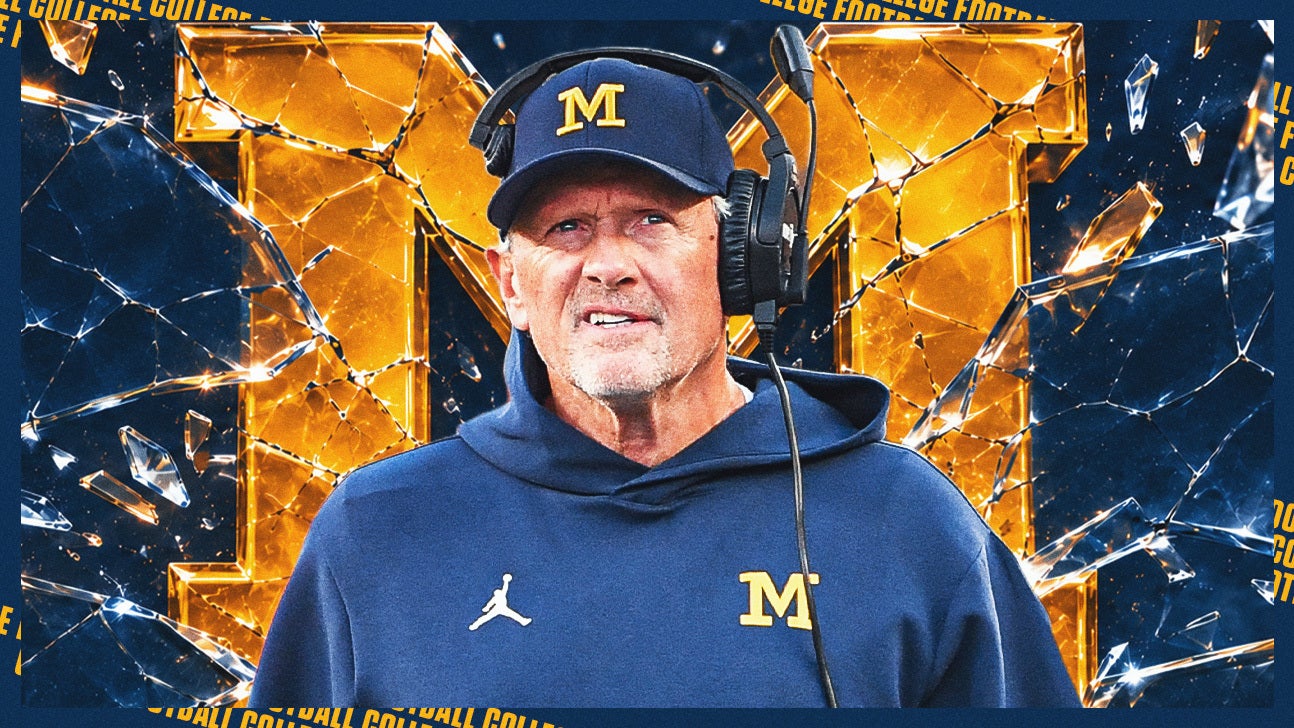
What Is Going On At Michigan? Inside The Chaos Surrounding Kyle Whittingham


There was no mincing words, no softballs, no easing into the usual Monday press conference.
Michigan head coach Kyle Whittingham is a man under fire. A 6-5 start to his first season in Ann Arbor will bring that kind of external turmoil and uneasiness among fans, donors and college football pundits.
But what transpired last week was closer to a White House press briefing than an inane college football presser. It painted a picture of a coach hired to bring stability, yet one who has led to a litany of missteps, misalignment and misunderstanding at a place that expects championships.
"There were some things to overcome," Whittingham said in ending a diatribe about the factors stacked against his squad in Year 1. "But all that sounds like excuses. It all falls on me that we haven't got enough wins and where we want to be. But if you're looking for why, there's some things out there that have been challenging for us."
There is no getting past the broader sentiment at Michigan — Whittingham’s first season as head coach of the maize and blue has been a mess.

Kyle Whittingham is 6-5 in his first season at Michigan. (Photo by Ali Gradischer/Getty Images)
The Wolverines have cycled through quarterbacks by the week, including high-priced, ex-No. 1 overall recruit Bryce Underwood. Offensive coordinator Jason Beck — who came with Whittingham from Utah to take the same role — was fired just nine games into the season after guiding an offense that ranked almost dead-last in the FBS.
This week, Whittingham misspoke when referring to the Big House, alluding to it first as Rice-Eccles Stadium — Utah's home venue — following a monumental victory over previously undefeated UCLA on Saturday.
He also noted during a press conference on Monday that the Wolverines have shelved the "Beat Ohio" moniker for a certain section of practice that had been nicknamed as such during the Jim Harbaugh administration.
As isolated incidents, those might seem meaningless. Perhaps they are. But during a season in which Michigan fans have been incensed with the on-field product, they only further fan the flames around a coach trying to find his footing at one of the bluest of blue bloods.
The fan base is irate at the entire affair. A newly minted president is slated to begin work on Dec. 1. Her athletic director hire has already crashed out in spectacular fashion. Whittingham and his future are at the center of it all.
It begs a simple question: What is going on at Michigan?
"Kyle spent his entire career at Utah," former Wolverines tight end and Big Ten Network analyst Jake Butt told me. "He knows the community. He knows the recruits. He knows the identity. He knows his staff, the AD, the president.
"And then he gets to Michigan and especially what he inherited — chaos, drama, AD turnover, president turnover, etc. — this is taking time for him to learn. But the problem with being the head coach at Michigan is there's no time. You're expected to win now."
Who's In Charge At Michigan?
There has not been an officially declared timeline for a deep inspection of Michigan football.
The clock behind closed doors? It’s been ticking — albeit in a messier form of late than even the on-field product.
Michigan shocked stakeholders across the broader college football landscape with the splashy hire of Texas A&M’s Trev Alberts, a former first-round NFL draft pick and Nebraska administrator who was expected to become one of the highest-paid athletic directors in the country.
The search was initially expected to finish sometime during the week of Thanksgiving or perhaps after, sources said. But pressure had mounted. Momentum shifted.
Calls were made to several sitting Power Four athletic directors. Michigan had a signed memorandum of understanding with Alberts by around 8 p.m. ET on Nov. 17.
And then it came crashing down.
News leaked on Tuesday morning that Alberts would no longer become the athletics director at Michigan due, at least in part, to comments he made during a deposition related to an inappropriate relationship between an athlete and coach during his time at Nebraska.
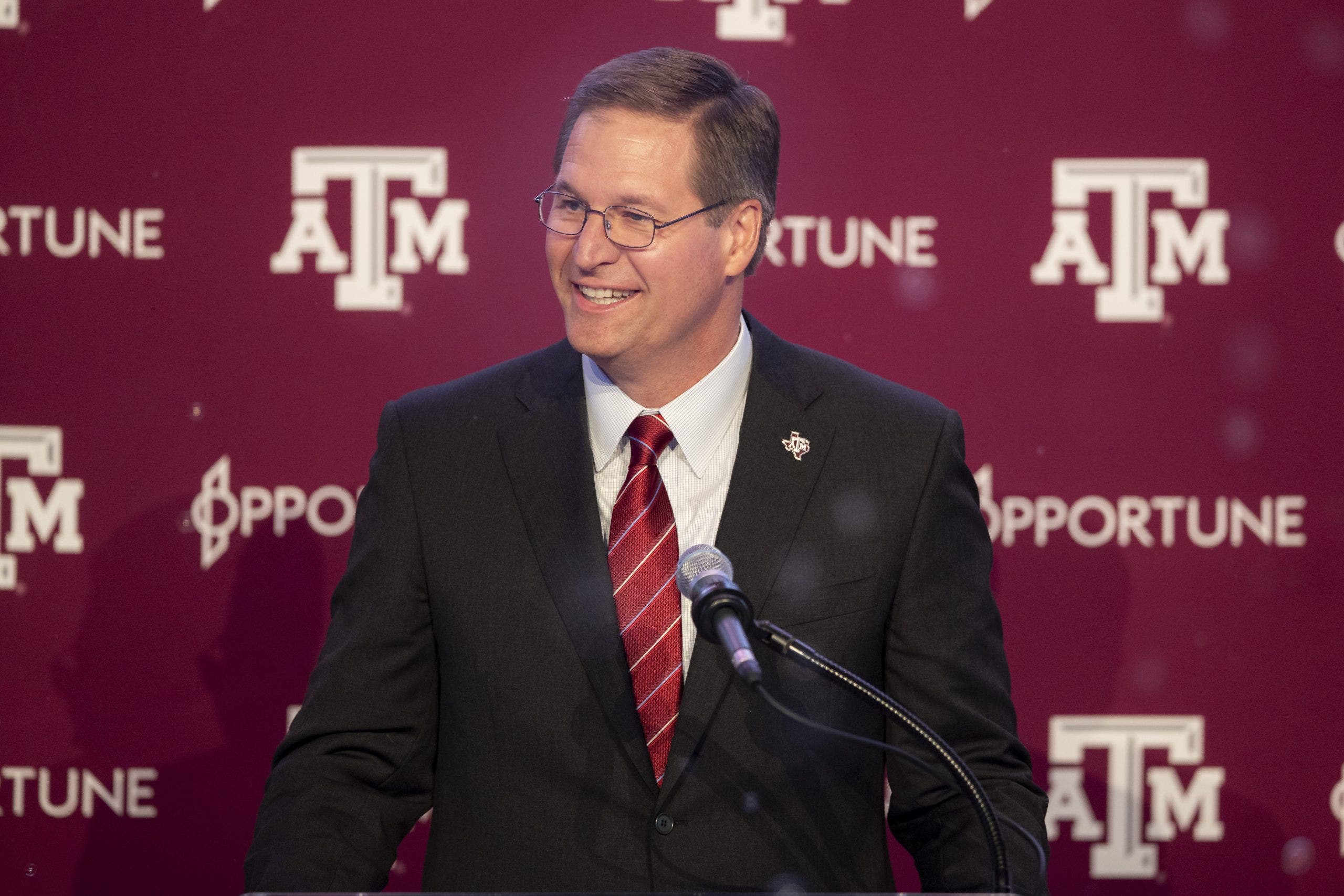
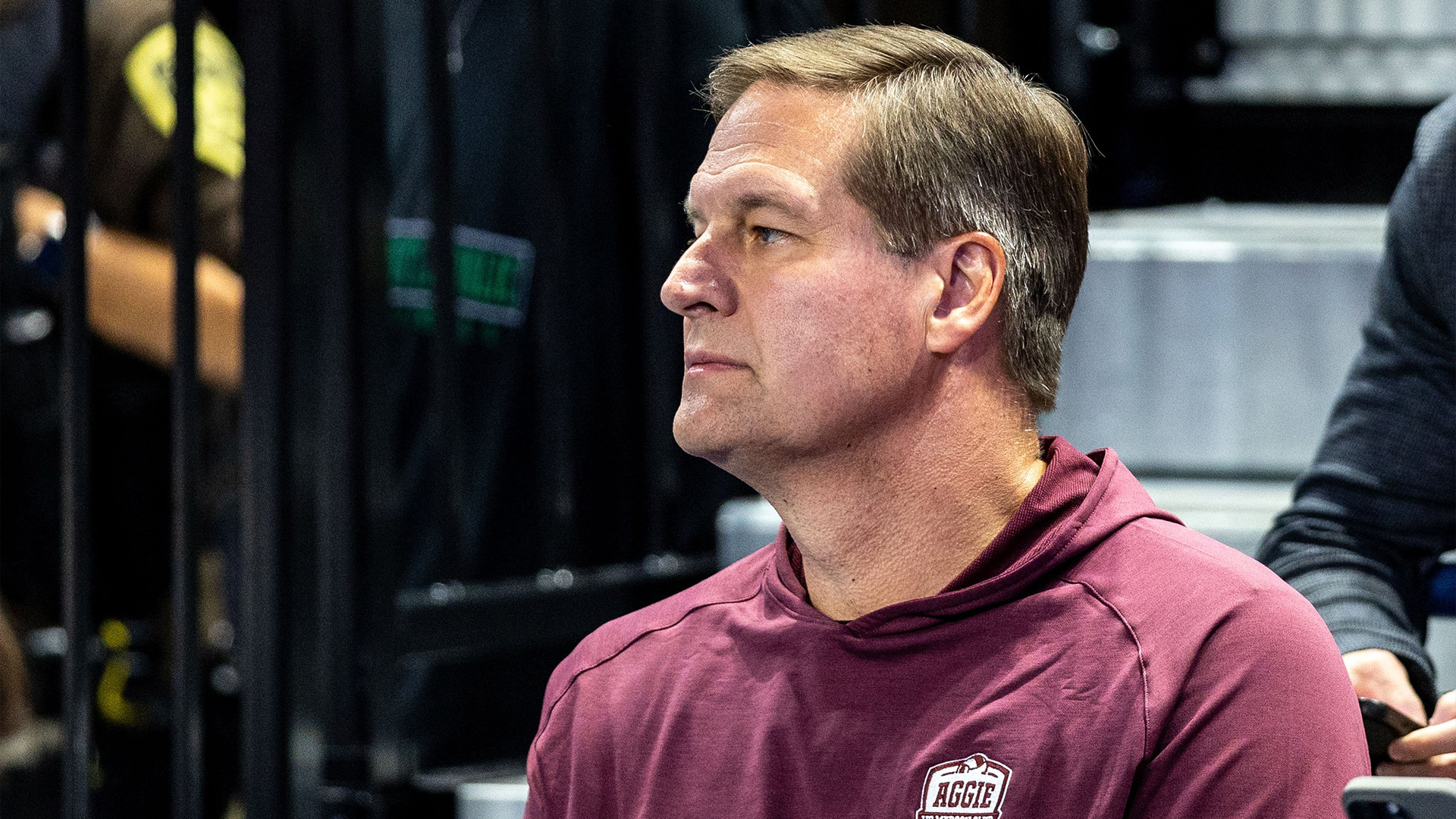
After agreeing to become Michigan's athletics director, Trev Alberts was informed he would not be the Wolverines' next AD. (Ishika Samant/Houston Chronicle via Getty Images)
Alberts was named in a 2024 lawsuit filed by former Nebraska basketball player Ashley Scoggin. The suit contends Scoggin was dismissed from the program when the university discovered a sexual relationship between her and assistant coach Chuck Love.
The legal proceedings have been the subject of ample coverage in Nebraska, but drew a more national focus when reporter David Covucci's muckracking site, FOIABall, reported that Alberts said "it just depends" when asked if it was acceptable for coaches to have sex with players as part of a deposition.
Alberts' comments prompted an emergency meeting of Michigan's Board of Regents over the last 48 hours, at which time incoming Michigan President C. Cybele Raver would not move forward with the hire.
Multiple sources familiar with the search told me Raver — who won’t officially take office for another week — was central in the process of identifying and attempting to hire Alberts, while the search itself was characterized as "bulletproof" and conducted in conjunction with the firm TurnkeyZRG.
Wherever the ultimate culpability in the Alberts fiasco lies, it amounts to the same issue: That Michigan may ultimately be on the hook for $17 million in buyout money for a person who didn't work a single day at the school.
"This hire for the new AD was not donor-driven," said an industry source familiar with the discussions, who spoke on the condition of anonymity given the sensitivity of the talks. "I would say that was president-driven."
One other wrinkle in the ongoing leadership shuffle atop the university is that sources anticipate Michigan will explore hiring something akin to a chief revenue officer in the coming months whenever it can finalize its athletic director situation. That role is expected to report directly to the president and work alongside the new athletics director.
"I tell people all the time, Michigan is a gold mine, but they've been operating at 60% for so long," said a second industry source, who spoke on the condition of anonymity given their direct dealings with the school. "They need to let the Bo Schembechler era, the ‘Michigan man’ thing go and figure out how to be a modern powerhouse."
A Leadership Vacuum In Ann Arbor
Michigan, like its blue-blooded brethren, is a place where palace intrigue reigns supreme.
The perpetual changes in leadership in Ann Arbor from coaches to the university itself that loom over the Whittingham situation could fill a novel.
Raver is slated to become the school’s sixth president since 2012, assuming she survives the Alberts fallout. That comes on the heels of Santa Ono’s rocky tenure and the departure of his replacement, Syracuse’s Kent Syverud, who was diagnosed with cancer shortly after his appointment.
That’s not to speak of the off-the-field issues.
The Harbaugh era’s dramatic ebbs and flows are well documented. That said, they're instructive in understanding the controversy Michigan football has been embroiled in over just the last three years, from NCAA investigations to the Connor Stalions sign-stealing scandal to Sherrone Moore’s arrest and the subsequent investigation.
Michigan’s Board of Regents also has long been a point of contention. Sources familiar with its dealings paint a portrait of a group that has been heavy-handed given the lack of top-level leadership across the university.
Armed with a new president who some hoped would receive more unilateral power in decision-making, Alberts would be the second step in providing stability — at least until that hire imploded on Tuesday morning.
"Show me another university program in so much disarray," author John U. Bacon, who has written a number of books about the Michigan football program, told me. "It's hard to imagine. It's not clear what they should do, and it's not clear what they're going to do."

Michigan head coach Kyle Whittingham is 3-5 in Big Ten play this season. (Photo by Aaron J. Thornton/Getty Images)
Where the responsibility falls for the Whittingham era's missteps specifically depends on who you ask.
Sources around Michigan and throughout the college football industry levy blame on a combination of the head coach, outgoing athletics director Warde Manuel — who is scheduled to step down at the end of the year following an investigation into Moore’s transgressions — and the power vacuum at the top end of university administration that’s persisted for the better part of a decade.
Michigan did not make Manuel or Whittingham available when contacted for this story.
"Michigan is a different animal, and, I believe, more difficult than any other place to coach," added attorney Todd Anson, who was intimately involved in Harbaugh’s hiring at Michigan and remains close to the former head coach and the school. "The friendly fire is worse than the enemy fire every day, and the difference between it and the SEC counterparts is they’re unified around football. Michigan isn't."
Whittingham’s Future And What Comes Next
That brings it back to Whittingham.
The former Utah head coach was locked in a struggle with administration and longtime head coach-in-waiting Morgan Scalley during his final days heading the Utes. Retirement loomed until Moore’s tenure unraveled and Michigan found itself in need of a coach.
Whittingham’s hire was lauded for its potential stability. He would be the adult in the room that the Wolverines lacked for years.
Reality hasn’t mirrored that optimism — even after Saturday's win over UCLA.

Head coach Kyle Whittingham led Michigan to a memorable 18-16 win over UCLA. (Photo by Jaime Crawford/Getty Images)
Ousting Whittingham and his entire staff would cost Michigan in the neighborhood of $50 million. That’s before factoring in roster retention and hiring a new staff.
LSU shelled out somewhere north of $100 million in the Lane Kiffin transaction last year. Michigan might have to come close to that figure if it makes a move just a year after firing Moore following his off-the-field transgressions.
"It takes $50 million just to start over," Bacon added. "... People have pointed out that [tech magnate] Larry Ellison, one of their benefactors, is worth many billions of dollars. He doesn't even feel this money.
"You know what? He didn't get there by being stupid or wasting it. This is a waste of money."
Coaching industry sources have tempered expectations about this year’s carousel. Plenty are prognosticating a slower cycle given a perceived dearth of high-end candidates from the Group of Six and only a handful of ascendant sitting head coaches.
Some logical names for stakeholders in Ann Arbor, too, may already be off the board.
Jake Dickert, a Wisconsin native with deep ties to the Midwest, inked an extension with Wake Forest in recent weeks and has the Demon Deacons set to play in this year's ACC championship game.
UCLA’s Bob Chesney is in the thick of a Big Ten title run and reportedly in talks about an extension. Leaving after just one year might prove a challenge optically.
Kalen DeBoer has long been seen as the dream replacement for Lincoln Riley if USC made a move, but trading Tuscaloosa for Ann Arbor might prove an equally hard sell given Alabama’s College Football Playoff positioning.
"Everybody is going to do what Wisconsin did — sit tight one more year, wait for rules and regulations to get resolved and put a bunch of money into their programs," a third industry source familiar with the coaching market told me. "When that gets worked out, it’s going to be a slaughterhouse next year on the coaching carousel."
But Michigan may not be able to wait that long, even if its administrative structure remains in flux.
The school has a president. It no longer has an athletic director. It also has Ohio State on Saturday in Columbus.
The Grim Reaper may well be lurking upon the Wolverines’ return home.
Everyone in college football is craning their necks for a glance.




Big Ten Championship Scenarios: How UCLA, Indiana, Oregon, Iowa, USC, Ohio State Can Clinch

2026 College Football Rankings: UCLA, Indiana Tank, Tennessee Joins Top 10

College Football Rankings: SEC Teams Surge As The Big Ten Is Collapsing

AP Top 25: Texas, Tennessee, USC Among Big Risers; Ohio State, UCLA, Indiana Drop

Predicting The 12-Team College Football Playoff Bracket Ahead Of Week 13

NFL, CFB Weekend Recap: 'We've Been Cooked Like A Thanksgiving Turkey'

Florida State Reportedly Hires Georgia DC Glenn Schumann As Head Coach

UCLA QB Ty Dieffenbach Could Return For Postseason, With Chance To Start Vs. USC

Why Ohio State Has Become The Most Disappointing Team In The Big Ten

'I'll Cut Off My Right Arm': Inside Jim Harbaugh's Obsession With Beating Ohio State





 Your Privacy Choices | Closed Captioning


