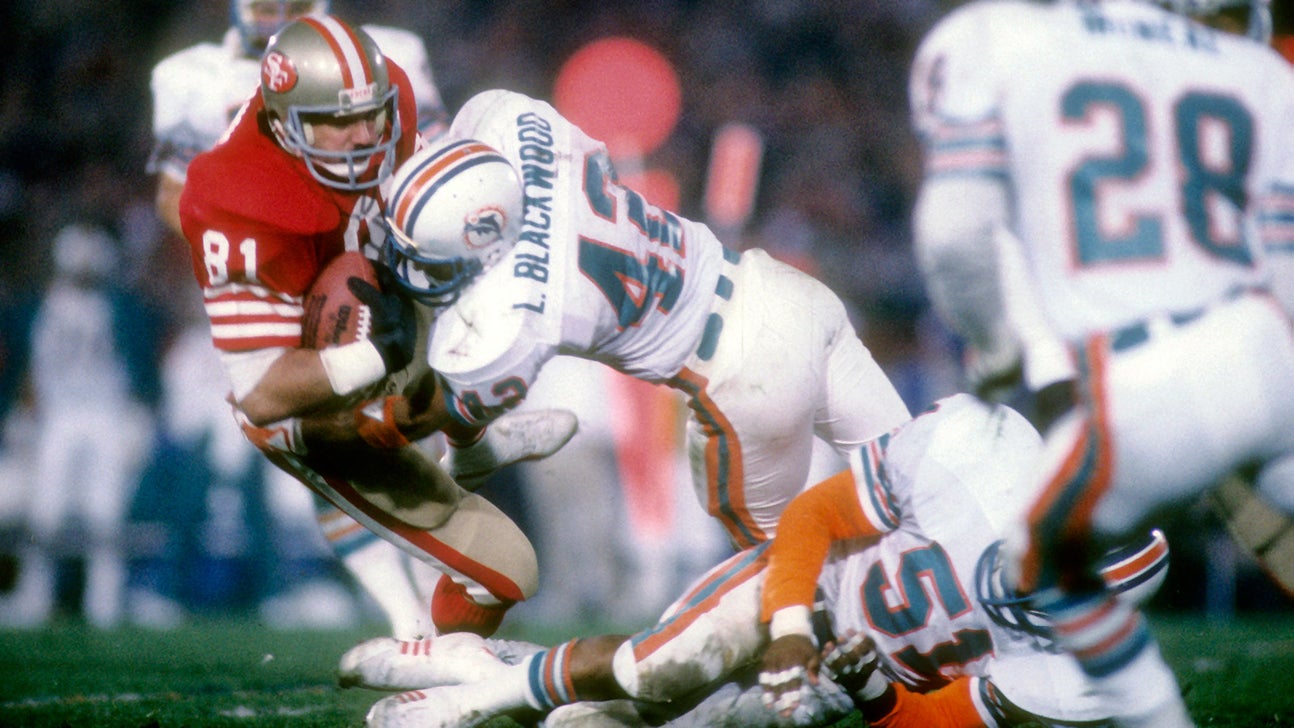
A 30-year drought: Dolphins through the decades since Super Bowl XIX


It's been 30 years since the Miami Dolphins made their last Super Bowl appearance in a 38-16 loss to the San Francisco 49ers in Super Bowl XIX on Jan. 20, 1985.
At this point, though, it would almost be fitting to add B.C. after that date given how long the three-decade drought has felt to both Dolphins players and fans.
The organization's two Lombardi Trophies, which are displayed proudly in the front lobby of their training facility, serve as reminders of the glory that continues to elude South Florida's once-storied NFL franchise.
Miami, which hasn't reached the playoffs since 2008, has a long way to go if it hopes to shake its current state of mediocrity and return to the days when the Dolphins were considered among the NFL's best.
What has happened the past 30 years? Why have the Dolphins failed season after season since Dan Marino's second season in the league?
Here is a look at how the Dolphins have fared in the decades since their last Super Bowl appearance from 1985 to the present...
1985-1989
Following Miami's 38-16 loss to the San Francisco 49ers in Super Bowl XIX, few could have imagined that future Hall of Famers Marino and coach Don Shula would never reach the promised land again.
In 1985, the Dolphins appeared poised for a return trip to the Super Bowl. The only team to defeat the Chicago Bears during the regular season and host of the AFC championship game, a much-anticipated rematch in Super Bowl XX was spoiled by the rival New England Patriots 31-14.
It's one of only two trips the Dolphins have made to the AFC championship game since their Super Bowl appearance. It was also the last playoff game for Miami in the '80s as the team would fail to eclipse eight wins in a season until 1990.
"We all felt there'd be a lot more Super Bowls for us," Shula told the Miami Herald in 2013. "The fact we didn't get back was one of the greatest regrets of my life."
Led by Marino, the Dolphins offense never finished worse than seventh in the league in total yards from 1985 to 1989, and was typically only matched by Joe Montana's 49ers and Boomer Esiason's Bengals in terms of proficiency and excitement.
Unfortunately, Miami's defense couldn't match the success of its offense, never finishing better than 23rd in total yards allowed during the same time span.
In the end, Miami would finish the 1989 season having failed to qualify for the playoffs for four consecutive seasons, tying the longest such record in franchise history at the time. This was also the longest such streak for Shula in his storied coaching career.
1990-1999
After closing out the '80s on a sour note, the Dolphins returned to the playoffs in 1990 to kick off the most successful decade in franchise history in terms of reaching the postseason.
It was during this time that, according to wide receiver O.J. McDuffie, who spent his entire NFL career with the Dolphins from 1993 to 2000, the team established a newfound Super Bowl-or-bust mentality as Miami reached the playoffs a franchise-record seven times.
"Every single year we thought we had a chance," McDuffie told FOXSportsFlorida.com "You've got coach Shula, you've got Dan Marino and a lot of other (good) guys on that team, especially on our defense at that time. We always thought we had a chance.
"We always counted on making the playoffs. We knew we were going to make the playoffs. It wasn't even a question like it's been lately. We never said 'hopefully we can get in' or 'hopefully we can get a wild card'. We always knew that we were going to get to the playoffs. That was our mentality and we always thought we had a team good enough to make it to the Super Bowl."
Unfortunately, Miami's championship dream of the '90s never came to fruition as the Dolphins reached the AFC championship game just once, falling to the Buffalo Bills 29-10 in 1992.

The Dolphins couldn't slow down the Bills in the 1992 AFC Championship game.
Following the 1995 season, Jimmy Johnson, who had won a collegiate national championship with the University of Miami and two Super Bowls with the Dallas Cowboys, replaced Shula as Miami's head coach.
So what was Miami's biggest hindrance in reaching the Super Bowl during a decade in which they frequently came so close?
"It was one thing or another," said McDuffie. "One time our defense wasn't good enough and another time our offense wasn't good enough. Nowadays in order to get there you have to have a combination of the two. We would seem to have a great offense at times and the defense would give up too many points or we had a great defense and the offense didn't score enough."
Only once did Miami rank in the top 15 in both total offense and defense in the same season during the '90s.
In 1999, Miami, who McDuffie admits had seen better days at that point, suffered the second-worst playoff loss in NFL history in a 62-7 defeat at the hands of the Jacksonville Jaguars in the AFC Divisional Playoffs.
"It was rough," said McDuffie. "Honestly, I didn't think we had the teams at that point, especially when we went out and beat Seattle and then went over to Jacksonville and got destroyed. We were good, but we weren't that caliber. By that time, guys were starting to fade off and Dan (Marino) was getting late in his career. It just wasn't the same team that we had earlier in my career and in the early '90s."
After the 1999 season, Johnson left the team and quarterback Dan Marino, who spent his entire 17-year career with Miami, retired.
2000-2009
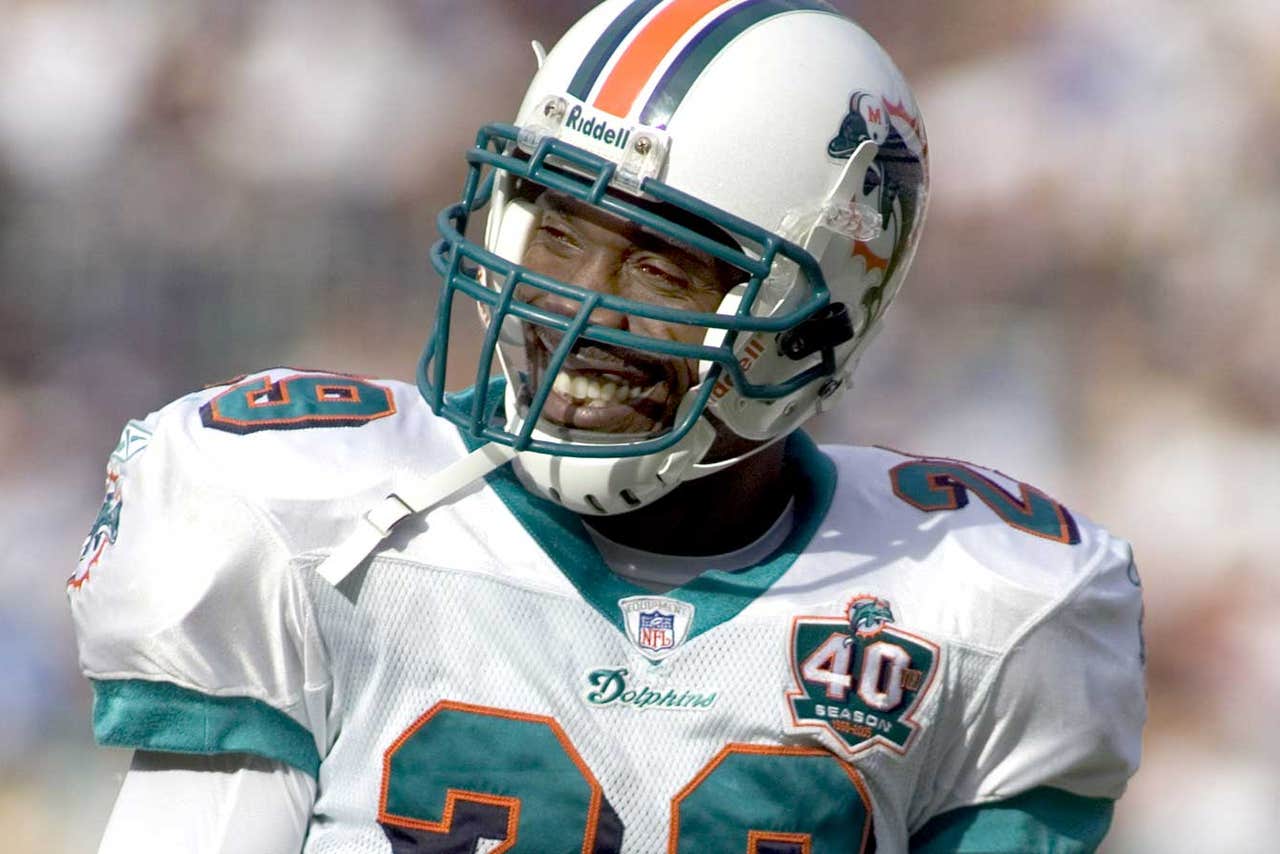
Sam Madison was a four-time Pro Bowler and two-time All Pro with the Dolphins.
The new millennium began with the Dolphins in search of a new identity. Johnson and Marino were out; Dave Wannstedt and Jay Fiedler were in.
Still, Miami initially didn't skip a beat despite these transitions. Led by superstars such as Zach Thomas, Jason Taylor, Sam Madison and Patrick Surtain, the Dolphins reached the playoffs in both 2000 and 2001 behind a defense that never ranked outside the top 10 in total yards allowed from 2000 to 2004.
Even in the early goings of a new era, the presence of Johnson and Marino lingered.
"Moving into those 2000s, there was already a building block that we thought we could build upon," Madison told FOXSportsFlorida.com. "Dan (Marino) gave us the structure that we needed, meaning how we needed to work in practice. Jimmy (Johnson) gave us that structure of how you needed to work in practice. It was instilled in the players that were brought in at that time that we would be able to play for a long time together.
"From 1998 all the way until 2004, we had some really good defensive units. We understood the championship mentality by Jimmy being there. The nucleus of guys that were drafted by him was still there through those runs."
It was in 2004, however, that the Dolphins would begin to unravel. Pro Bowl running back Ricky Williams, whom Miami traded four picks -- including two first-rounders -- to acquire, unexpectedly retired amid substance abuse allegations.
Miami would go on to drop its first six games of the 2004 season, marking the worst start in franchise history at the time. The team fell to 1-8, leading to Wannstedt's resignation.
In stepped Nick Saban, who had coached LSU to a national championship in 2003, as Miami's new head coach. Following a 9-7 first season at the helm, the Dolphins were in the market for a new quarterback during the 2005 offseason. There were two high-profile free-agent options, both coming off injuries -- Daunte Culpepper (knee) and Drew Brees (shoulder).
The Dolphins chose Culpepper, who would play all of four games for Miami. Brees would go on to have a record-setting career in New Orleans, winning a Super Bowl in 2009.
Failing to fix their quarterback issues, the Dolphins went 15-17 over the next two seasons as Saban's collegiate coaching prowess failed to translate to the NFL ranks.
Following the 2006 season, even though he had publicly reaffirmed his commitment to Miami on multiple occasions, Saban spurned the Dolphins and accepted the head coaching job at the University of Alabama.
Under new head coach Cam Cameron, the Dolphins hit rock bottom in 2007, going 1-15 in the worst season in franchise history. That would be Cameron's lone season in Miami as he was replaced by Tony Sparano.
Miraculously, the Dolphins won the AFC East in Sparano's first season as coach, but the success was short-lived as Miami closed out the decade with a 7-9 season the following year.
In all, Miami's most recent, complete decade was marked by rampant instability.
From 2000 to 2009, five different head coaches roamed the Dolphins' sideline and 14 different quarterbacks started at least one game under center.
2010-Present
After back-to-back sub-.500 seasons to start the decade, Miami opted to cut ties with Sparano, replacing him with former Green Bay Packers offensive coordinator Joe Philbin prior to the start of 2012 season.
With Philbin at the helm, the team continued their organizational face lift by selecting Texas A&M quarterback Ryan Tannehill with the No. 8 overall pick in the 2012 NFL Draft, the first time the team had chosen a QB in the first round since Marino in 1983.
In 2013, a bullying scandal involving offensive lineman Richie Incognito and Jonathan Martin cast a bad light on the franchise for the majority of the season, but also served as a catalyst for a change in the team's locker room culture heading into the 2014 season.
In three up-and-down seasons under Philbin, the team has posted a 23-25 record, including back-to-back 8-8 seasons in which the team was expected to compete for a playoff spot.
Yet there is reason to be optimistic about Miami's future.
Unlike the Dolphins teams of the previous decade, ownership made a commitment this offseason to continue building upon their current foundation when it was announced that Philbin would be returning for a fourth season.
Rather than tear it down, Miami has decided to weather the storm going forward in hopes that brighter days are ahead.
"I believed this for 30 years that players deserve a coach that believes in them," Philbin said of the team's commitment to each other. "That belief, I think, allows players to hopefully reach their potential. It's important for a head coach of an NFL football team that the owner believes in him, what he is doing and the program he is instilling. It's very important.
"If you don't have that type of belief and faith from the owner, it's not going to work. I know if players don't believe in their coaches and coaches don't believe in their players, you have no chance. It's important."
You can follow Jameson Olive on Twitter @JamesonCoop or email him at JamesonOlive@gmail.com.


Falcons Release Statement After Cutting QB Tua Tagovailoa

Brock Purdy Out, Sam Darnold Back As 49ers And Seahawks Head Into Pivotal Matchup

Ohio State-Michigan All-22 Roster: Top Buckeyes And Wolverines Since 2000

Eagles' Joe Milton Torches Former Team, But He Was Just As Excited To Meet Tom Brady

Jay Glazer Details How Aaron Rodgers' Steelers Exit Unfolded

Tom Brady Admits He Wasn't Great Friends With Peyton Manning During Playing Career

Terry Bradshaw Sides With Mike McCarthy In Aaron Rodgers' Dispute

Chargers QB Justin Herbert Set To Miss Sunday's Game vs. Patriots

2026 NFL, CFB Odds: Best Bets For Louisville-Kentucky, Falcons-Vikings





 Your Privacy Choices | Closed Captioning


