The Plays That Stood Out In Week 3, From A 'Meatball Sub' To Lamar Jackson's Game-Winner


Well-executed football was in short supply across the NFL in Week 3. But, as always, the slate provided plenty of drama.
The Bills rallied from a double-digit hole to avoid an upset against the Chargers; the Ravens and Cowboys gave football fans in Brazil quite the show; and the Broncos, with some help from the refs, knocked off the Rams with late defensive heroics.
All three games turned on pivotal fourth-quarter plays, from Justin Herbert's poorly timed interception to Lamar Jackson's last-second pass to Zay Flowers and Talanoa Hufanga's pick-six.
As always, we’ll dive into the strategies, the matchups, and everything else that created those memorable moments – along with what those moments mean for the future.

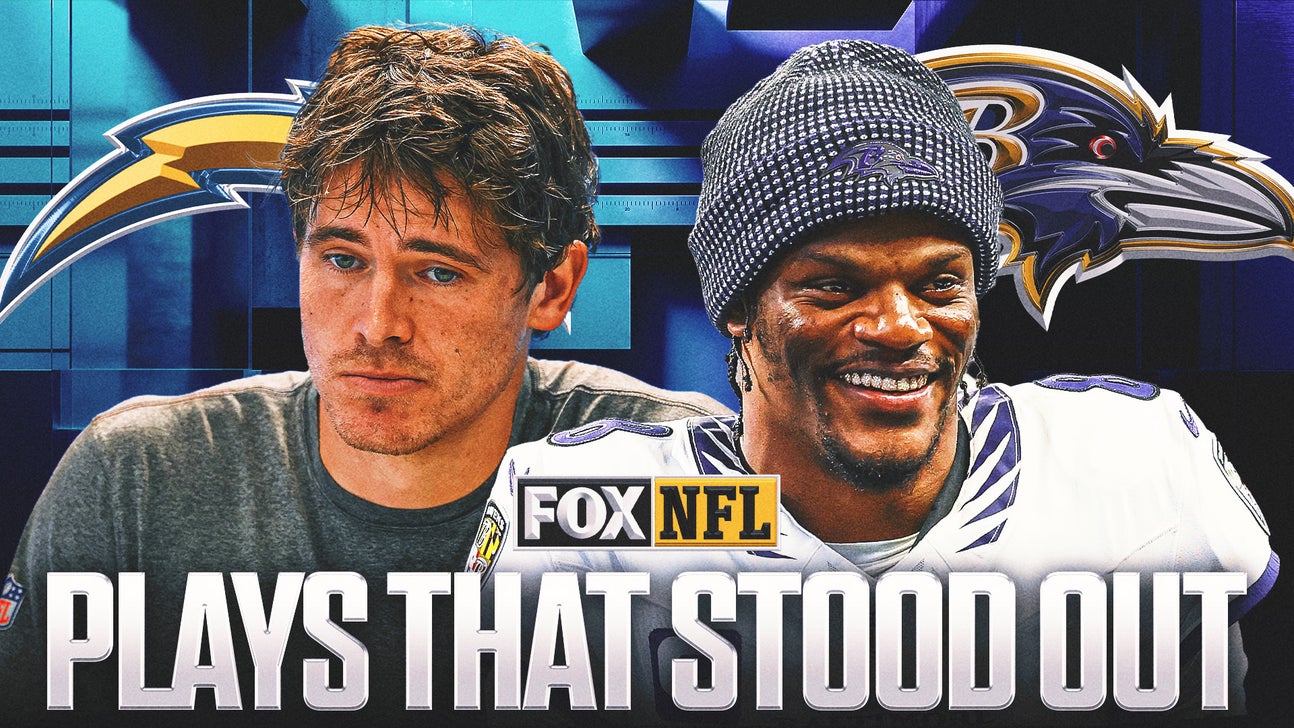
Tom Brady just has a way with words, I guess. A week after sending the internet into a frenzy by calling a Dak Prescott throw a "piss missile," he used a more PG descriptor for Justin Herbert’s fourth-quarter interception in Sunday’s loss to the Bills.
"There’s a safety in the middle of the field," Brady said. "Poor awareness, poor decision. Throws him a meatball sub."
It’s never good when the greatest quarterback of all time is comparing your throws to Italian sandwiches. This was a new low for Herbert in a season full of them.
So what, exactly, did Herbert see before serving up that meatball sub to C.J. Gardner-Johnson? Here’s the all-22 angle of the interception, which took points off the board for the Chargers and set up Buffalo’s go-ahead drive.
Herbert wasn’t asked about the play after the game, so we’ll have to do some guesswork. Herbert’s eyes go to Gardner-Johnson, and he sees the Bills safety turn his hips toward the sideline. It looks like Gardner-Johnson is bailing to the deep half, and Buffalo is rotating into a Cover 2 look.
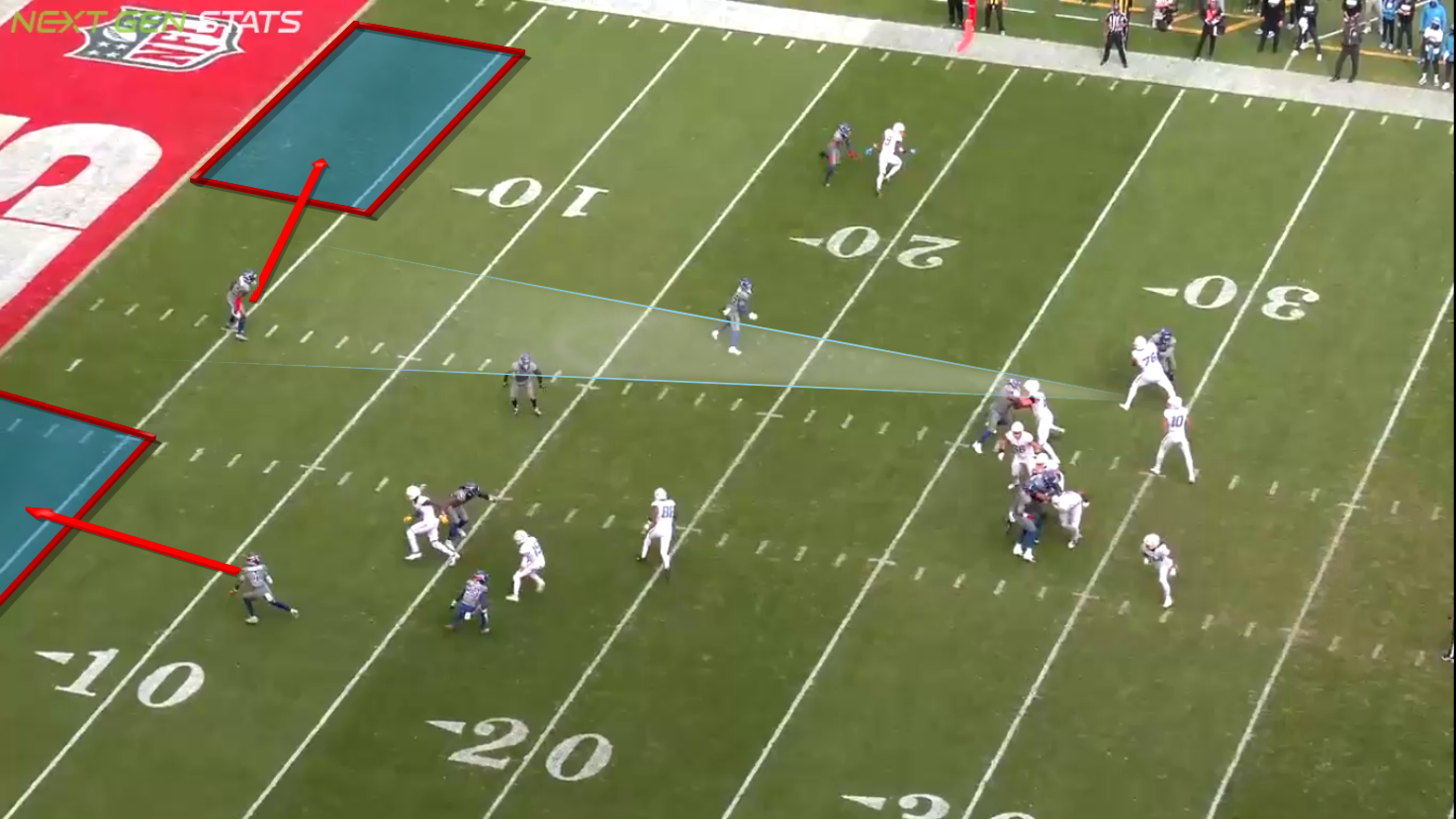
In theory, Marquez Valdes-Scantling’s post route would be open against Cover 2, which leaves the deep middle of the field vacated. But as soon as Herbert’s eyes left Gardner-Johnson, he changed direction and worked back to the middle of the field, taking away that route.
It’s unclear whether the Bills were actually playing Cover 2; either way, Gardner-Johnson made a heady play baiting the throw. And, either way, Herbert has to do a better job holding the safety with his eyes, since there's no deeper route to the right to pull Johnson out of the middle.
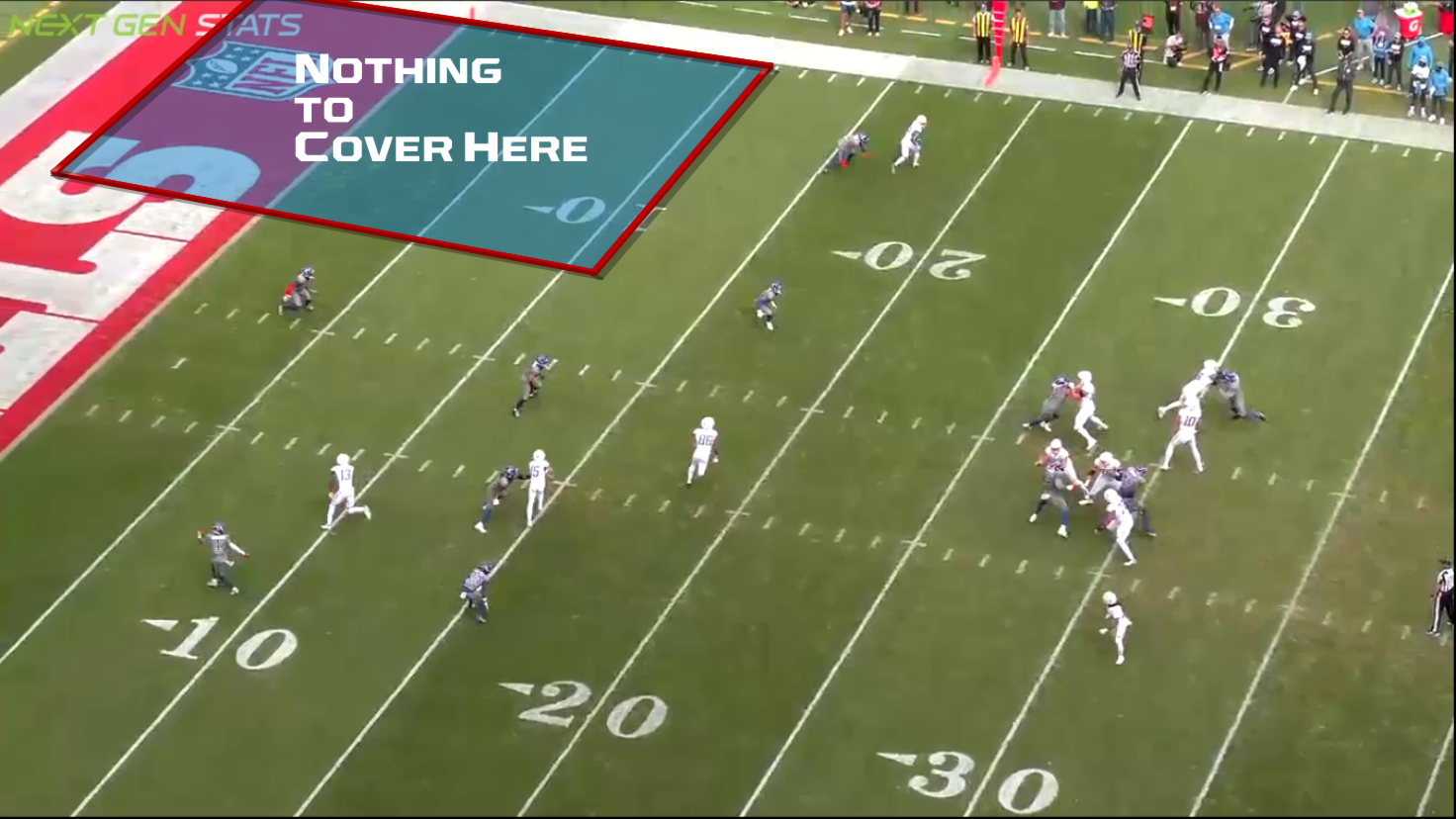
Herbert (wrongly) assumes the deep middle is wide open and tosses up a meatball sub that Gardner-Johnson devours for a momentum-swinging play.
The takeaway: The Chargers' deep passing game is a mess. Herbert is 1-for-12 with three interceptions on deep pass attempts this season. There have been some drops, and receivers are struggling to separate, but Herbert has also served up a few sandwiches. L
os Angeles has had no issues moving the ball, but the lack of explosives and the repeated blunders in enemy territory have prevented the offense from taking off like everyone expected before the season. This play was a good microcosm of the issues. The play design doesn’t stretch the safeties to open up the deep middle; the Chargers are relying on a receiver who was just signed off the street; and Herbert makes a disastrous decision while trying to do too much.
Seven seconds.
That’s all Lamar Jackson needed to get the Ravens from their own 35-yard line into range for Tyler Loop’s game-winning kick. Here's how he did it.
As easy as Jackson makes it look, that’s a remarkable throw. Per Next Gen Stats, the pass traveled 36.4 yards in 1.6 seconds. Based on my back-of-the-napkin math, that works out to a 46-MPH throw.
As much as I’d like to heap praise on Jackson for the game-winning effort, the Cowboys' defense really botched this one. Some have blamed deep safety Alijah Clark for the coverage bust, but he’s actually doing his job by retreating downfield. The blame falls squarely on two Cowboys defenders who were nowhere near Zay Flowers when he caught the ball.
The first culprit is safety Marquise Bell, who’s playing the "robber" role for Dallas. The robber’s job is to help with in-breaking routes over the middle, which Bell does—he just picks the wrong route to help on. Bell latches onto Mark Andrews, who’s running a crossing route that’s about 15 yards short of field goal range.
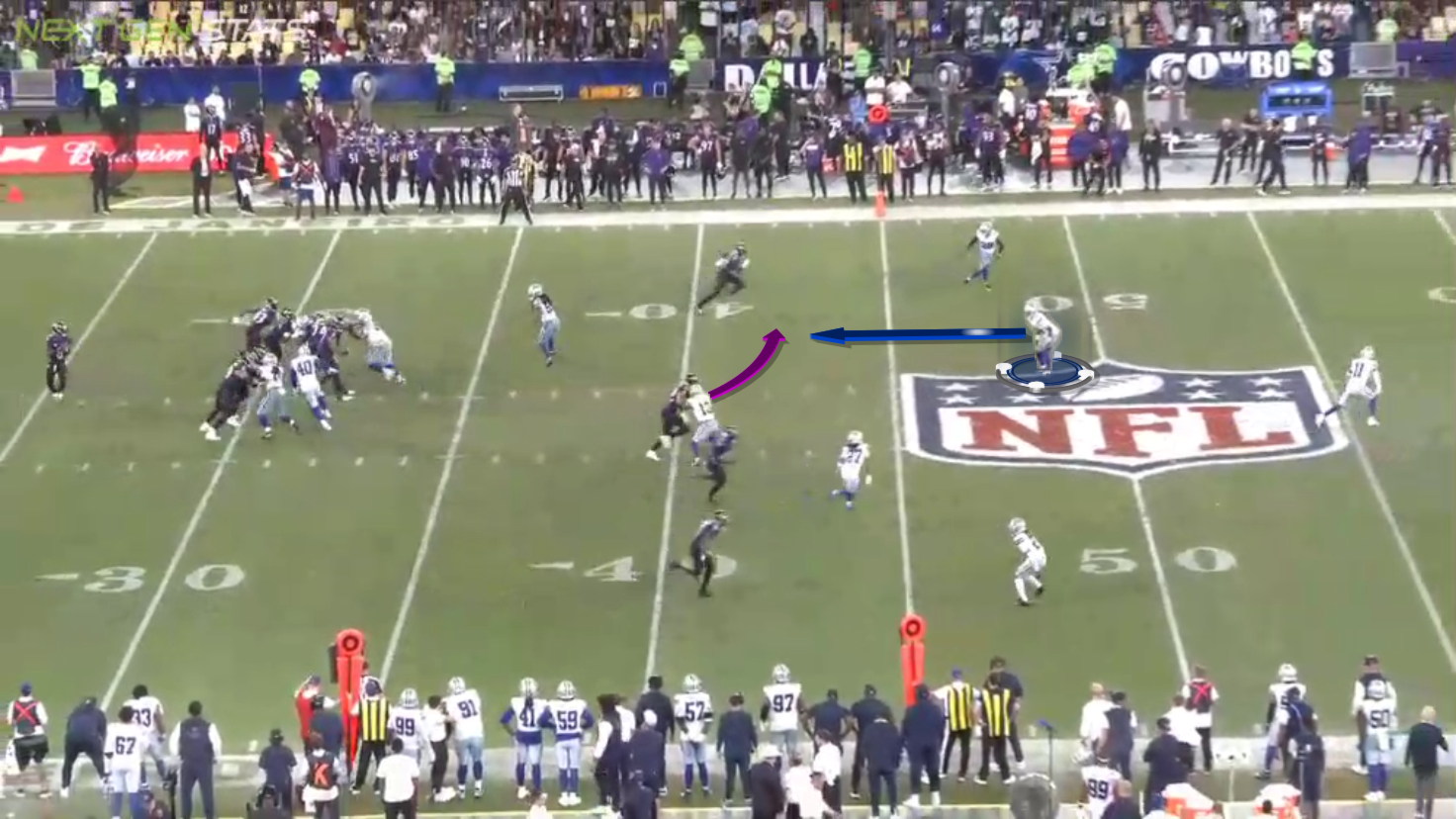
With only seven seconds on the clock, Andrews didn't pose much of a threat, and Bell didn't need to jump his route. That put our second culprit, Caleb Downs, in a tough spot. Once Bell takes Andrews, Downs becomes the new robber.
Downs needs more depth to get into deeper passing windows. Instead, he parks himself around midfield and is in no position to help on the routes behind him.
Reddy Steward, the cornerback responsible for Flowers, expects help inside and plays with outside leverage. Could he have been tighter to Flowers? Absolutely, but his teammates left him out to dry.
The takeaway: The coverage was poorly executed on the field, but this epic failure ultimately falls on first-year defensive coordinator Christian Parker. Man coverage, with just one deep safety, is a bold call in that scenario. And if the young Cowboys secondary lacks the situational awareness to take up a deeper position, Parker should have gone with a more conservative call, like a soft zone.
Over three weeks, this Dallas defense has played like a poorly coached unit. Parker was brought in to clean up last year's mess and help out the offense. That hasn't happened and the 2026 Cowboys look an awful lot like the 2025 version of the team.
Let’s stay on the subject of coaches not putting their players in a good spot to succeed. Only in Denver, Broncos safety Talanoa Hufanga found a way to make a play for his team despite his defensive coordinator, Vance Joseph, putting him in a precarious situation. Hufanga’s game-changing pick-6 of Matthew Stafford came on a play where he was left to fend for himself in a two-on-one situation.
The Broncos sent an all-out blitz on third-and-6 and disguised it by lining up a safety in the deep middle.
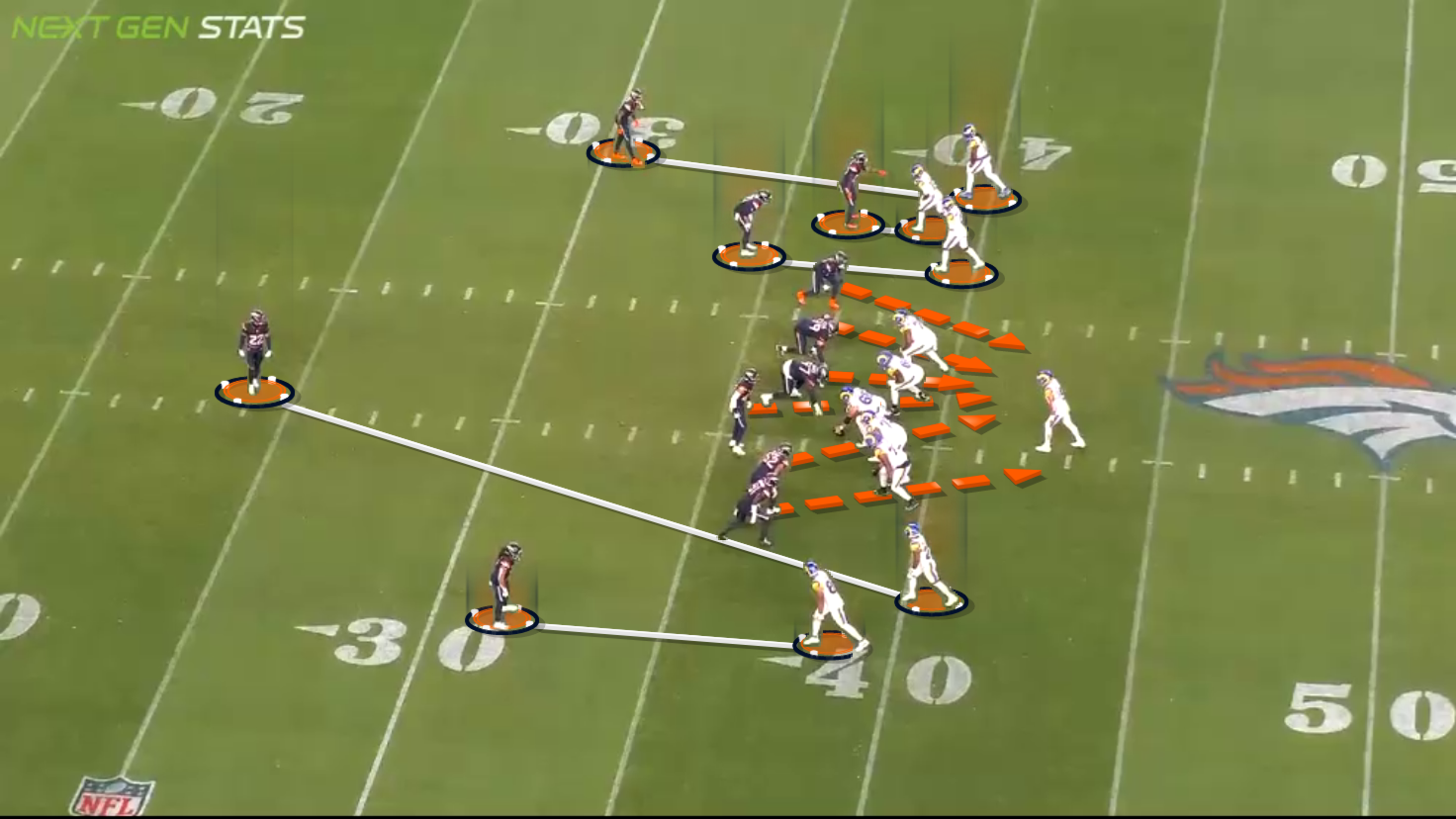
With only Hufanga lined up over the two receivers to Stafford’s right, the Rams quarterback assumed one of the potential blitzers on the line of scrimmage would have to drop into coverage.
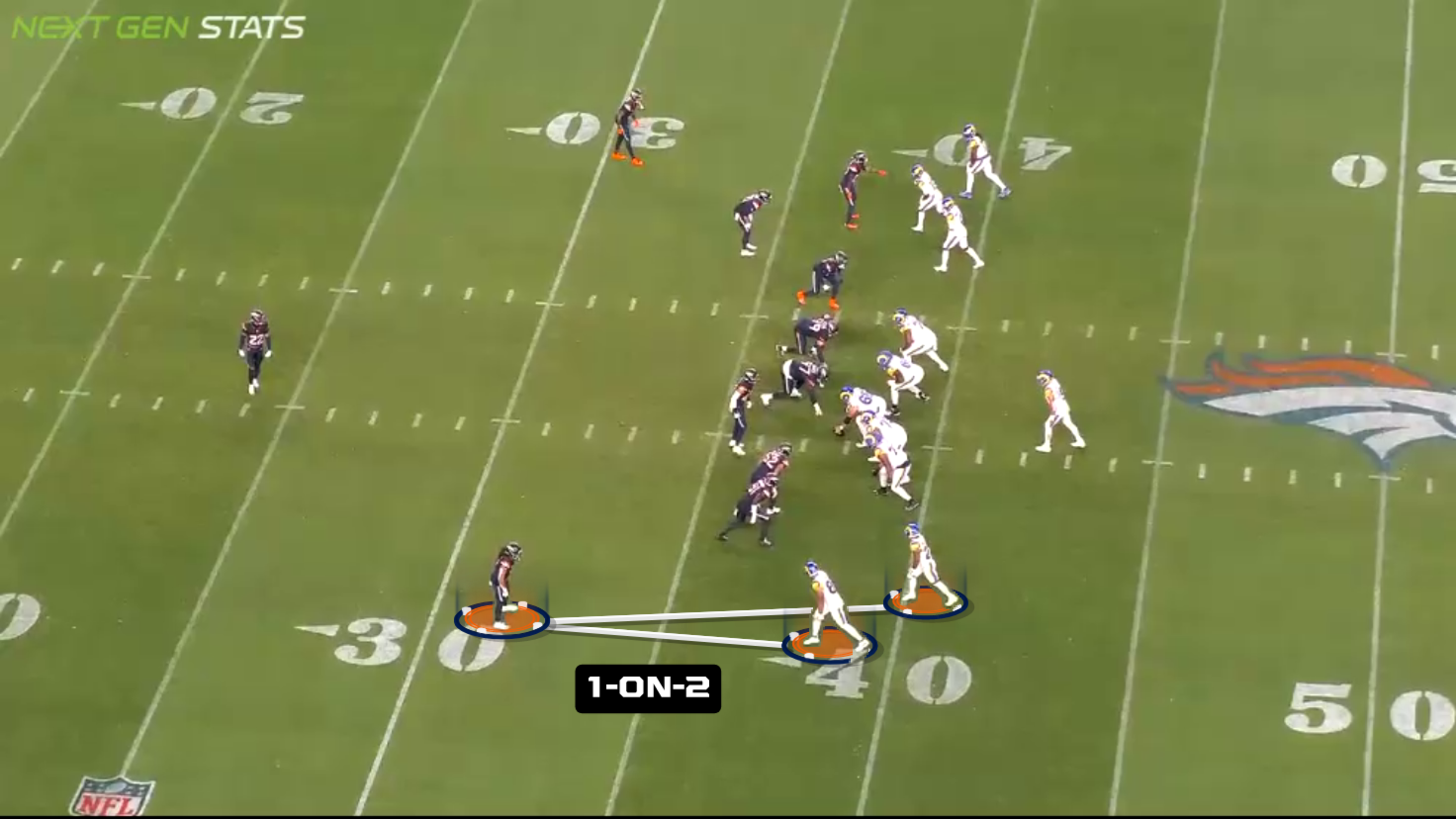
That didn’t happen. Denver sent the house and asked Jones to come out of the deep middle to cover one of those receivers man-to-man. Stafford recognized it instantly and targeted Kyren Williams’ quick out route. Quick outs are typically a good answer against the blitz, with defenders often playing with inside leverage to guard against quick slants and in-breakers.
So, this was a bit of an I-know-you-know situation. Hufanga knew Stafford would be looking for the quick out against the blitz and fell off his original assignment to jump that route.
Hufanga made a similar play to seal the win. With the Rams needing a touchdown and only seconds on the clock, the Broncos sent another blitz, leaving the secondary in man-to-man coverage across the board. Knowing Stafford would likely target Davante Adams, Hufanga left his man and made a break on the ball to pick it off and end the game.
"Your [thought] is, ‘best player on the field, they’re trying to get him the ball," Hufanga said after the game. "So I kind of left my coverage and just went over there and made a play."
The takeaway: After a rough start to the season, this Broncos defense is rounding into championship form. Zach Allen was the hero in the Week 2 win over the Jaguars. This week, it was Hufanga, who also had a key third-down sack in the fourth quarter. Joseph has an ideal collection of plays to run his chaotic brand of defense. When this unit is at its best, even the league's most experienced quarterbacks can struggle to figure out what they’re seeing.
Next week’s matchup against the 49ers and the league’s hottest quarterback, Brock Purdy, will be a real test. The Broncos defense looks up to the challenge.
 Three And Out
1. NFL teams should be running more lateral plays like the one the 49ers used to score an 82-yard touchdown on Sunday.
That play inspired me to look into how effective those plays are, and the results are stunning. I excluded desperation plays in the dying moments of a game or half and focused on lateral plays called in more typical situations. I found 25 of them dating back to 2021. Those plays have averaged 18.9 yards and resulted in 15 first downs. Almost all of them have come in second- or third-and-extra-long situations.
Ben Johnson has been the tactic's biggest advocate. The Lions ran the play five times over his three seasons as offensive coordinator, and he used it once last year in Chicago. Kyle Shanahan had used it once before Sunday’s game. In last year’s loss to the Jaguars, Christian McCaffrey picked up a first down on second-and-16 after receiving a lateral from Ricky Pearsall.
Maybe Sunday’s big play will convince Shanahan to lean into the strategy a bit more. After all, Purdy is now averaging 56 yards per attempt on those plays.
2. The Jets lost in Detroit on a sack-fumble by Geno Smith, but the veteran quarterback was hardly to blame. New York's protection broke down, giving Lions safety Chuck Clark a clear path to Smith.
So who was to blame? It looks like left guard Jordan Meredith caused the bust. The Jets are sliding three linemen to the left, with running back Braelon Allen working away from the slide.
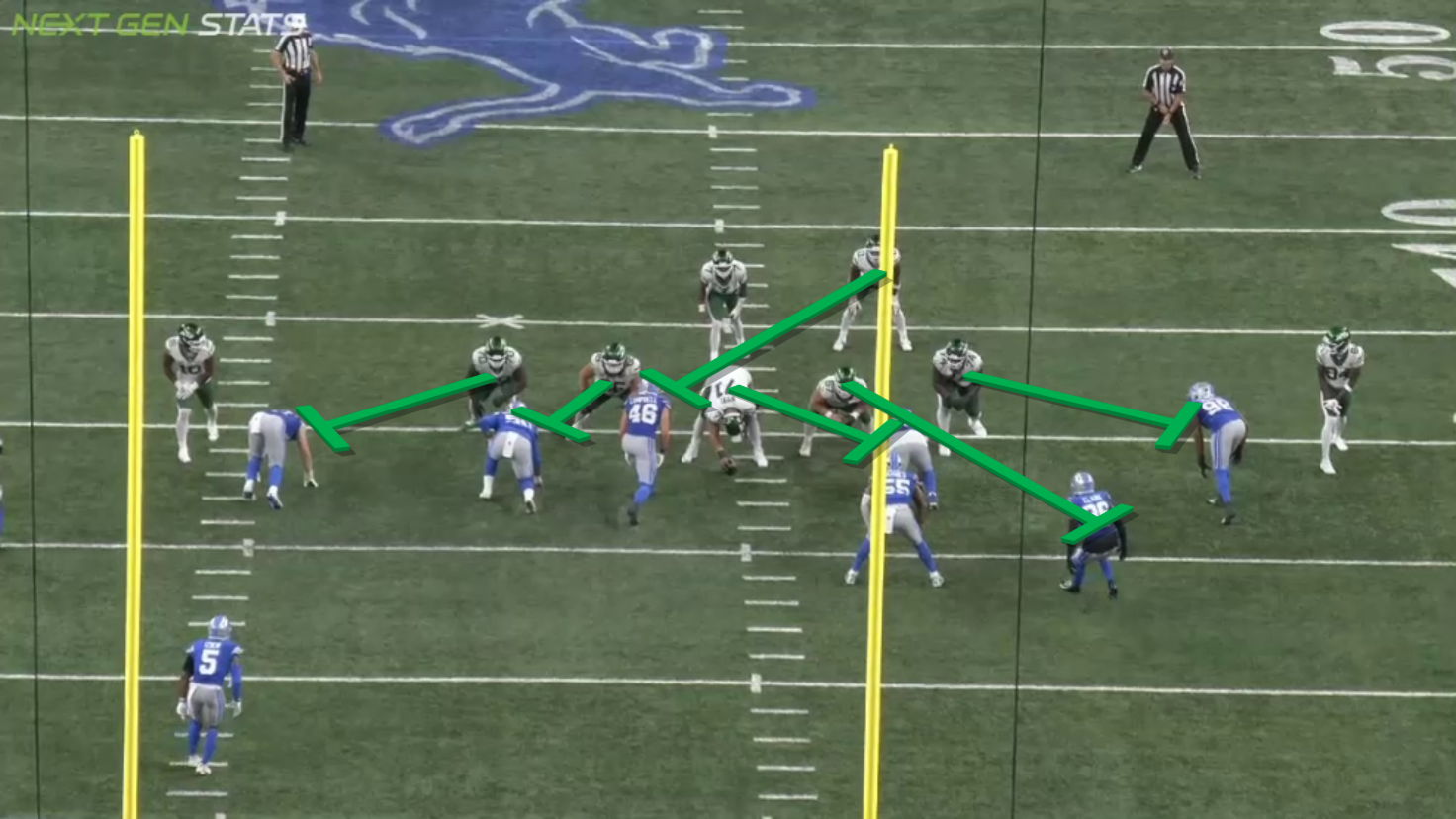
With six in protection, the Jets should have enough to pick up Detroit’s pressure. Instead, Meideth gets hung up on the defensive tackle and pins center Josh Myers inside. Myers and Allen both end up on Jack Campbell, leaving Clark unblocked.
3. As FOX Sports’ Joe Davis observed during Washington’s upset of Seattle on Sunday, Marcus Mariota looked like Peyton Manning orchestrating the Commanders' offense at the line of scrimmage. Seahawks coach Mike MacDonald noticed it too, and credited Mariota’s pre-snap checks for making the difference.
Mariota's most important change came on the final drive. With the Commanders facing a third-and-9 and holding onto a two-point lead late in the fourth quarter, Seattle’s defense lined up in a blitz look with seven defenders on the line of scrimmage.
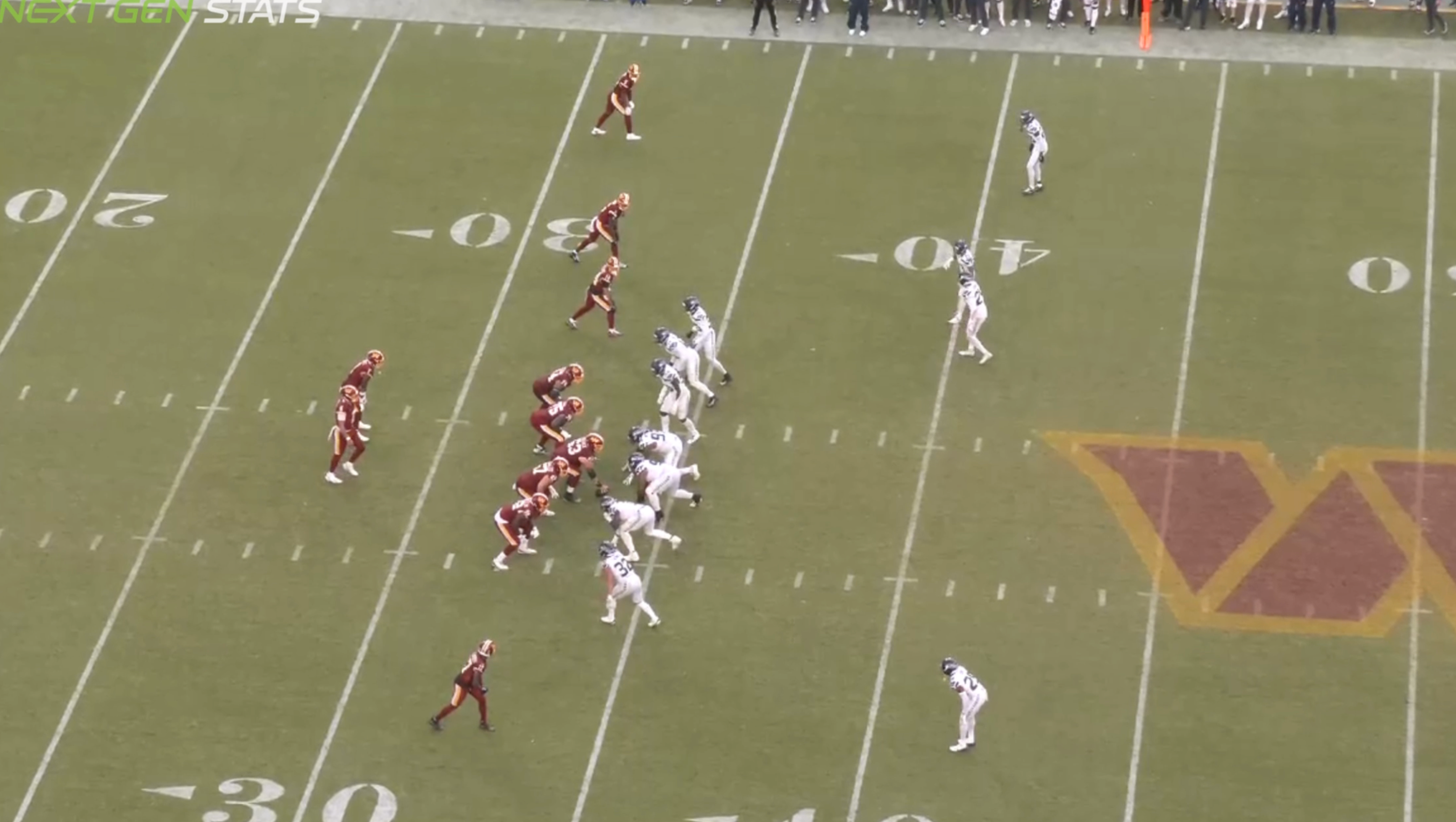
Mariota had seen this look before. Earlier in the game, Seattle aligned the same way on second-and-long, and Mariota checked into a run that went for a 48-yard touchdown, but an illegal formation penalty negated it.
Mariota made the same check on the key third-down play. This time, Washington lined up correctly, and Rachad White ran for 19 yards to pick up a key first down.
A few plays later, Mariota iced the game with a zone-read keeper.

Monday Morning NFL Top 10 Rankings: Undefeated Teams Shoot Up The Rankings

NFL Fallout Week 3: The Patriots Are Battling More Than A Super Bowl Hangover

Overreaction Monday: Time To Bench Drake Maye? Chiefs Best Team In NFL?

How Brian Schottenheimer Cost The Cowboys; Seahawks Badly Miss Kenneth Walker III

Tom Brady Calls Out Justin Herbert's 'Meatball Sub' Throw In Chargers' Loss To Bills

2026 NFL Odds Week 4: Lines, Spreads, Results For All 16 Games

Commanders QB Jayden Daniels Reportedly Targets Fast Return From Elbow Injury

Another Brutal Buccaneers Loss: 3 Takeaways From Vikings' Win In Tampa Bay

Ravens' Tyler Loop Hits Ronaldo's ‘Siu’ After Walk-Off FG To Beat Cowboys In Brazil


-
Monday Morning NFL Top 10 Rankings: Undefeated Teams Shoot Up The Rankings
NFL Fallout Week 3: The Patriots Are Battling More Than A Super Bowl Hangover
Overreaction Monday: Time To Bench Drake Maye? Chiefs Best Team In NFL?
-
How Brian Schottenheimer Cost The Cowboys; Seahawks Badly Miss Kenneth Walker III
Tom Brady Calls Out Justin Herbert's 'Meatball Sub' Throw In Chargers' Loss To Bills
2026 NFL Odds Week 4: Lines, Spreads, Results For All 16 Games
-
Commanders QB Jayden Daniels Reportedly Targets Fast Return From Elbow Injury
Another Brutal Buccaneers Loss: 3 Takeaways From Vikings' Win In Tampa Bay
Ravens' Tyler Loop Hits Ronaldo's ‘Siu’ After Walk-Off FG To Beat Cowboys In Brazil





 Your Privacy Choices | Closed Captioning


