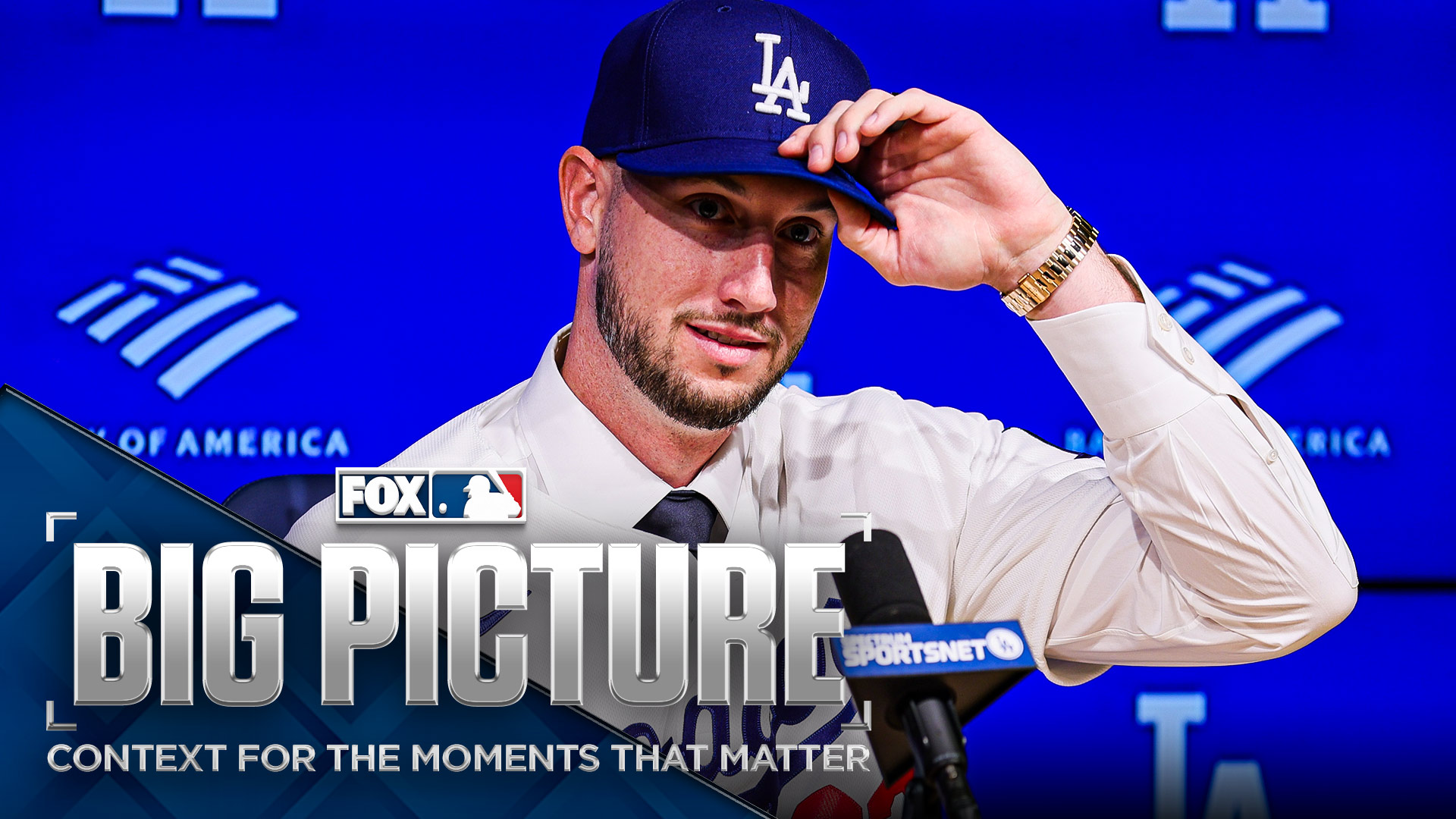
Big Picture: Kyle Tucker's $240M Deal Represents A New Level of Dodgers Supremacy


LOS ANGELES – Whether you love them for their unrivaled commitment to producing a winning product, envy them for their exorbitant spending in their quest to three-peat or despise them for supposedly breaking Major League Baseball and its economic system with their excess, the Dodgers and their latest All-Star acquisition don’t particularly care.
On Wednesday at Dodger Stadium, Kyle Tucker ran into Shohei Ohtani and Max Muncy, FaceTimed with Freddie Freeman and shook the hands of his new manager, Dave Roberts, and general manager, Brandon Gomes, before donning a No. 23 Dodgers jersey for the first time on the heels of signing a four-year, $240 million contract that made him the club’s eighth nine-figure earner, further widened MLB’s financial gap and set off alarms around the sport.
"I think baseball is in a good spot," Tucker countered.
Why wouldn’t he?
The best free agent on the market joined the best team in the game on a contract that set a record for present-day average annual value at $57.1 million. In reality, Tucker will actually cost the Dodgers far more than that. Incurring a 110% fee for every dollar they spend after again skyrocketing past the highest luxury-tax threshold, the Dodgers are projected to pay close to $120 million annually on Tucker’s deal when accounting for the additional tax penalties.
Read more: Four Takeaways From Tucker Joining the Dodgers
The astounding expenditure sent a clear message: The Dodgers, a year after paying a record $169.4 million in competitive balance taxes while winning a second straight championship, are still in hyperdrive and unbothered by the public outcry as they look to extend their window and solidify the club’s golden era, a long-stated goal of president of baseball operations Andrew Friedman.
"For us, we just don’t pay much attention to that because we operate within the rules and do everything we can to put ourselves in the best position both short term and long term," Friedman said. "And we’re not thinking about more macro things outside of that. It is about, ‘How can we win as many games and put ourselves in the best position to win a championship in 2026 without really compromising ourselves out into the future and falling off that proverbial cliff? It’s the balance and maintaining of those two things that are our sole focus.’"
Get ‘Needle Movers’
Avoiding that cliff, in part, requires the infusion of younger pieces.
The Dodgers won it all again last year despite a dysfunctional bullpen and the oldest position-player group in the sport. They addressed the former issue by signing the top closer on the market in Edwin Díaz earlier this winter. The stunning addition of Tucker, a 29-year-old four-time All-Star, helps with the latter.
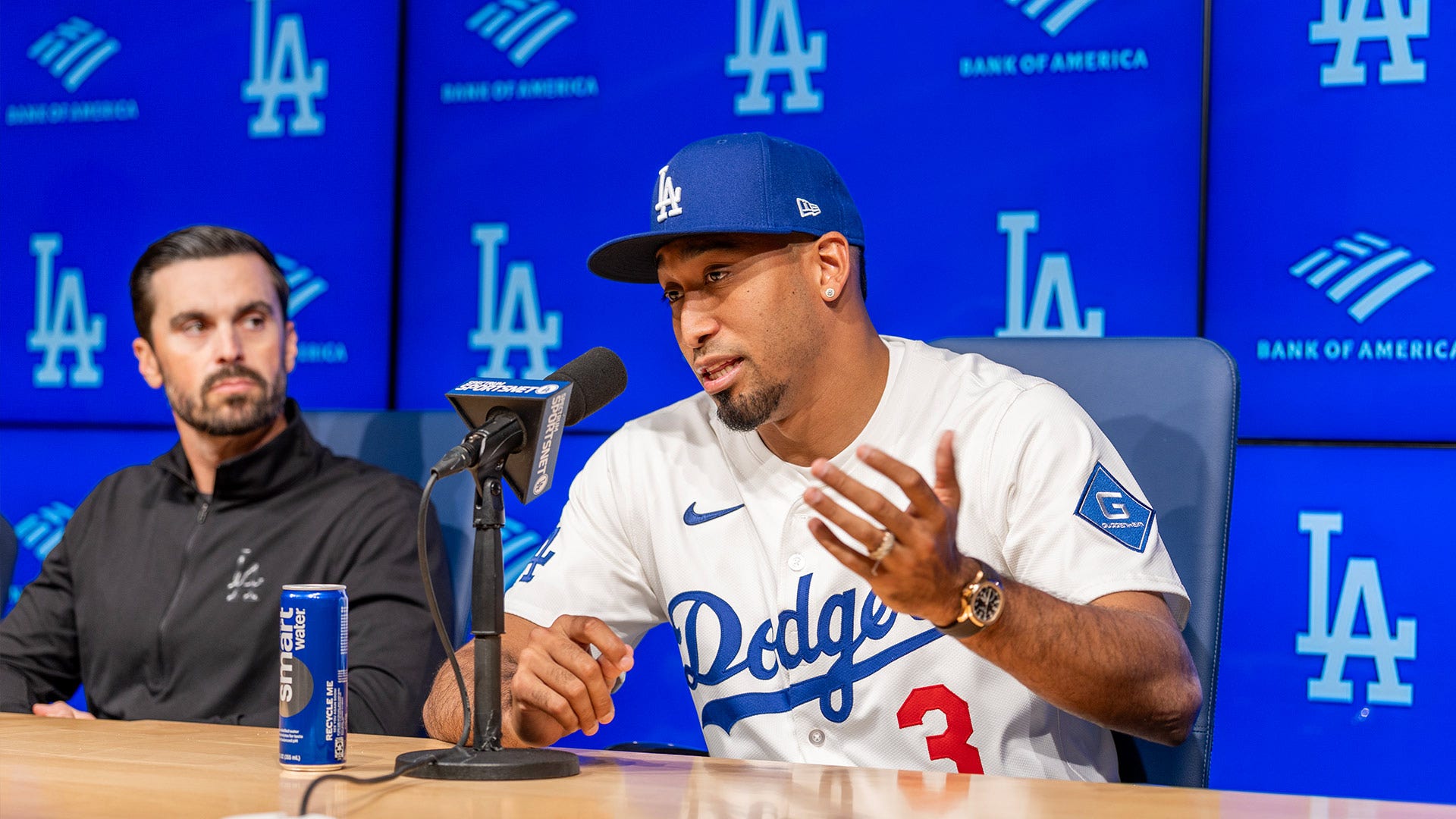
Edwin Diaz's arrival gives the Dodgers the best closer on the free agent market (Getty)
Ohtani, Freeman, Muncy, Will Smith, Teoscar Hernandez, Tommy Edman are all 30 or older. As is Mookie Betts, who’s coming off his worst offensive season as a big leaguer and is still under contract for another seven years. Possessing one of the richest farm systems in baseball helps mitigate risk, but the Dodgers’ best prospects — including a quartet of highly-regarded outfielders in Josue De Paula, Zyhir Hope, Mike Sirota and Eduardo Quintero — might still be a year or so away from fully contributing.
The Dodgers still could have sat out of the top end of the free-agent market and been the favorites in 2026. Instead, they decided to bridge the gap to their future by targeting "needle movers" — players who could meaningfully impact their chances of winning another World Series — as long as they were open to short-term deals at a high AAV.
Convincing a star talent in his 20s to accept those terms represents a significant challenge, especially when those players have longer offers that would set them up for life. The Dodgers understand that, having tried and failed in a similar endeavor before. In 2019, they reportedly offered Bryce Harper four years at $45 million annually, which would have given Harper a record AAV at the time while allowing him to cash in again in free agency at age 30.
But a lot has changed in the years since Harper accepted his long-term deal in Philadelphia. Los Angeles has developed into baseball’s mecca, and the Dodgers — with three championships over the last six years — have offered proof of concept for star players looking to win.
Earlier this winter, they got Díaz to agree to a three-year deal when many expected him to get at least four by giving him the highest AAV ever for a reliever. Signing Tucker, the top free agent on the market, presented a greater challenge given the offers the Dodgers were competing against.
Convincing the 29-year-old would require straying from their usual tactics. They included opt-outs after the second and third seasons, a maneuver they’ve generally tried to avoid, and upped their initial offer to try to entice him away from both the Blue Jays, who reportedly offered 10 years and $350 million, and the Mets, who reportedly offered a frontloaded four-year, $220 million deal with no deferrals.
The structure that Tucker accepted, which surpassed the previous present-day AAV record set by Mets star Juan Soto ($51 million), will allow him to cash in again in his early 30s if he wants to seek a longer deal.
Read more: How Kyle Tucker's $240M Deferred Deal Works
"Obviously, we started lower," Friedman said. "I think when we’ve seen these kinds of shorter-term, higher-AAV deals, I don't think they’ve ever come when they also had a really long, significant deal as well. Not that I can remember. Usually guys take those shorter-term deals because a longer-term deal hasn’t materialized, so it’s a chance to kind of reset and go back out to the market. He had that opportunity.
"And so for us, it was about selling the opportunity to play with these guys, to play in front of these fans, to play in this city, to connect with this community. And who knows, it doesn't mean that it has to be two, three, four years here. It could be longer than that. And I think for him to choose us when he had other longer-term and other shorter-term [offers], I think speaks to the growth and progress that we’ve made in creating a destination spot."

The Dodgers weren't lacking in superstar power with the likes of Shohei Ohtani, Freddie Freeman, and Mookie Betts. (Photo by Harry How/Getty Images)
The allure of Los Angeles is obvious — great weather, talented teammates, tens of thousands of fans packing the stadium every night, the near guarantee of playing meaningful October baseball. There is also likely a prosperous future ahead, regardless of what happens with the next CBA, as the Dodgers continue to reap the rewards of both the Ohtani-conomy and a lucrative local television deal at a time when regional sports networks are collapsing.
"I think this organization is, from the top down, first class," Tucker said. "The team these guys put together and assembled to give a great product for the fanbase in the city, to go out there and compete for a championship, kind of speaks for itself. Taking all of that into account, wanting to be a part of it, I think it's very special. You don't really get that very often."
Steep Prices to Fix Flaws
While the additions of Díaz and Tucker make the rich richer, they also make sense from a roster-building standpoint. The Dodgers’ two premier offseason signings addressed their two greatest flaws and corrected last year’s mistakes.
Last offseason, the Dodgers gave Tanner Scott four years and $74 million only to watch the top closer on the market go 1-4 with a 4.74 ERA. He converted just 23 of his 33 save opportunities and was left off the playoff roster. As a whole, the Dodgers bullpen was tied for 20th in both ERA and WHIP. Their ineptitude required the team to use starters in relief to get through October.
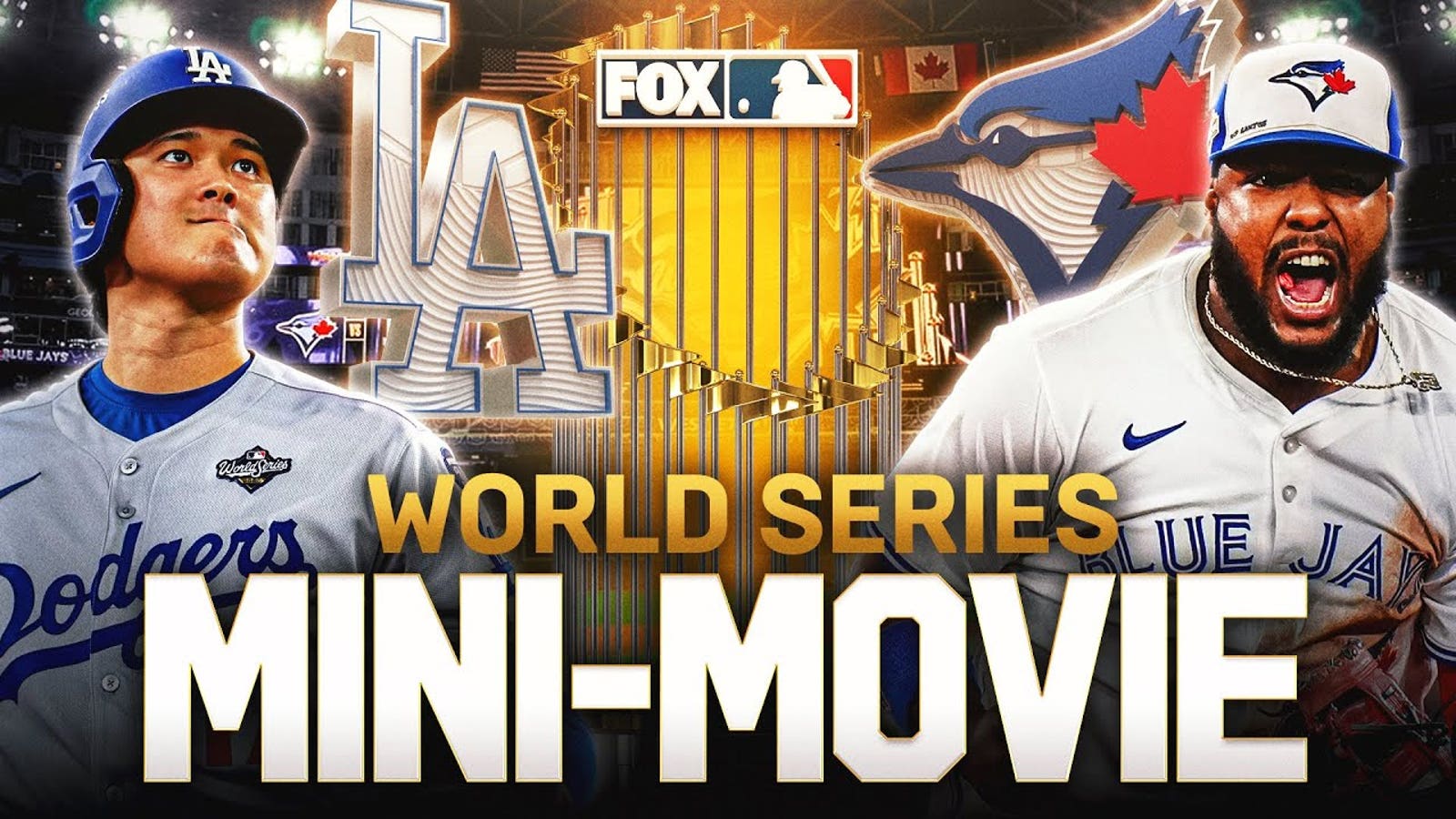
Dodgers vs. Blue Jays: MINI-MOVIE of 2025 World Series | MLB on FOX 🎥
They also gave Michael Conforto $17 million to man left field only to watch him hit .199 and produce below replacement level in the worst year of his big-league career. Meanwhile, Hernández regressed mightily at the other corner outfield spot after a resurgent first season in L.A.
The benefit of Conforto’s one-year deal meant they could quickly move on, though given their penchant for short-term deals, few could’ve predicted the level of upgrade they would make.
The Dodgers stayed in touch with Tucker’s representation throughout the offseason to make their interest clear. Discussions between the two sides heated up in the days before he agreed to terms, and the Dodgers felt like they had a real chance after a Zoom call that Friedman, Gomes and Roberts had with Tucker and his wife.
Still, until around 6 p.m. on Jan. 15, when the Dodgers actually received the call that he would be joining him, they weren’t sure.
"All you can do is kind of state your strong interest," Friedman said, "and sell as much as you can."
Read more: Watch Out, Dodgers? The Mets Also Made Some Savvy Moves
Tucker, a four-time All-Star who has hit 50% better than league average over the last three years, will man his usual spot in right field, with Hernández shifting to left. Andy Pages, the only other Dodgers starting position player in his 20s, will likely stick in center. The addition of Tucker will allow the Dodgers to slow-play Tommy Edman as he recovers from offseason ankle surgery and allow him to spend most of his time on the infield.
It also gives the Dodgers arguably the most complete club they’ve ever assembled, increasing the vitriol among the 29 other fanbases as a contentious labor battle looms. The rules could change after the CBA expires at the end of this year, but Friedman told me that didn’t impact the desire to make this deal now.
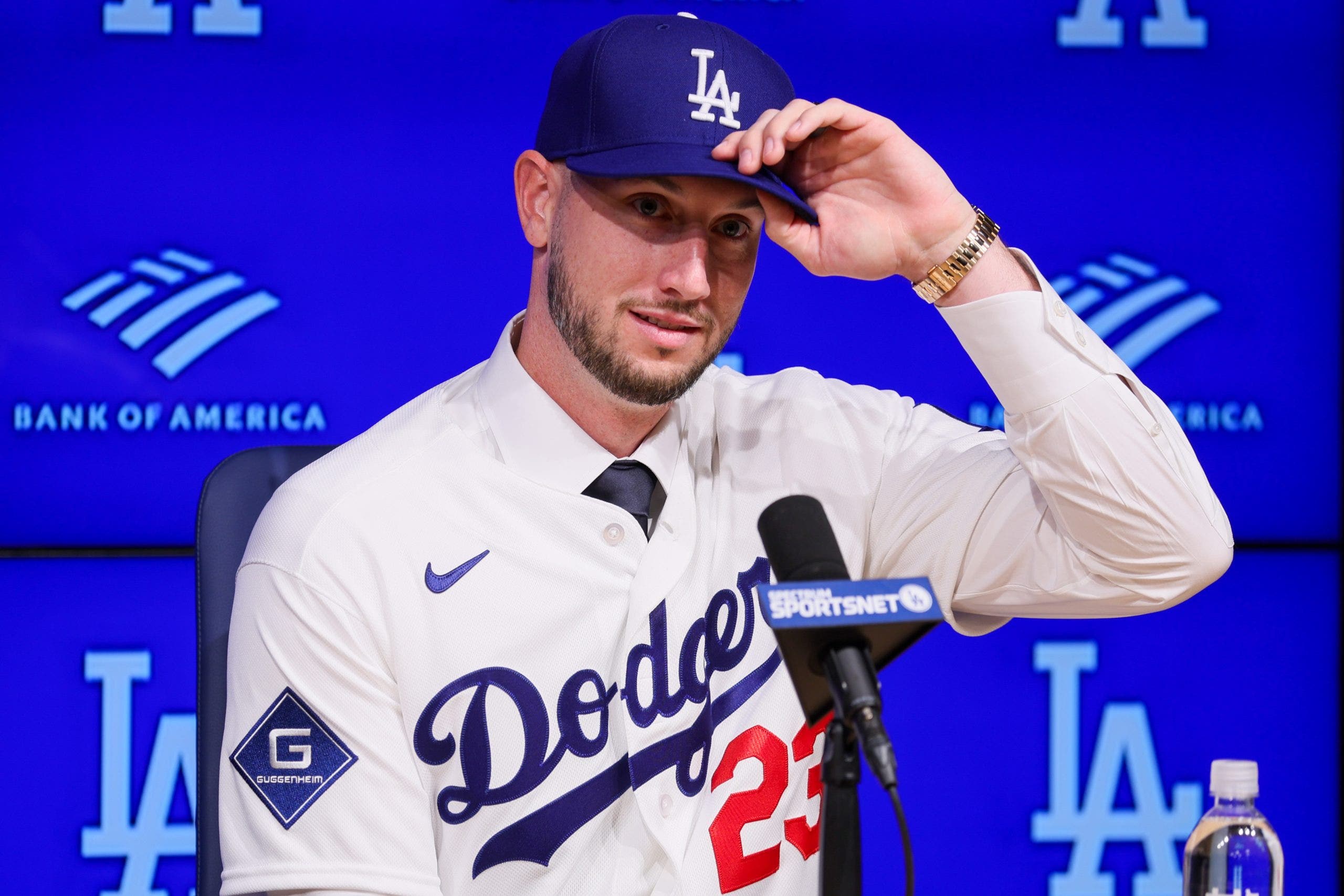
Kyle Tucker's deal structure only fanned further discussion of an MLB salary cap. (Ronaldo Bolaños / Los Angeles Times via Getty Images)
"There’s just so much unknown around that," Friedman said. "I have now been through a lot of CBAs and have tried to get cute leading into a CBA, like, ‘OK, this is where it might be going.’ We have no idea. We are sitting in the cheap seats on that. For us, it’s just about whatever the rules are, reading and reacting to that and doing whatever we can to be as good as we can be."
So, as the calls for a salary cap get louder with every premier talent they add and each dollar they spend, they carry on undeterred.
It is not their problem to solve.
"For us, all we’re consumed with is the partnership that we have with our fans," Friedman repeated. "Our job is to win as many games as we can to provide a product and a team that fans feel passionate about, connect with…and pouring back into them with how much they pour into us. That’s our only focus."
In the Big Picture, we contextualize key moves and moments so you can instantly understand why they matter.





Guardians Complete Historic Comeback vs. White Sox: 3 Takeaways From ALDS Game 5

Why Dodgers And Brewers Don't View NLCS Rematch As David vs. Goliath

2026 MLB ALCS Odds: Rays Open As Favorites Over Guardians

MLB Playoffs: Each Time Teams Have Overcame A Division Series 0-2 Deficit

How 22-Year-Old Jackson Chourio Has Already Become The Brewers’ Mr. October

Dodgers-Brewers NLCS Game 1 Will Be Skubal vs. Misiorowski; Yamamoto For Game 2

What Will Be The Keys To The Brewers Taking Down The Dodgers In 2026 NLCS?

2026 MLB NLCS Odds: Brewers Slightly Favored Over Dodgers

2026 AL, NL Pennant Odds: Which Teams Will Meet In Fall Classic?





 Your Privacy Choices | Closed Captioning


