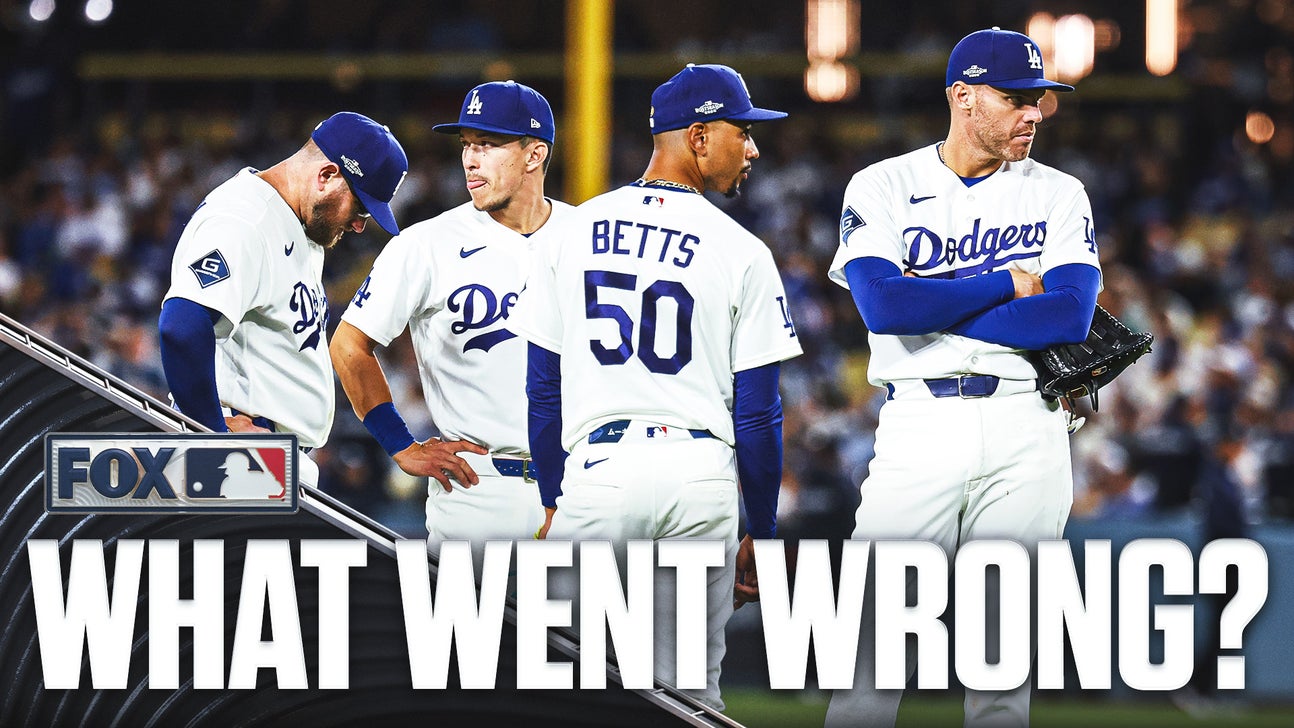
The Dodgers' Three-Peat Dream Became An NLCS Nightmare. Now What?


LOS ANGELES — Forty minutes after the Milwaukee Brewers emptied out of the visiting dugout at Dodger Stadium and turned the defending back-to-back champions’ three-peat dream into a National League Championship Series nightmare, shortstop Miguel Rojas’ eyes were still bloodshot from the tears. The Dodgers’ reign of baseball supremacy ended Thursday night in stunning fashion, and only time will tell what happens next for their aging dynasty amid a changing baseball landscape.
The one certainty is that it won’t look quite the same.
"We never thought about being in this position," Rojas said, "and not being able to do it."
(Photo by Keith Birmingham/MediaNews Group/Pasadena Star-News via Getty Images)
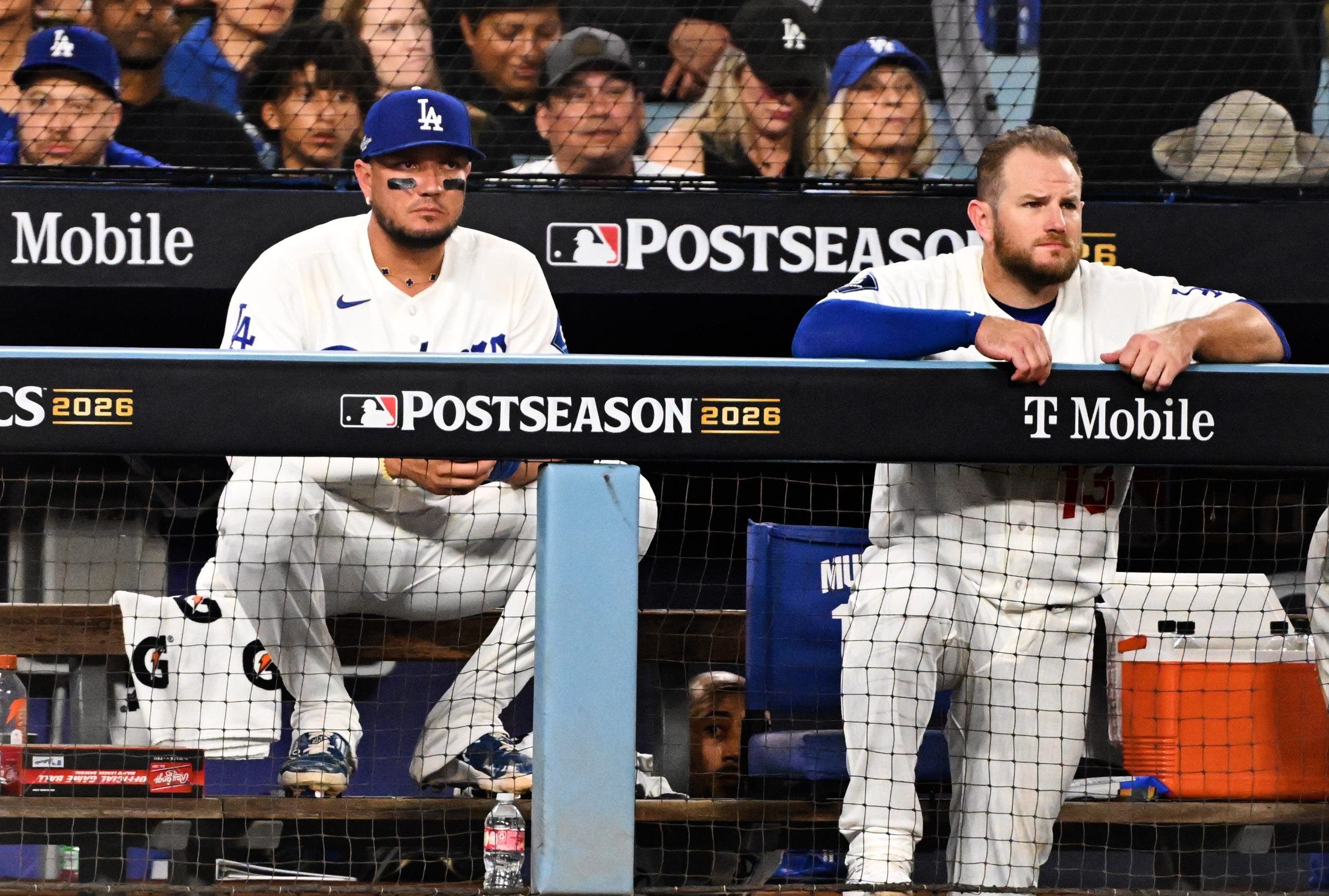
In the aftermath of a thorough sweep, Dodgers manager Dave Roberts addressed his players before handing the floor to Rojas, one of the team’s valued voices. On a club teeming with superstars, the 37-year-old utility infielder had emerged as an important ingredient to the team’s championship concoction and an unlikely hero whose Game 7 home run in the 2025 World Series helped put the Dodgers in position to chase history this year.
Rojas had a hard time taking off his uniform and cleats Thursday night, knowing that the Game 4 loss marked the end not only of the Dodgers’ World Series aspirations but also his own ride as a big leaguer. He thanked his teammates for changing his life, then delivered the news of his impending retirement.
"This is it," Rojas confirmed to me in the Dodgers’ clubhouse. "That was my last game playing. That was the last time I put these cleats on and this uniform on as a player."
Neither he nor the rest of the Dodgers could have envisioned their ride ending on Oct. 15.
The Dodgers entered the postseason with one of the most talented teams ever assembled, a payroll more than twice the size of their NLCS competitors, and the experience of winning three World Series championships over the past six seasons. They were trying to become the first team since the 1998-00 Yankees and the first NL team ever to win three straight World Series titles.
The Milwaukee Brewers, who will now be playing in their first World Series since 1982, did not care.
Milwaukee won a franchise-record 103 games this year despite ranking last in the National League in home runs. The Brewers earned a deserved reputation for causing havoc with their contact, speed and general unwillingness to chase out of the zone.
But they didn’t simply small-ball their way through this NLCS.
(Photo by Luke Hales/Getty Images)
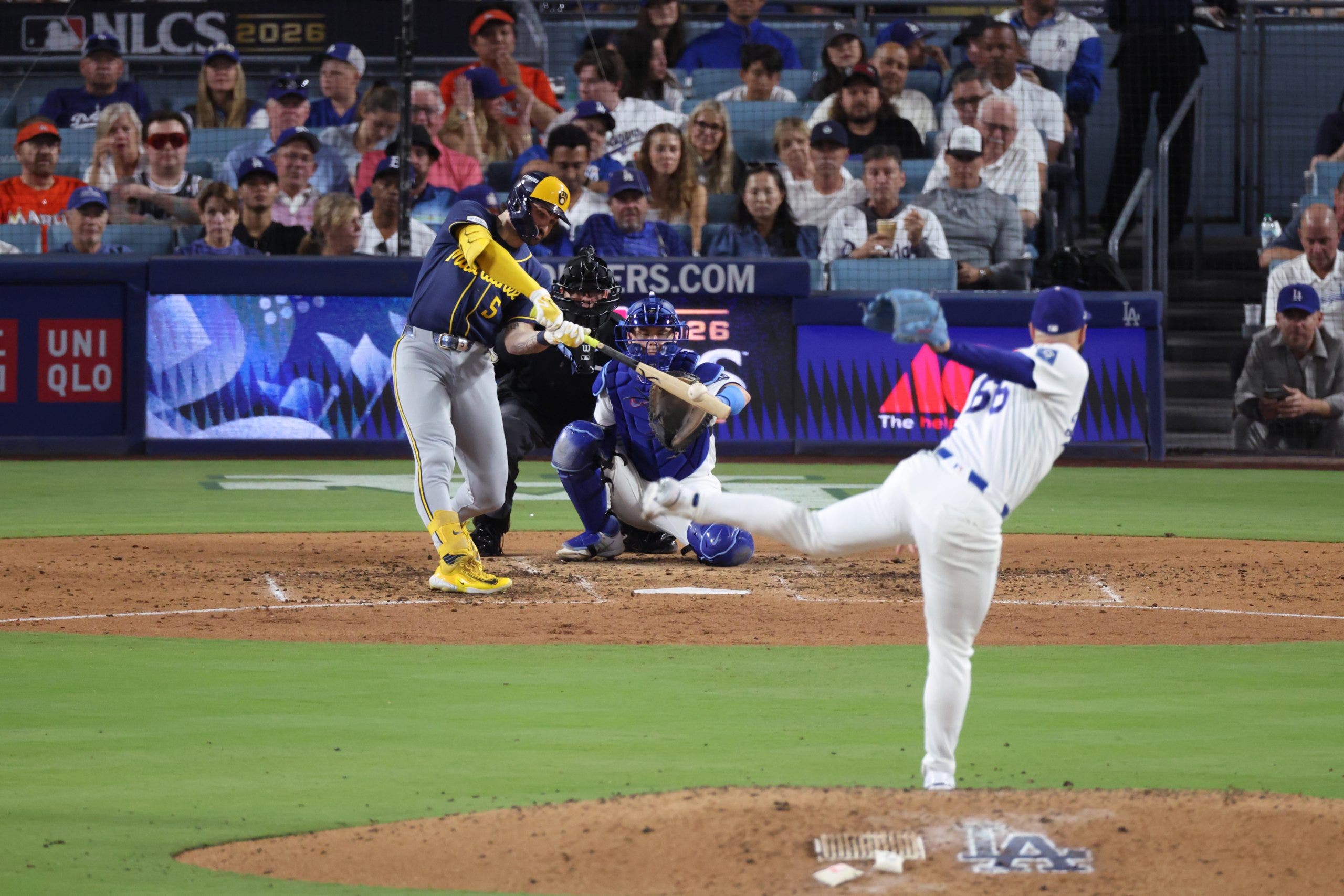
Unintimidated, undaunted, undeterred, they overwhelmed the Dodgers in every phase, outslugging their star-studded foes, countering every punch, perpetually pouring on pressure and snatching the will of the defending champs, who couldn’t help but tip their caps afterward.
"No matter how much you win, these moments suck," said Kiké Hernández. "I've won a lot in my career, but I've also had a lot of these. They don't get easier. But they're playing unbelievable right now. Congrats to them. I hope that they end up winning it all. They're almost playing perfect baseball. That's a team that's incredibly hungry and incredibly talented. Their pitching was lights out. Their offense was almost suffocating."
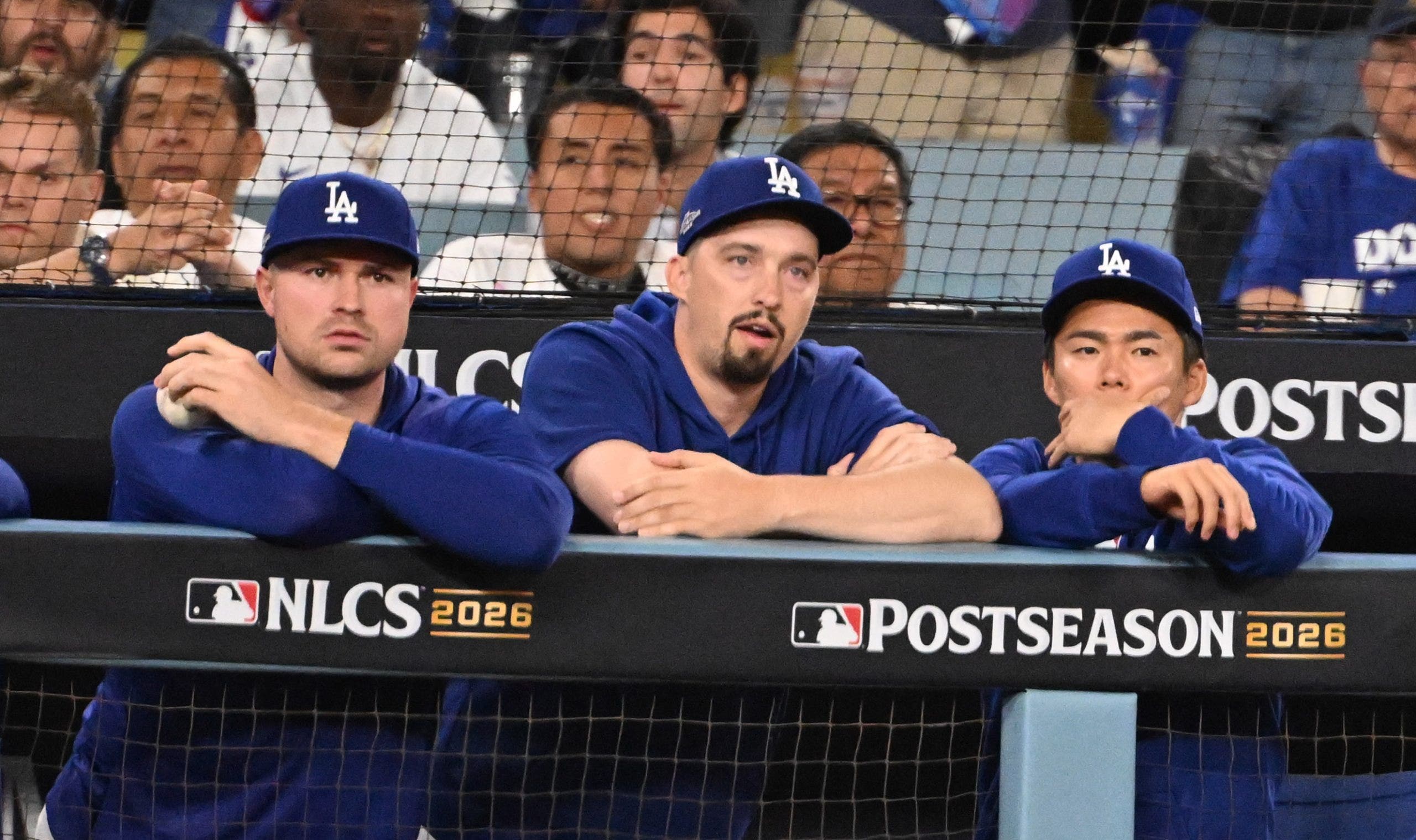
The Brewers faced defending back-to-back American League Cy Young Award winner Tarik Skubal in Game 1, reigning World Series MVP Yoshinobu Yamamoto in Game 2 and another two-time Cy Young Award winner Blake Snell in Game 3. They fell in an early 4-0 hole against No. 4 starter Tyler Glasnow, who would have been the ace of some playoff rotations, in Game 4.
And they won all of them, despite playing from behind in each.

The final comeback was especially awe-inspiring, considering the swing that preceded the Brewers’ nightly fusillade.
Dodgers designated hitter Shohei Ohtani had looked like a shell of himself at the plate for months as he fought through multiple physical ailments, which could require procedures this offseason.
"Hard to tell at this point," Ohtani said through interpreter Will Ireton. "It’s something that’s going to be analyzed, discussed over the offseason."
Entering Thursday, Ohtani was homerless over his previous 25 games and had knocked in just one run over that stretch. So, when he unloaded on an electrifying three-run, 428-foot drive, then turned toward the home dugout and let out months worth of frustration with a bat flip and a yell, it seemed like it might be a turning point not only in the game but potentially the series.
"He gets that moment, it’s like, ‘That’s the swing we’ve been waiting for,’" third baseman Max Muncy told me. "We’ve got a nice lead, we got Glas on the mound, we’re confident behind him."
Had the Dodgers won Game 4, they would have had Skubal and Yamamoto ready for a second crack at the Brewers in Games 5 and 6.
"I was thinking that before the game started," Skubal told me. "There was no doubt in my mind that we were going to get to a Game 5, and my thought process was, ‘I’m going to get Yama the ball in Game 6 and we’ll see what happens. But baseball … it’s hard to win."
Especially against these Brewers, who did what they always do.
(Photo by Keith Birmingham/MediaNews Group/Pasadena Star-News via Getty Images)
They kept chipping away — two runs in the fourth, another two in the fifth, a blast from Garrett Mitchell. Just like that, the Dodgers were down by the sixth inning and facing another undesirable battle against the Brewers’ overpowering relief arms.
"They just kept stringing together one good at-bat after another after another after another," Muncy continued. "They were just kind of relentless."
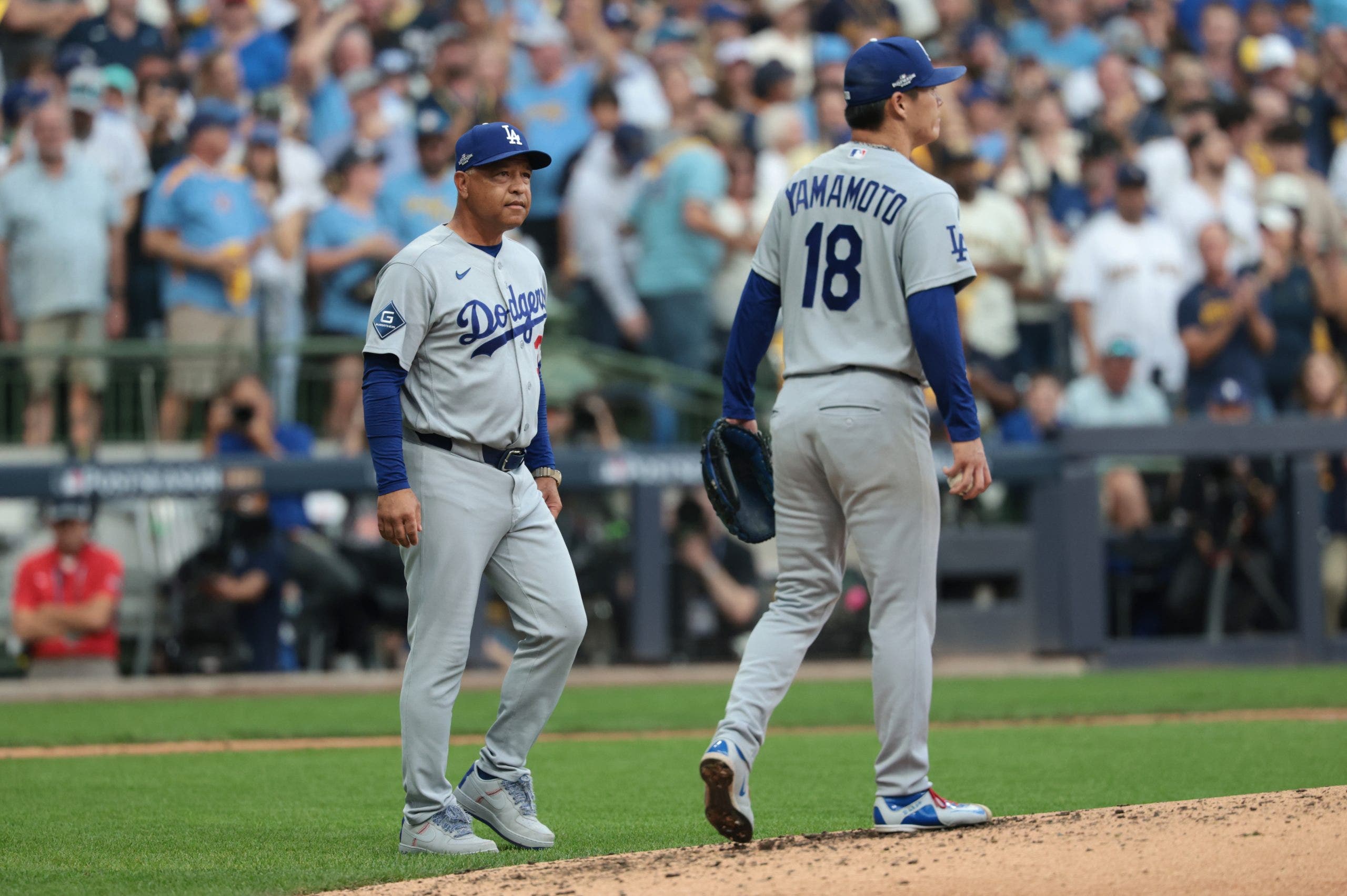
Even before the series shifted back to Los Angeles, the Dodgers seemed almost shell-shocked by their opponents after Yamamoto got chased in the third inning of Game 2, marking the shortest start of the October sensation’s decorated playoff career.
(Robert Gauthier/Los Angeles Times via Getty Images)
That was perhaps most obvious in the attendance at Dodger Stadium. While 50,708 fans attended Game 3 and another 49,104 showed up for Game 4, neither was a sellout.
The Brewers had nine more hits, six more homers and 10 more runs than the Dodgers in the series. They became the first club ever to trail in all four games of a best-of-seven sweep and the first to record six comeback wins in their first eight games of a postseason.
Meanwhile, their assortment of high-powered arms rendered the Dodgers’ top sluggers incapable, seemingly stripping them of their confidence more and more with each passing day. Milwaukee’s bullpen finished the series 4-0 with a 2.08 ERA and 22 strikeouts to just six walks.
But the Dodgers had plenty of opportunities that went uncashed. The final frames of their season Thursday night will go down as a fitting representation of their lineup’s unmet potential.
Andy Pages, who delivered the team’s only two hits with runners in scoring position through the Dodgers’ first six games of the playoffs, doubled to start the seventh inning, representing the tying run. Hernandez sacrificed Pages to third base, turning the lineup over for Ohtani, who had already broken out of his prolonged power outage.
This time, though, Ohtani reverted to his previous October form, striking out on three pitches against lefty Aaron Ashby while helplessly chasing at strike three. Mookie Betts followed with a groundout.
An inning later, the Dodgers left Will Smith stranded at third base after a one-out double. With runners in scoring position, they finished 4-for-27 in the NLCS and 5-for-43 in the postseason.
With that, the Brewers became the first MLB team to sweep a playoff series against a team that swept them the year prior.
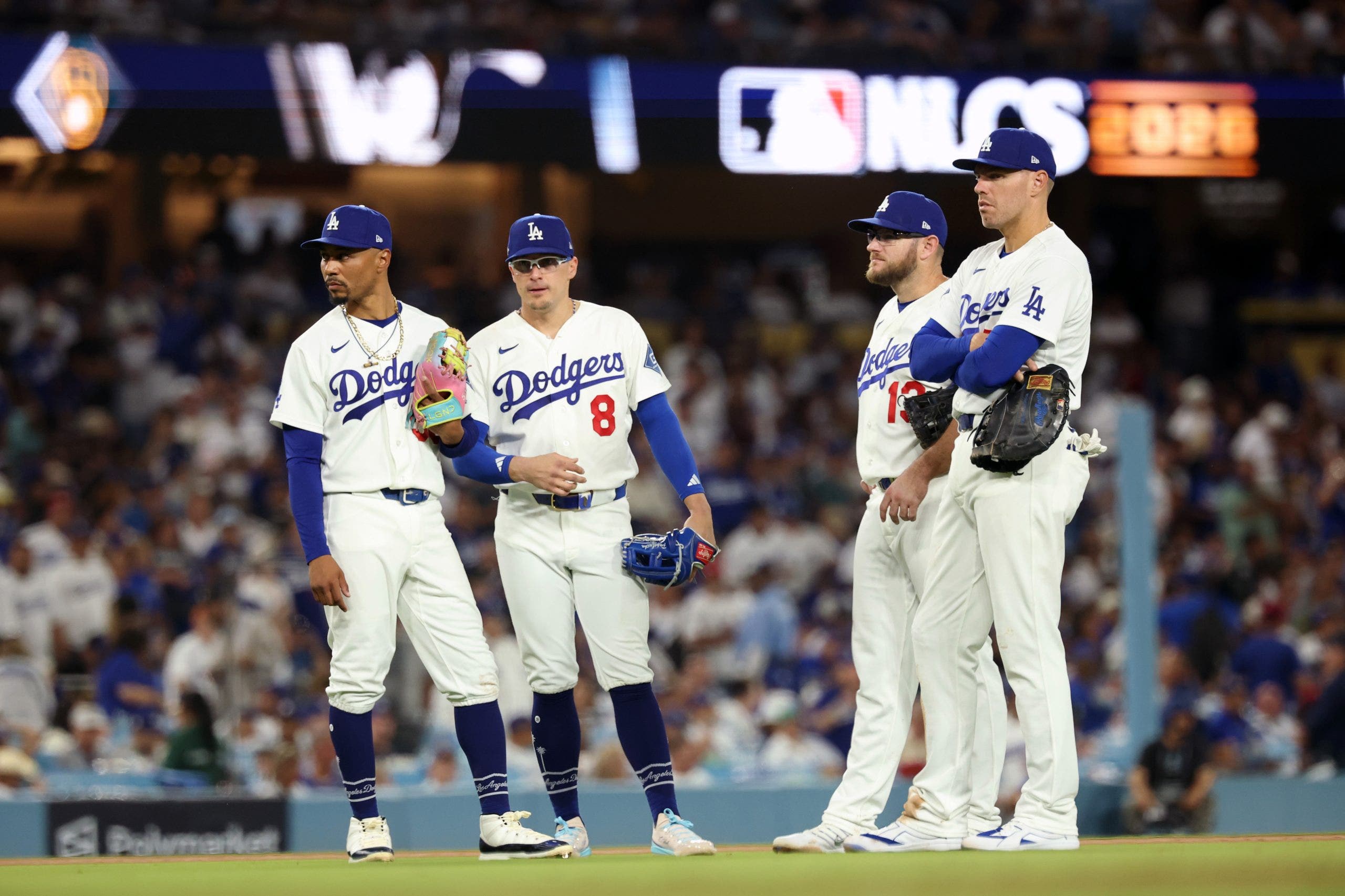
"Sometimes you go out there and give it your all, and you come up short," said Freddie Freeman. "It’s life. I’ve been playing this a long time, only won three times. That’s a lot of hurt at the end of seasons. Sometimes, you just get beat."
The decisive manner in which it happened, though, came as a shock.
(Photo by Harry How/Getty Images)
The defending two-time champs, a group laden with veteran superstars, were supposed to be the team capable of relying on their experience in these circumstances.
The flip-side of that argument? Their age might have been part of the problem.
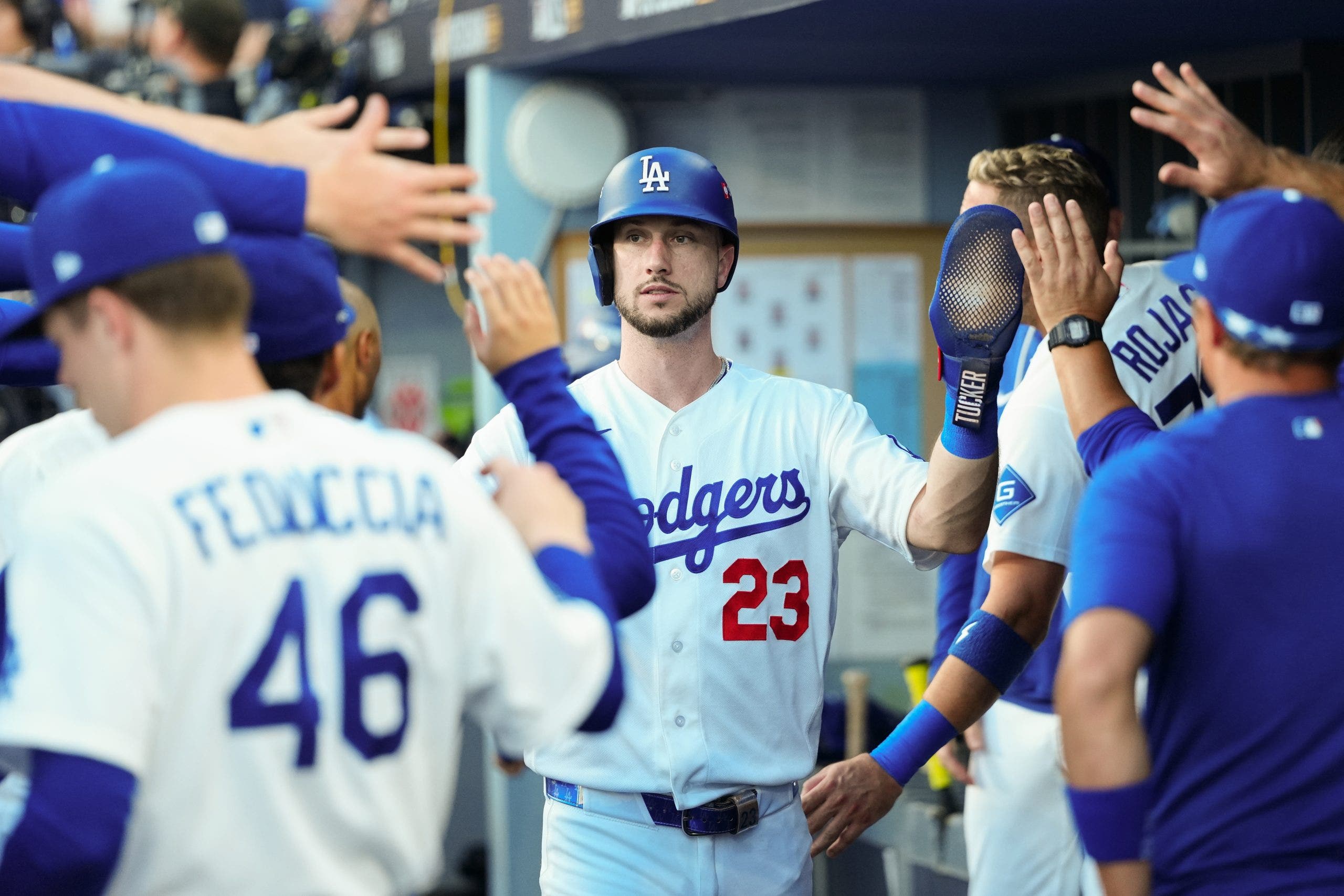
The Dodgers didn’t buy into the narrative that Father Time had finally come knocking for MLB’s oldest roster, but they had tried to prepare for the reality by lavishing 29-year-old Kyle Tucker with a four-year, $240 million contract, making him one of only two starters in their lineup under the age of 30.
Tucker and three-time All-Star closer Edwin Díaz, the Dodgers’ two biggest free-agent acquisitions — and two more reasons that fans from 29 other fanbases decried the Dodgers’ payroll advantage and the sport’s competitive imbalance — labored through the worst full season of their careers.
(Photo by Daniel Shirey/MLB Photos via Getty Images)
Coincidentally, by the time October arrived, their two major offseason additions were finally giving the Dodgers what they had hoped. But they couldn’t change their team’s fate.
And signs of their aging roster were appearing. They had grounded into the most double plays in the National League this year, a problem that reappeared this postseason, and their roster was ailing.
Among players with at least 100 competitive runs, the Dodgers’ fastest player this year was Teoscar Hernández, who celebrated his 34th birthday on Thursday and was slowed by a hamstring strain this year. A sore knee for Freeman sapped the 37-year-old’s power late in the year, clearly playing a part in the veteran first baseman hitting just one home run in the season’s second half and one extra-base hit in all of September.
Most notably, even Ohtani demonstrated his mortality.
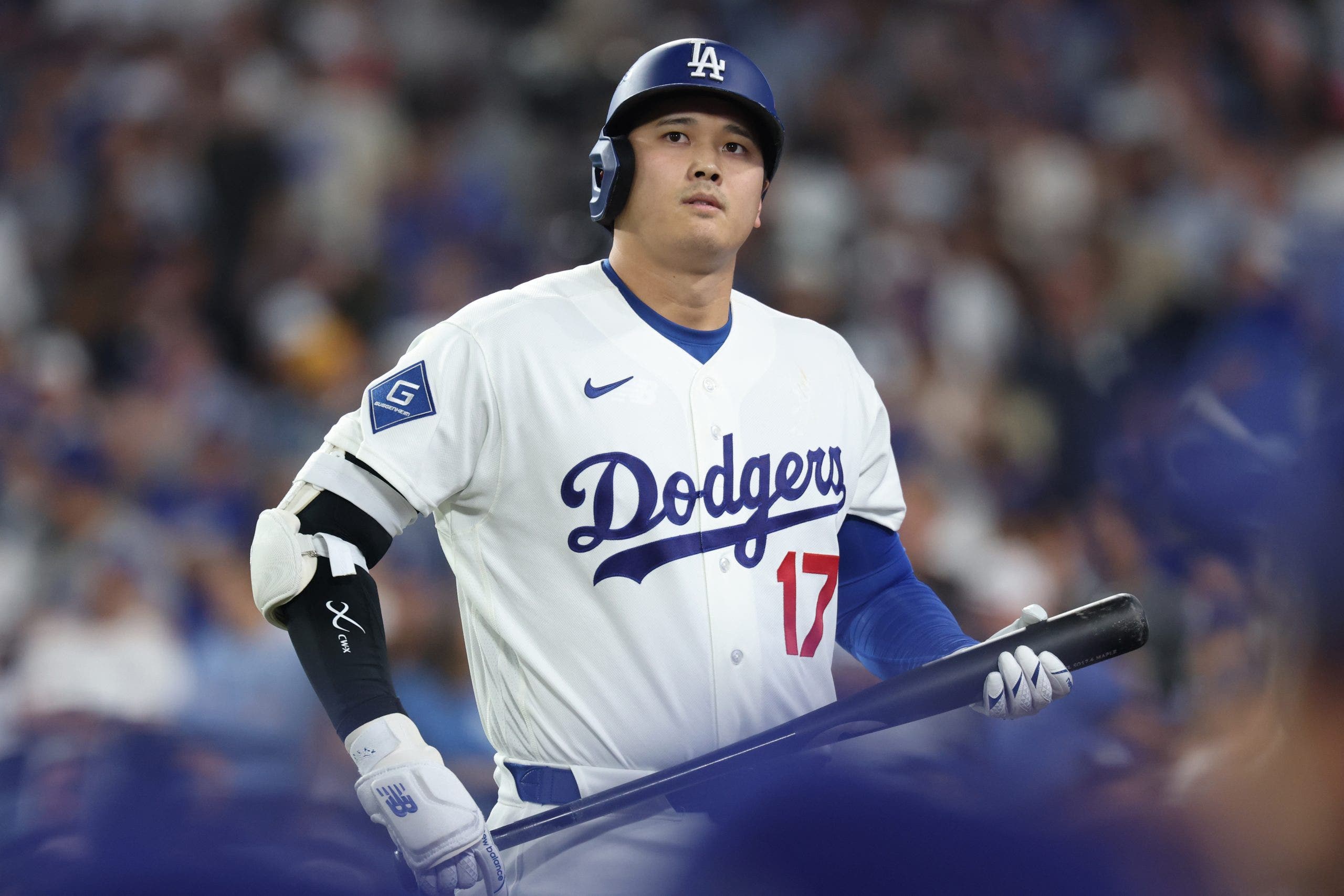
Photo by Sean M. Haffey/Getty Images)
A medley of aches and pains, including injuries to his left knee and right biceps, prevented him from pitching after July 3 and clearly impacted him at the plate down the stretch.
He said he’ll need to "go back to the drawing board" in terms of treatment and training to see how to better prepare his body next year, though he still plans on trying to pitch again next season.
By then, the group surrounding him will have changed.
Skubal is set to become one of the highest-paid pitchers in MLB history. Kiké Hernández and relievers Evan Phillips and Alex Vesia are both free agents. The Dodgers also may want to create more time for standout rookie Josue De Paula as they usher in a fresh wave of talent.
These are all conversations the Dodgers didn’t expect to be having so suddenly.
"We really tried to do something special in this clubhouse, and I know next year we’ll be ready to get right back to it," Muncy said. "But right now, this sucks."
Of the previous 42 teams that trailed 3-0 in a best-of-seven series, only one — Roberts’ 2004 Red Sox — overcame that deficit. Thirty-two of them were swept.
The Dodgers made it 33, and now a winter of uncertainty awaits with their owner under federal investigation and an impending labor battle looming.
"You can’t really think about this being the end of an era," Rojas said. "I think when you have Shohei Ohtani on your team, Yoshinobu Yamamoto, Freddie Freeman, Mookie Betts and the years ahead of these guys, you can never think that it’s going to be the end."
At least, not for most of them.




MLB Moves Start Time Of Brewers-Dodgers NLCS Game 4

Down 3-0 In NLCS, Can Dodgers 'Make A Little More History' To Keep 3-Peat Alive?

Jake Bauers Nearly Retired. Now He Has The Brewers One Win From The World Series

Down 0-2, Dodgers Drop Star Shohei Ohtani To Sixth In Lineup For NLCS Game 3

Can Dodgers Flip A 3-Game Deficit? Big Papi, Jeter, A-Rod Know It Can Happen

‘They Melt Your Soul Away’: A-Rod Stunned As Brewers Take 3-0 Lead Over Dodgers

Mariners Reportedly Targeting 4 Managers With Championship Pedigree

Phillies President Dave Dombrowski Stresses Trea Turner 'Has To Be Better'

Petey Halpin Home Run Electrifies Guardians To ALCS Game 3 Win Over Rays





 Your Privacy Choices | Closed Captioning


