Why INDYCAR's 2-Week Break Is Anything But A Vacation — And How Teams Capitalize


In Driver's Eye with James Hinchcliffe, the six-time INDYCAR winner will bring you inside the mind of a racer while breaking down the nuts and bolts of the sport for fans.
INDYCAR is smack in the middle of a two-week break. And while that means you won't watch on-track action and I won't be in the INDYCAR on FOX booth for two straight weekends, the drivers and teams aren't off.
Far from it, actually.
Calling it a two-week "break" is a bit misleading. I promise you that these days away from the track are anything but a vacation. It's more like a valuable opportunity.
After four races in the first five weeks of the season, the paddock packed up following Alex Palou's checkered flag at Barber Motorsports Park, and teams and drivers were staring at a two-week break before heading to the streets of Long Beach for the Acura Grand Prix.
So what are they doing in these couple "off" weeks? Let's zoom out briefly.
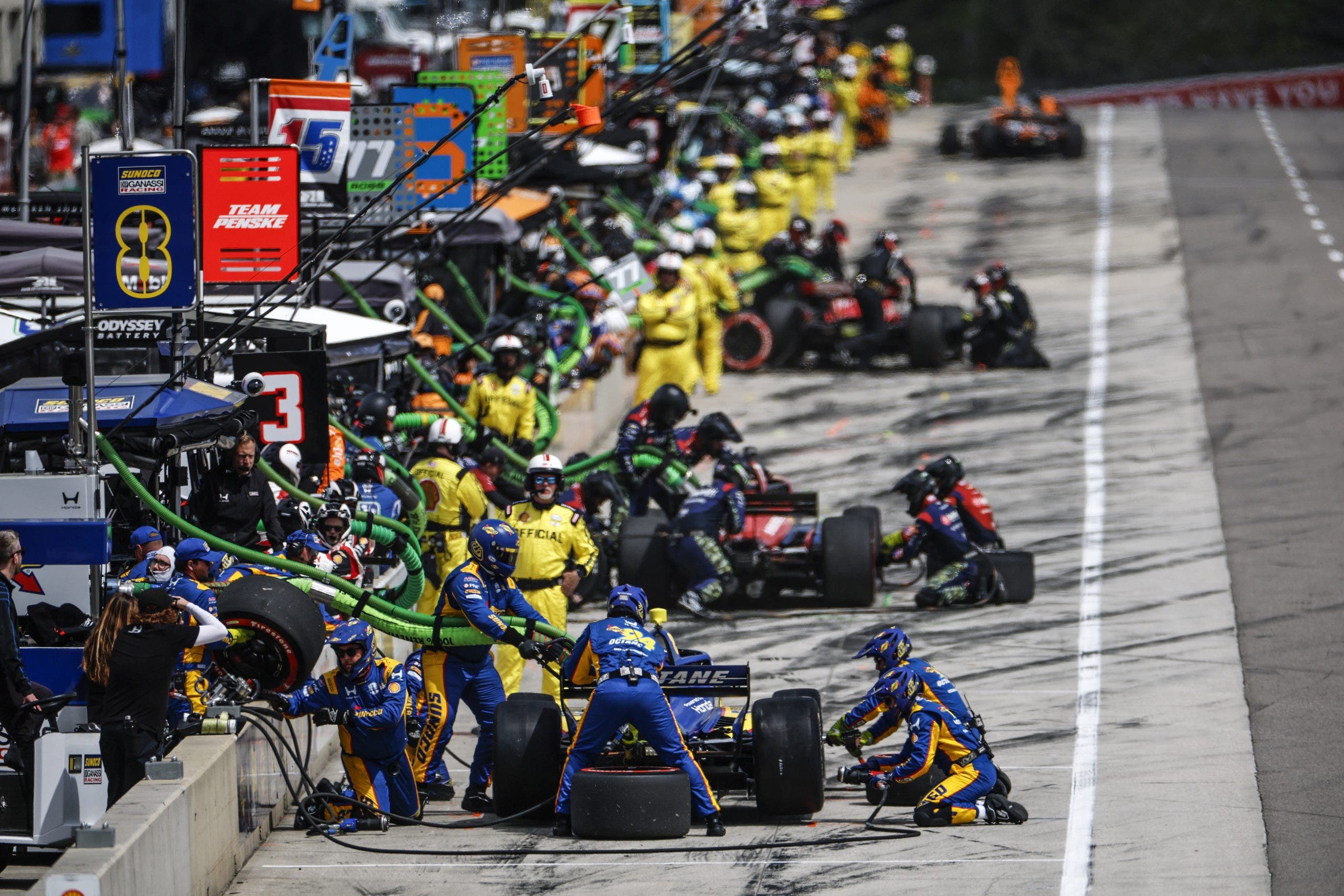
A pit stop during the Children's Of Alabama INDY Grand Prix on March 29, 2026 at Barber Motorsports Park. (Photo by Michael L. Levitt/Lumen via Getty Images)
Back-to-back races are grueling for INDYCAR teams. Typically, the mechanics, engineers and drivers will fly into a race market on a Thursday for what we call Set Up Day. This is when the tents are put up, the cars get unloaded and final prep happens. Drivers and engineers sit and go over the weekend plan, which usually includes a track walk.
Friday, Saturday and Sunday, we practice, qualify and race, and then teams will rush to get home Sunday night. The trucks and trailers often don’t roll in until early hours on Monday, when the mechanics and engineers are in the shop tearing down and rebuilding the car, as well as pouring through the data from the weekend.
Tuesday, the cars get finalized and put back on the truck, so they can leave Wednesday — sometimes earlier for the West Coast races — to be at the track Thursday for Set Up Day.
What that all means is that there is generally very little time between consecutive race weekends for the engineers and drivers to deep dive into what has happened the previous weekend. These cars have so many sensors and collect so much telemetry data that when you only have one day at the shop in between races, there is no way a team can sift through it all to find every little detail that will make them faster.
So this two-week pause in the schedule gives everyone time to do a proper postmortem on the races so far.
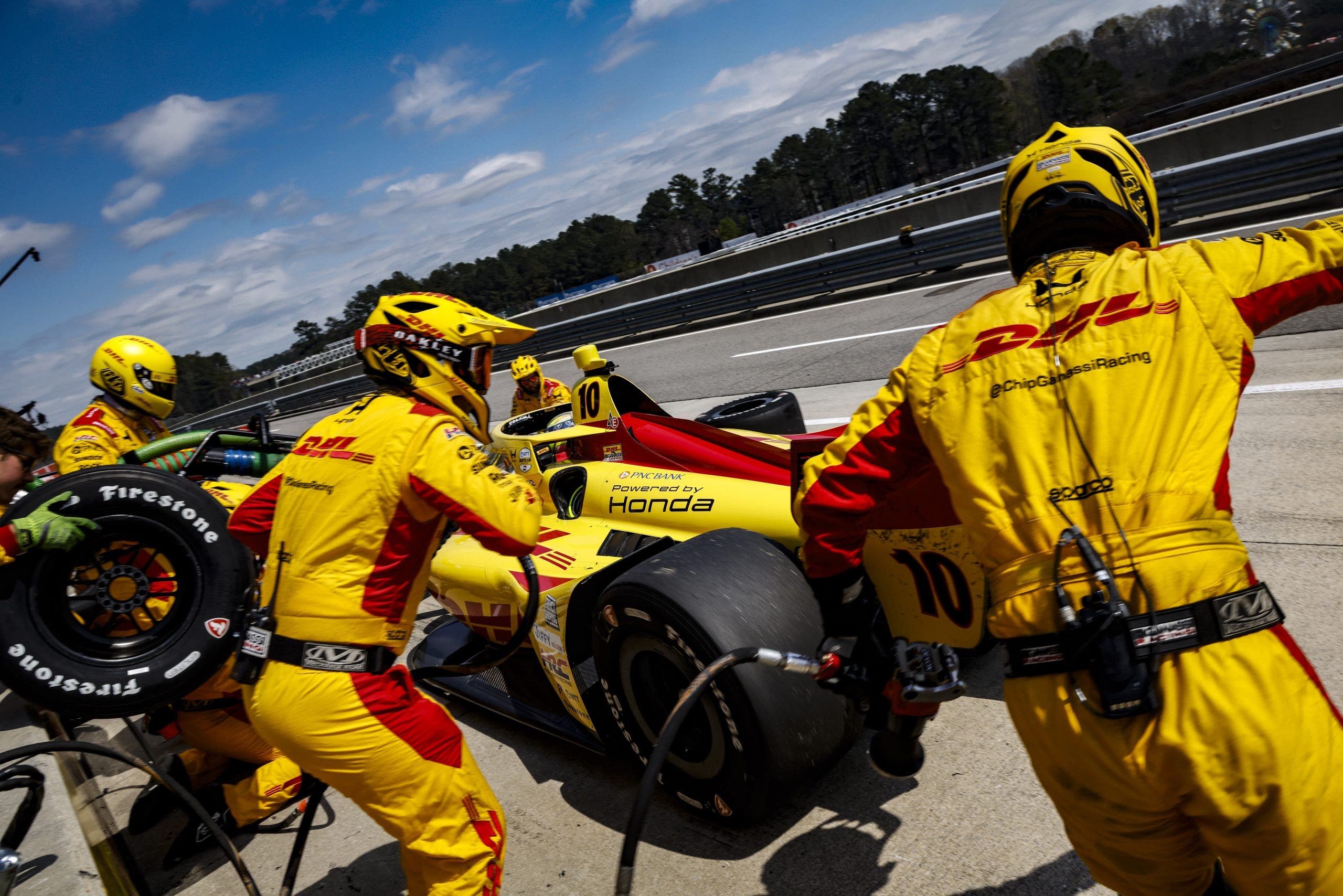
Alex Palou and his Chip Ganassi Racing pit crew during the Children's Of Alabama INDY Grand Prix. (Photo by Michael L. Levitt/Lumen via Getty Images)
We’ve already had races on a street course, a road course and an oval, so the entire gambit of INDYCAR track types has been covered. Teams already have a sense of where their strengths and weaknesses lie. Now, they’ve got the time to find out why.
Remember: It’s just as important to understand why you’re fast at some tracks (so you can try to replicate it) as it is to understand why you’re slow at some tracks (so you can fix it!).
Teams can analyze 100 different things about the car and driver, but a few seem pretty simple. For example, engineers know what impact changing a certain setup should have. If a driver complains of X balance problem, an engineer knows that Y setup change should fix it. But that doesn’t always happen! So the engineers will look at moments when the race car didn’t perform as expected and try to figure out what caused that.
Another thing that will be very common in this stretch is drivers getting into the simulator.
With relatively little track time in the weekend’s practice sessions, you never have enough time to get through everything on your list. Jumping into the sim allows teams to keep experimenting with other setup changes that they didn’t have a chance to try on the race weekend.
Maybe there are a couple silver bullets for lap times that they missed. Maybe there's an unexpected lesson learned or an innovative opportunity born out of a light-bulb moment.
The sim is as much a tool for working through solutions from the last race weekend as it is a preparation tool for the next race.
Personally, during multi-week breaks like this, I always loved getting in the simulator to keep sharp.
It’s also a great time to get back into a good training routine. With how much travel you have in the back-to-backs, it is tough to keep that training routine, but this stretch lets you reset physically and that always feels good for drivers.
SOUND LIKE AN INDYCAR EXPERT
We talk a lot about INDYCAR's versatility in track types, but we don’t often look too closely at what different tracks require from a setup standpoint.
So let’s break it down.
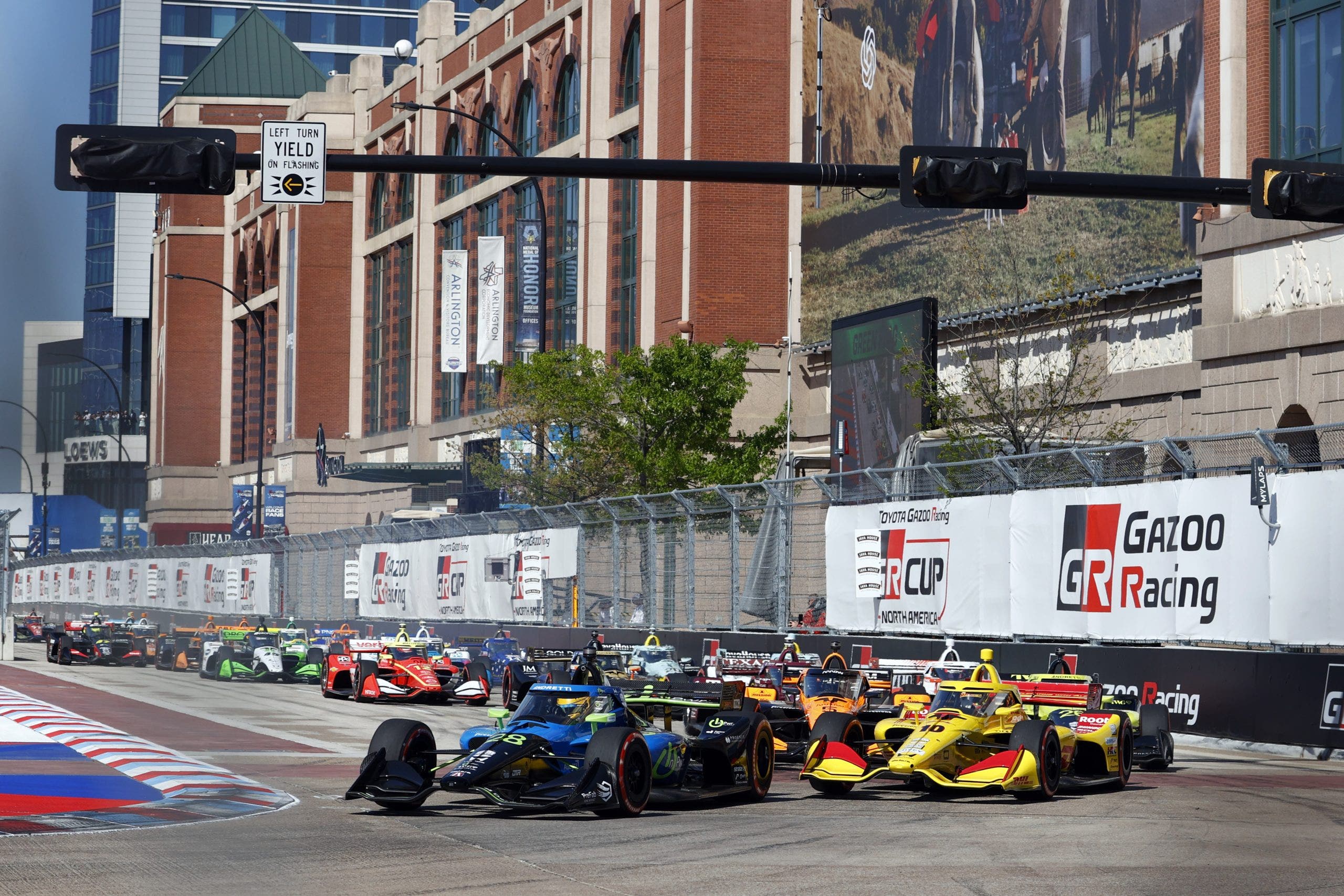
INDYCAR's first race on the streets of Arlington, Texas on March 15, 2026. (Photo by Perry Nelson/Lumen via Getty Images)
Let’s look at street courses first. Street courses are temporary tracks over city streets that tend to have many different surface types, bumps and generally a lack of high-speed corners. This usually puts the most emphasis on mechanical grip, which you achieve with damper settings and softer springs.
Putting it simply, softer springs means more grip. Another common setup trait is higher ride heights, which you need to avoid the bottom of the car slamming into all the bumps on this type of track.
Road courses may seem similar but are the opposite in a lot of ways.
Take Barber as an example. It’s a uniform surface, very smooth and has a lot of long, high-speed corners. That means that Barber has more of a reliance on aerodynamic grip, or downforce.
Downforce is generated by the big wings on the front and rear of the car and by the floor. On this type of track, you typically run much stiffer springs to support the car through the fast corners and maximize the downforce potential.
The stiffer springs also allow lower ride heights, which helps the aero grip. It’s a tougher, more direct feel from behind the wheel than a street-course car, but you have to be an inch perfect when driving it.
Ovals are a completely different beast all together.
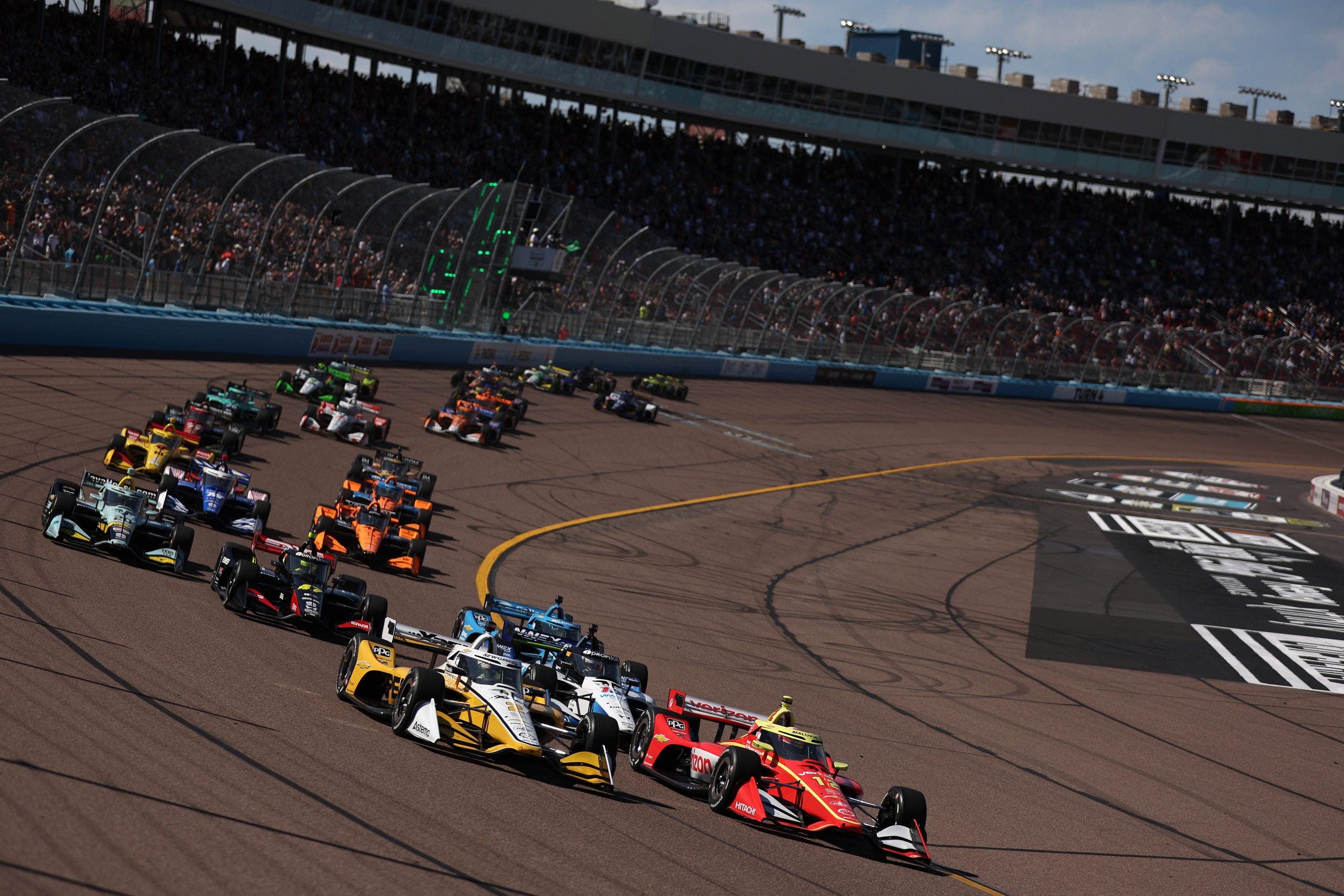
INDYCAR's Good Ranchers 250 at Phoenix Raceway on March 07, 2026 in Avondale, Arizona. (Photo by Meg Oliphant/Getty Images)
There are generally different aerodynamic rules for ovals, so first and foremost, the wings will look different. Obviously, on ovals you only turn left, so the cars are set up very asymmetrically. Things like cambers (the vertical tilt in the tire) and toes (how straight the tire is relative to the centerline of the car) are set up in a way that means the car naturally wants to turn left.
So much so that you have to physically turn the wheel a bit right on the straights!
The car naturally wants to turn left. If you just let go of the wheel, the car will careen into the inside wall, so you have to fight that by turning right to go straight.
Needless to say, the things that make you quick on one type of track do not always — in fact, rarely — translate to speed on a different type of track. That’s why there is so much information to digest, process and apply to be better from one week to the next.
1 FOR THE ROAD
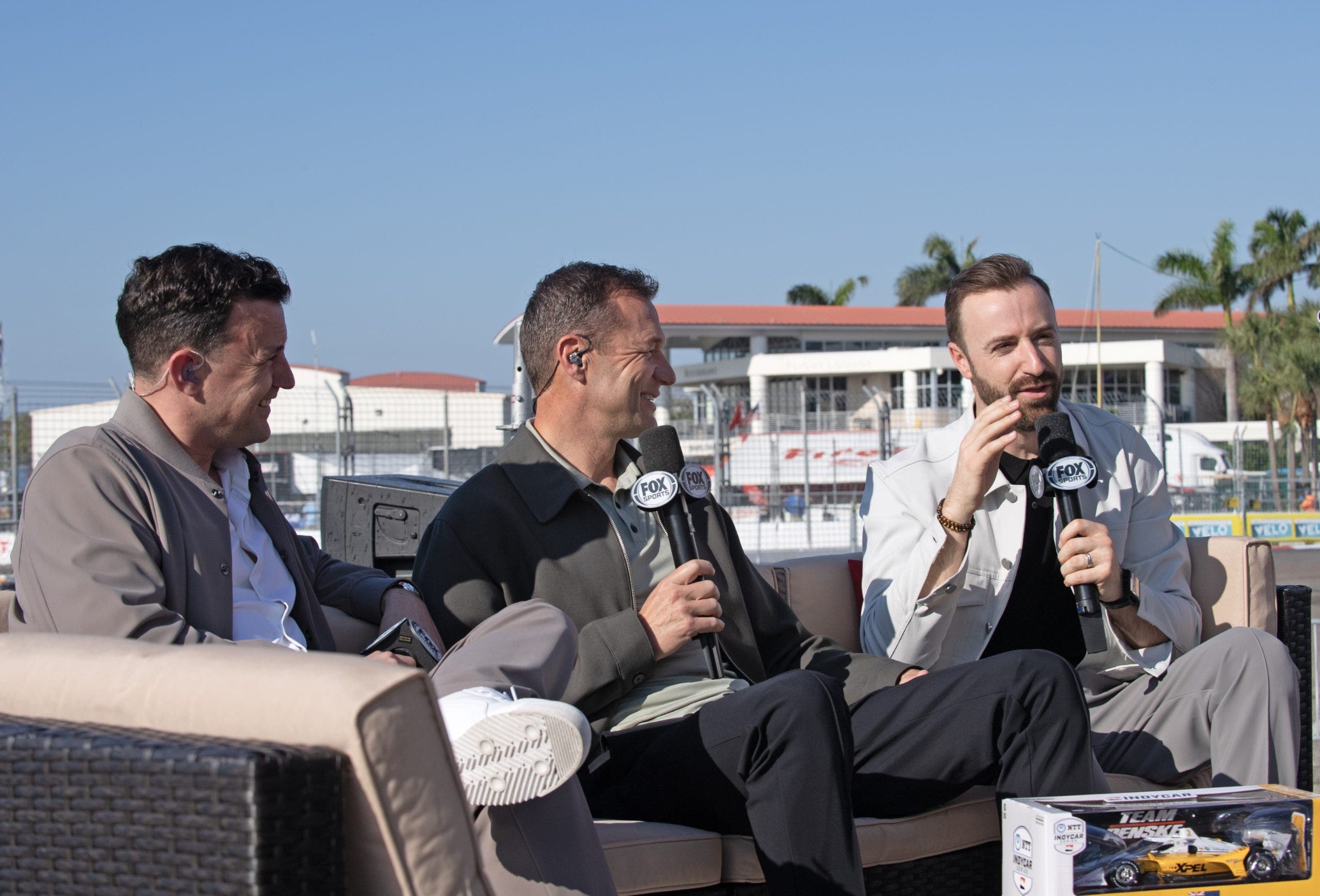
Will Buxton, Townsend Bell and James Hinchcliffe at the Firestone Grand Prix of St. Petersburg in March. (Photo by Mark Taylor/PictureGroup for Fox Sports)
As for me and the rest of the INDYCAR on FOX team, the break is a welcome thing for the TV crew.
Not unlike race teams, we like to do thorough breakdowns of each broadcast to look at what we did well and what we can improve on. With consecutive races, it’s tough to get into too deep an analysis.
So these weeks are spent rewatching the first races of the season, talking regularly between myself, my co-commentators, my director, producers — you name it! The end result is hopefully that you see a broadcast that gets just a little better every time you watch.
MORE DRIVER'S EYE:

INDYCAR's Unforgettable 2026 Season And The Bright Future It Signals

How to Watch 2026 INDYCAR Milwaukee Mile Doubleheader: Start Times, TV, Streaming

How to Watch 2026 INDYCAR Freedom 250 in DC: Start Time, Date, TV Channel, Streaming, Schedule

How to Watch 2026 INDYCAR Freedom 250: Start Time, Date, TV Channel, Streaming, Schedule




-
INDYCAR's Unforgettable 2026 Season And The Bright Future It Signals
How to Watch 2026 INDYCAR Milwaukee Mile Doubleheader: Start Times, TV, Streaming
How to Watch 2026 INDYCAR Freedom 250 in DC: Start Time, Date, TV Channel, Streaming, Schedule
-
How to Watch 2026 INDYCAR Freedom 250: Start Time, Date, TV Channel, Streaming, Schedule





 Your Privacy Choices | Closed Captioning


