4 Takeaways From the College Football Playoff 12-Team Bracket Reveal


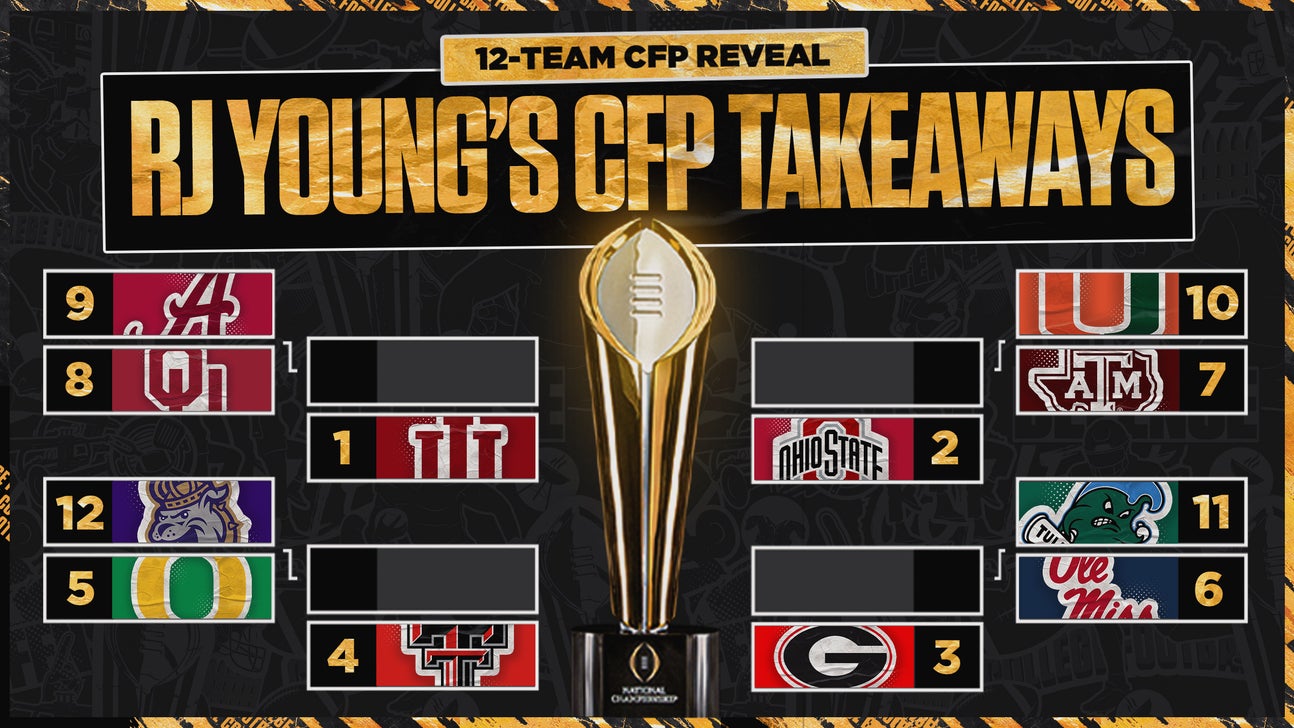
The field is set, the seeds are known, and the College Football Playoff begins in just 12 days time. After a conference championship weekend that crowned Indiana in the Big Ten, Georgia in the SEC, Texas Tech in the Big 12 and Duke in the ACC to round out the Power 4, the College Football Playoff committee revealed the 12-team field for this year's postseason.
Here are my four takeaways from the setting of the 2025 CFP field:

1. The ACC isn’t the selection committee’s favorite G6 conference
On Tuesday, I was confident that the ACC was the committee’s favorite Group of 6 conference. But that’s not true anymore. Not one but two Group of 6 champions were selected for the CFP. That left the ACC, a Power 4 conference, without a champion in the playoff. Previously, we might’ve thought this very unlikely in a 12-team CFP model. But read the fine print, folks.
It’s not that the selection committee must automatically select each Power 4 champion. It must only select the five highest-ranked conference champions. It doesn’t matter if they’re powerful or weak, Power 4 or Group of 6.
But it is clear that the ACC had better get its wattage up or pivot to a more strategic tiebreaker.
Rather than relying on opponents’ conference winning percentage — which is how Duke arrived at the ACC title game rather than Miami, Georgia Tech, Pitt or SMU — the obvious and most beneficial tiebreaker is selecting the highest-ranked team among those five teams tied for second place.
This would’ve been fire insurance against the catastrophe for the league that was an 8-5 unranked champion. Last year, the ACC got two in: its champion Clemson and its runner-up SMU.
None of that mattered to this year’s committee in a jumbled ACC that could’ve ended up with a second team in for a second-straight year, if only its tiebreaker had been built around the CFP rankings. If that feels like a self-inflicted wound by the ACC, that’s because it is.
Although Miami is in, the ACC champion has been locked out of the CFP for the second time since 2023.
2. Notre Dame kept getting away with it — until today
You’ll remember the Fighting Irish lost to Northern Illinois at home last year, didn’t play a conference title game and got to sit at home in a de facto bye week as they prepared to host a College Football Playoff game in South Bend, Indiana.
Then they nearly ran the table, finishing as the national title runner-up to Ohio State.
This season, instead of Notre Dame building on its success, it opened with an 0-2 record. But at least both of those losses were to teams that finished inside the selection committee’s top 25 with No. 10 Miami and No. 7 Texas A&M.
Leading up to the final rankings, all the selection committee seemingly cared about was Notre Dame's 10-straight wins. It cared so much about those wins that they have forsaken one of the most important principles in sport:
If you beat them, you’re better than them.
Miami beat Notre Dame at Hard Rock Stadium this season. We kept score. We even took pictures. We can prove it. Yet, Miami had been continuously pushed behind ND because the losses it sustained to Louisville and SMU mattered more to the committee than its win in a head-to-head with the Fighting Irish.
And this is where the selection committee made a mess.
CFP chairman Hunter Yurachek twisted himself into knots trying not to discuss how the committee could rank Notre Dame ahead of Miami throughout previous rankings, only to flip the two on the day it mattered most, knowing each team had been done playing football for a week.
In the end, Yurachek said the selection committee rewatched the Week 1 matchup between Miami and Notre Dame last week and then flipped the two in its ranking from Tuesday to Sunday.
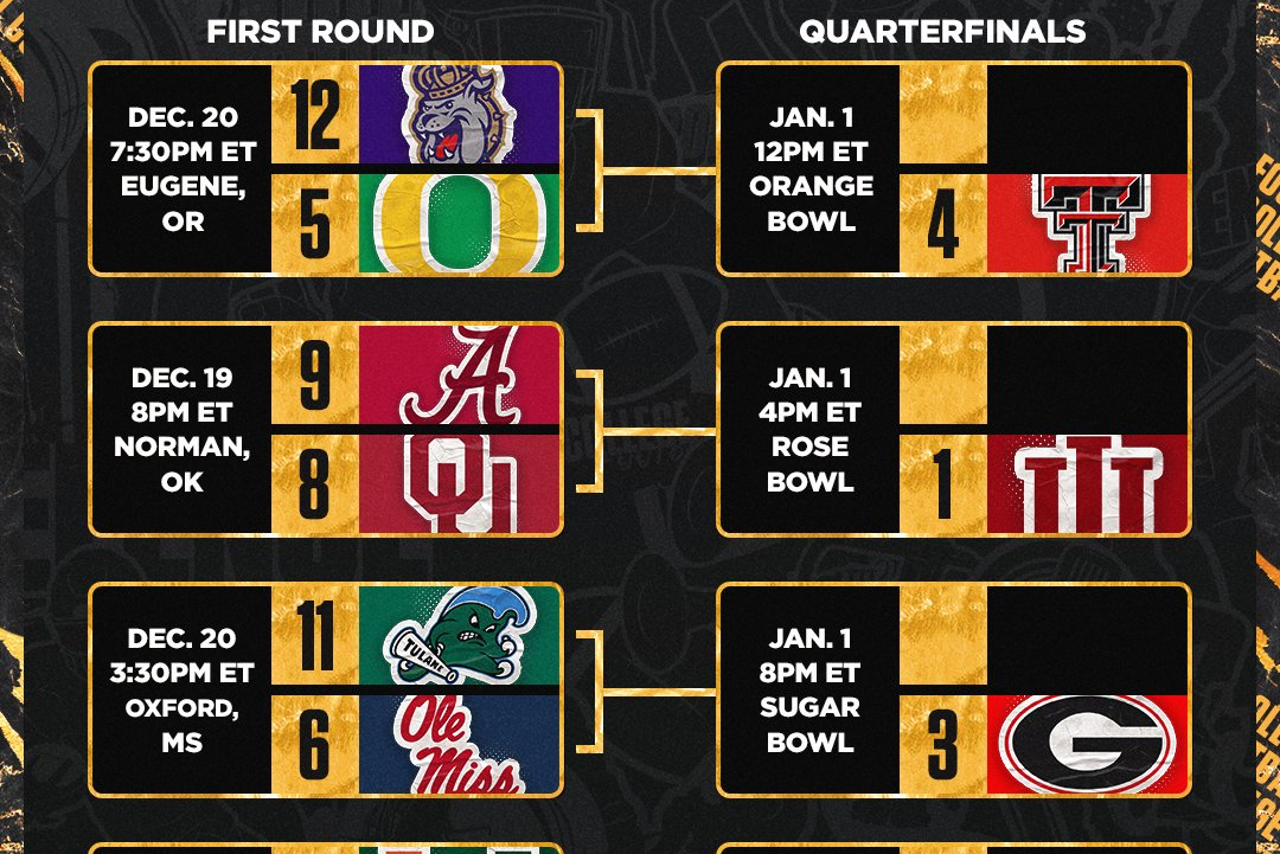
3. Alabama’s reward for losing the SEC title game playing Oklahoma
Alabama used to rent a room in the College Football Playoff. Heck, Alabama used to rent a room in the national title game. From 2009 to 2023, there was no more dominant program in the country with eight appearances in the CFP since its inception in 2014 and six national titles won in 15 years.
Following a beating at the hands of those Georgia Bulldogs in the SEC championship game, the Crimson Tide sat at 10-3 with one more win than last year's Alabama squad, which was excluded from the CFP field.
Now, Alabama is the first team with three losses to earn selection into the CFP, and it’s all because it is the first team in six years to go into Sanford Stadium and beat the Georgia Bulldogs. (And it didn't hurt that they made the SEC championship in the first place.)
Kalen DeBoer no longer has to worry about what it will be like for his team to enter a second offseason without playing in the CFP. All is right in Tuscaloosa — for now.
Meanwhile, BYU, like Notre Dame, will look at Alabama’s selection and have a relevant point for inclusion. BYU made and lost its conference title game, just like Bama, but was excluded. Notre Dame won 10 in a row, and its losses were to two teams who were selected for the CFP.
Notre Dame and BYU should be in the CFP, and there’s a fix for that.
Expand the CFP.

4. We need a 24-team CFP, and we need it now.
The FCS has used a 24-team playoff model since 2013. Since then, two teams — North Dakota State and South Dakota State — have combined to win 10 national titles. A 24-team format hasn’t had a seismic impact on who wins the national title.
But more importantly, the model ensures every team that should get a chance to play through the bracket gets it. In the FCS, you can earn it by winning a conference championship or being an at-large selection by the committee.
In August, the Big Ten and others began "populating" the idea of an expanded College Football Playoff of 24 or 28 teams. The 24-team model, which seems to have the most support in private circles, would include:
— Four automatic qualifiers from each of the Power 4 conferences (ACC, Big Ten, Big 12, SEC)
— Two automatic qualifiers from the Group of 6 (American, Conference USA, MAC, Mountain West, Sun Belt and Pac-12)
— Six at-large selections to be made by the College Football Playoff selection committee — the only selections the committee gets to make
This year, that would mean teams like Alabama, Miami and Notre Dame would not have to enter into a debate about which is more deserving of an at-large berth. They’d be in the CFP — along with other 9- and 10-win teams like Vanderbilt, Texas, Utah, Michigan and Virginia.
I’ve written about this hypothetical 24-team CFP since the committee began releasing its rankings in an effort to not only show how the model would work but also to underscore its benefits. Among them: 16 home site playoff games across the first and second rounds. And a bunch more teams in the hunt through the end of the regular season.
And that is a win for fans, who don’t change teams because the money is longer, don’t ditch their team and run to the nearest coaching gig or transfer portal and don’t opt out of bowl games because they have a new head coach (looking at you, Kansas State and Iowa State).
The CFP is for those who want to know, leaving no doubt, who the best is. If you’re not one of those folks, I suggest you watch a beauty pageant. They like judging people by their looks over there, not by whether the scoreboard says you got your butt kicked.





2026 College Football Rankings: Georgia Stays Perfect, BYU Breaks Into Top 10

NFL, CFB Weekend Betting Recap: Pats, Cowboys Give Books 'Sigh Of Relief'

Oregon Coach Dan Lanning Gives Positive Dante Moore Injury Update

AP Top 25: Missouri Jumps 11 Spots After Top-10 Upset; Florida Falls

Joel Klatt Says Jeremiah Smith Is 'Entering The Chat' As Greatest Buckeye Ever

Is It Coaching, Talent, Or Money? For Deion Sanders And Colorado, It’s All Three

Dabo Swinney And Clemson Are Stuck In Neutral After Another Blowout Loss

Jeremiah Smith Can't Stop Making History, This Time With An Ohio State Triple Crown

The Day Minnesota's P.J. Fleck Rowed The Boat Into History




 Your Privacy Choices | Closed Captioning


