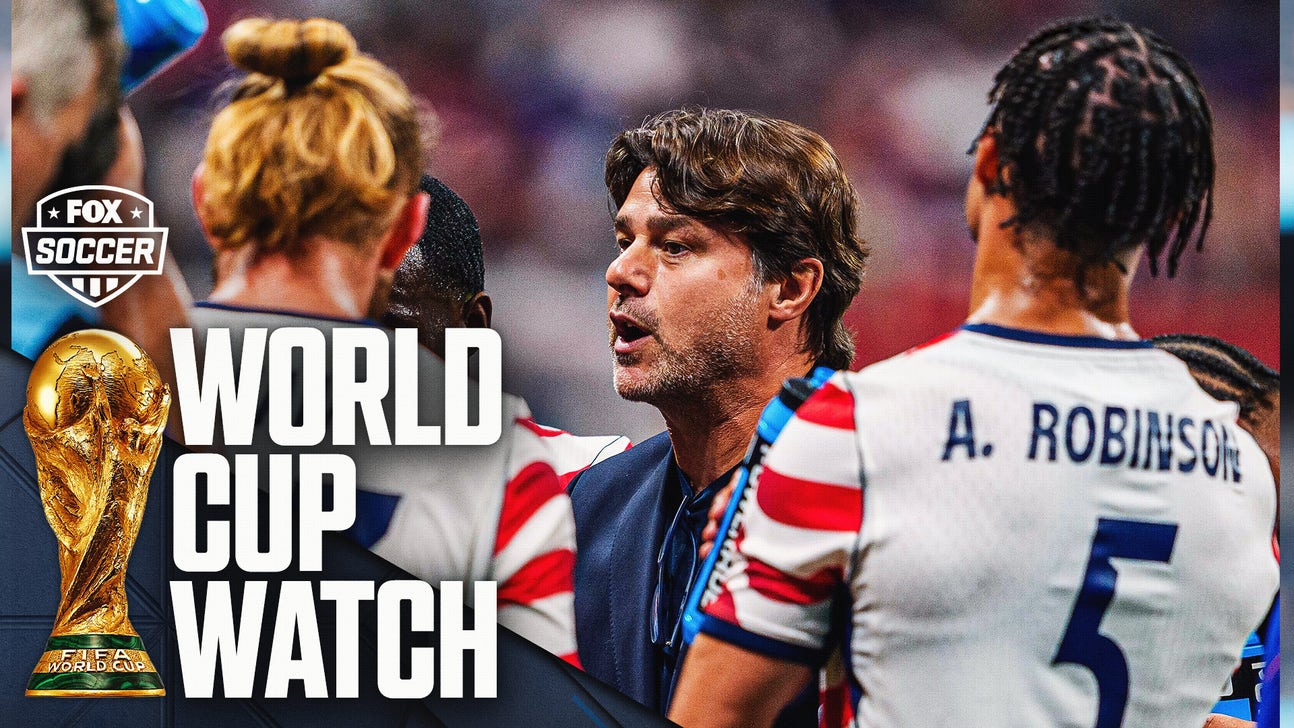
USA Must Rediscover Intensity In Tuneup v. Portugal: 'That's Non-Negotiable'


MARIETTA, Ga. — As he settled into his podium seat for Monday’s packed pre-match press conference inside the sprawling and pristine training facility of MLS side Atlanta United, U.S. men’s national team coach Mauricio Pochettino cut a businesslike figure.
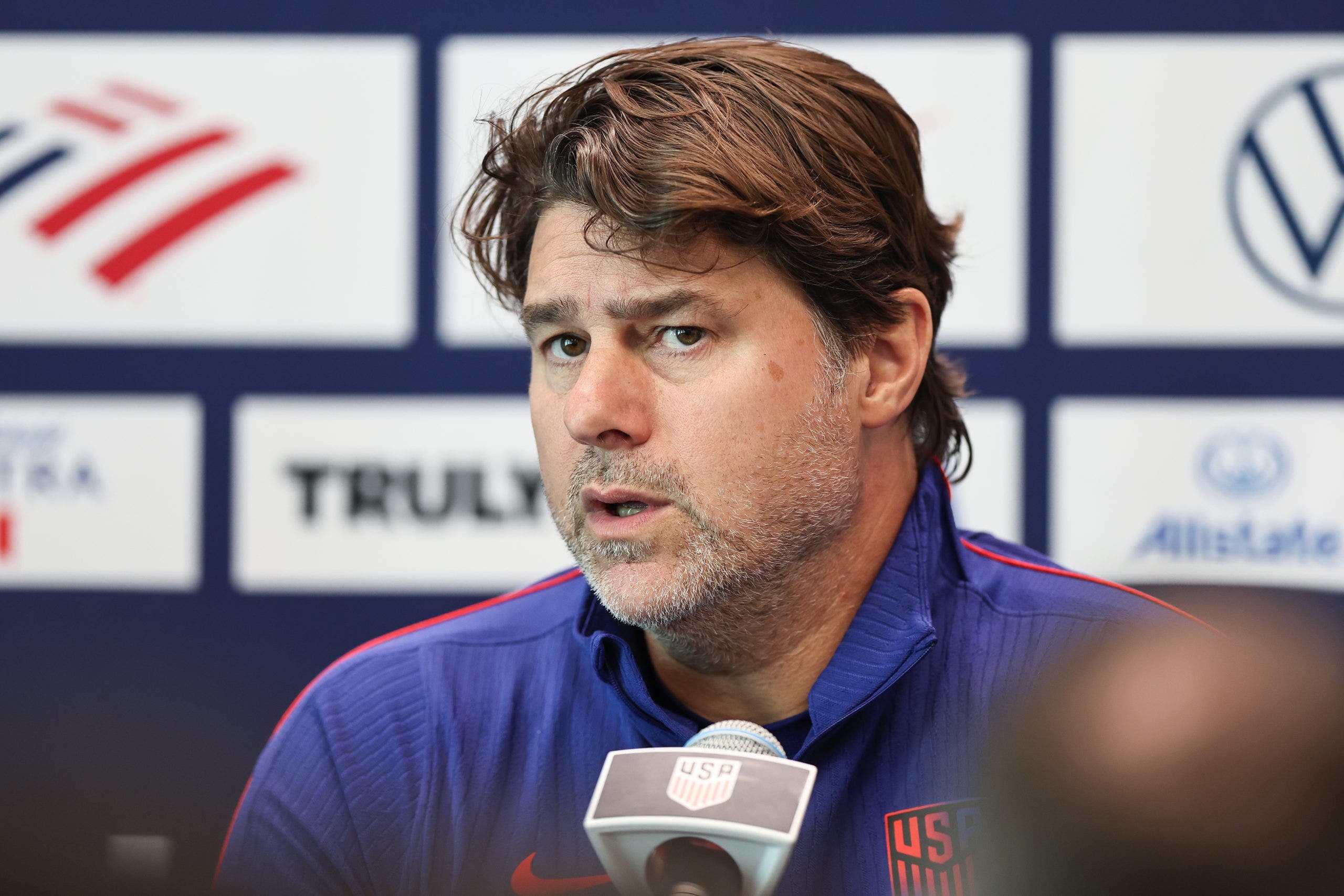
(Photo by Omar Vega/Getty Images)
The Argentine answered the first dozen or so questions matter-of-factly, displaying little sign of the charm that endeared him to fans of clubs across Europe — including the all-world squads like Chelsea and Paris Saint-Germain — during the 15 years he spent managing on the continent.
- Will Defender Chris Richards Play vs. Portugal?
- World Cup Schedule, Matches
Exactly 24 minutes into the back-and-forth with reporters, Pochettino’s demeanor changed. Asked how the American squad can keep its intensity high for all 90 minutes, something it failed to do in Saturday’s 5-2 capitulation against Belgium, in Tuesday's World Cup preparation match versus No. 6-ranked Portugal, the 54-year-old instantly became animated. He gesticulated as he spoke. That trademark charisma was suddenly on full display.
"If you watched the game [between] France and Colombia, that is intensity," said Pochettino, referring to Sunday’s exhibition between the 2018 World Cup champions (and 2022 runners-up) and Los Cafeteros in Landover, Maryland. Les Bleus won 3-1, yet the victory was anything but comfortable.
"You can win, or you can lose," Pochettino said. "But do you think the coach of Colombia, [despite] losing the game, is going to complain about [the effort of] some players? They played like this was the final of the World Cup. And France, when they saw the intensity and the aggression of Colombia, said, ‘If we aren’t as intense, they’ll kill us.’ That is intensity."
(Photo by Johnnie Izquierdo/USSF/Getty Images)
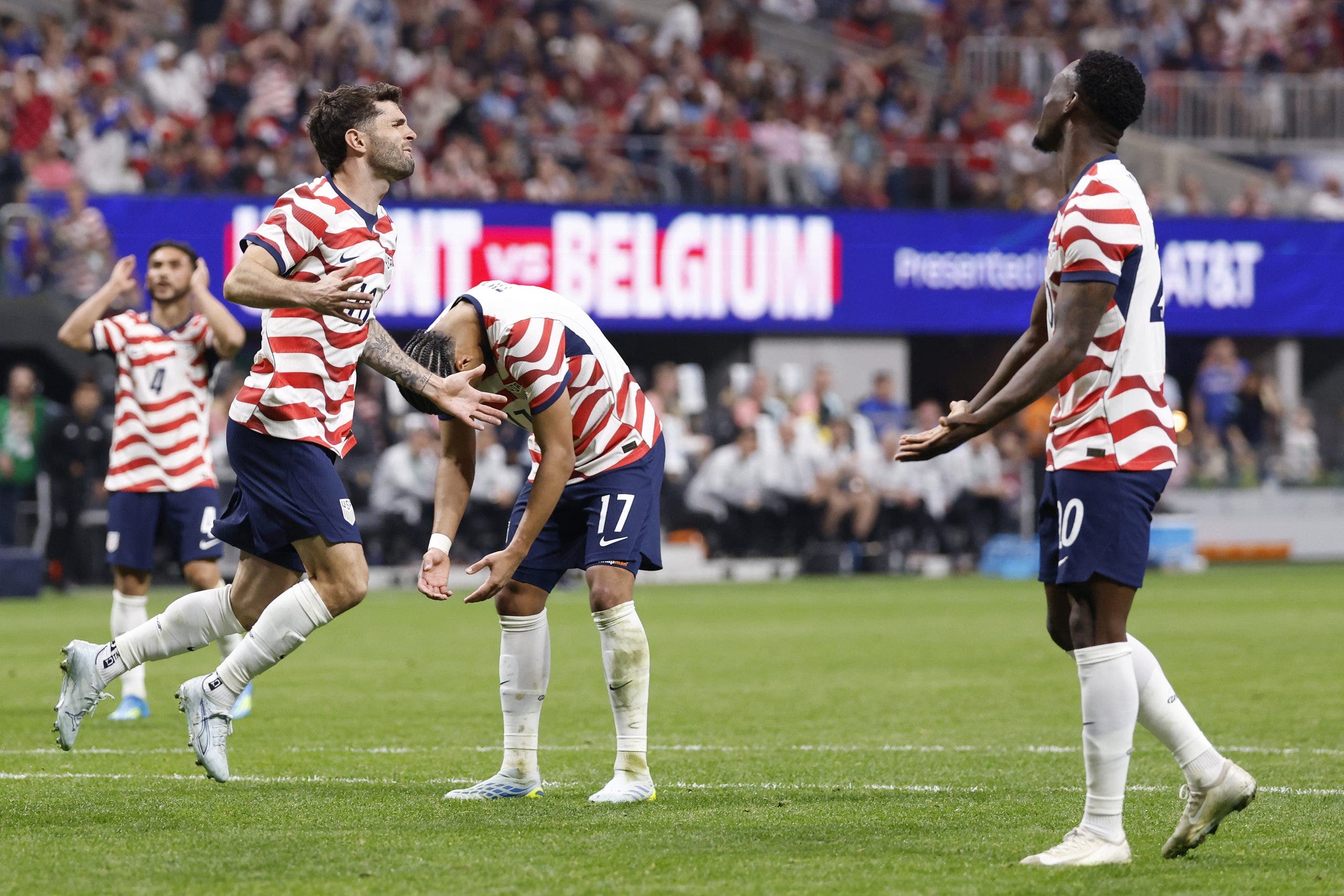
In stark contrast, the U.S. all but folded up shop when a Belgian penalty put the home side down two goals on Saturday with more than 30 minutes of the contest still left to play. The response, goalkeeper Matt Turner and others said afterward, should’ve been the opposite. As the saying goes: If you can’t beat them, beat them up.
Pochettino didn’t go that far, of course. And although English is his third language after his native Spanish and the French he learned playing as a central defender for Ligue 1 sides PSG and Bordeaux in the early 2000s, he couldn’t have expressed himself more clearly.
This isn’t the first time intensity has been a problem for the Americans since Pochettino arrived on these shores 18 months ago.
Exactly this time last year, a flat and toothless USA dropped home games to regional foes Panama and Canada in the Concacaf Nations League finals.
Pochettino was so upset that he and his staff "destroy[ed] what we needed to destroy" and began to rebuild the team in his own image by bringing in a gaggle of newcomers who have since become mainstays. By the end of last year, the lack of fight was no longer an issue: The U.S. literally brawled toward the end of a November win over Paraguay before beating the brakes off two-time World Cup champ Uruguay — arguably the hardest team, pound for pound, on planet fútbol.
It’s something Poch’s lot must rediscover between this month's two games.
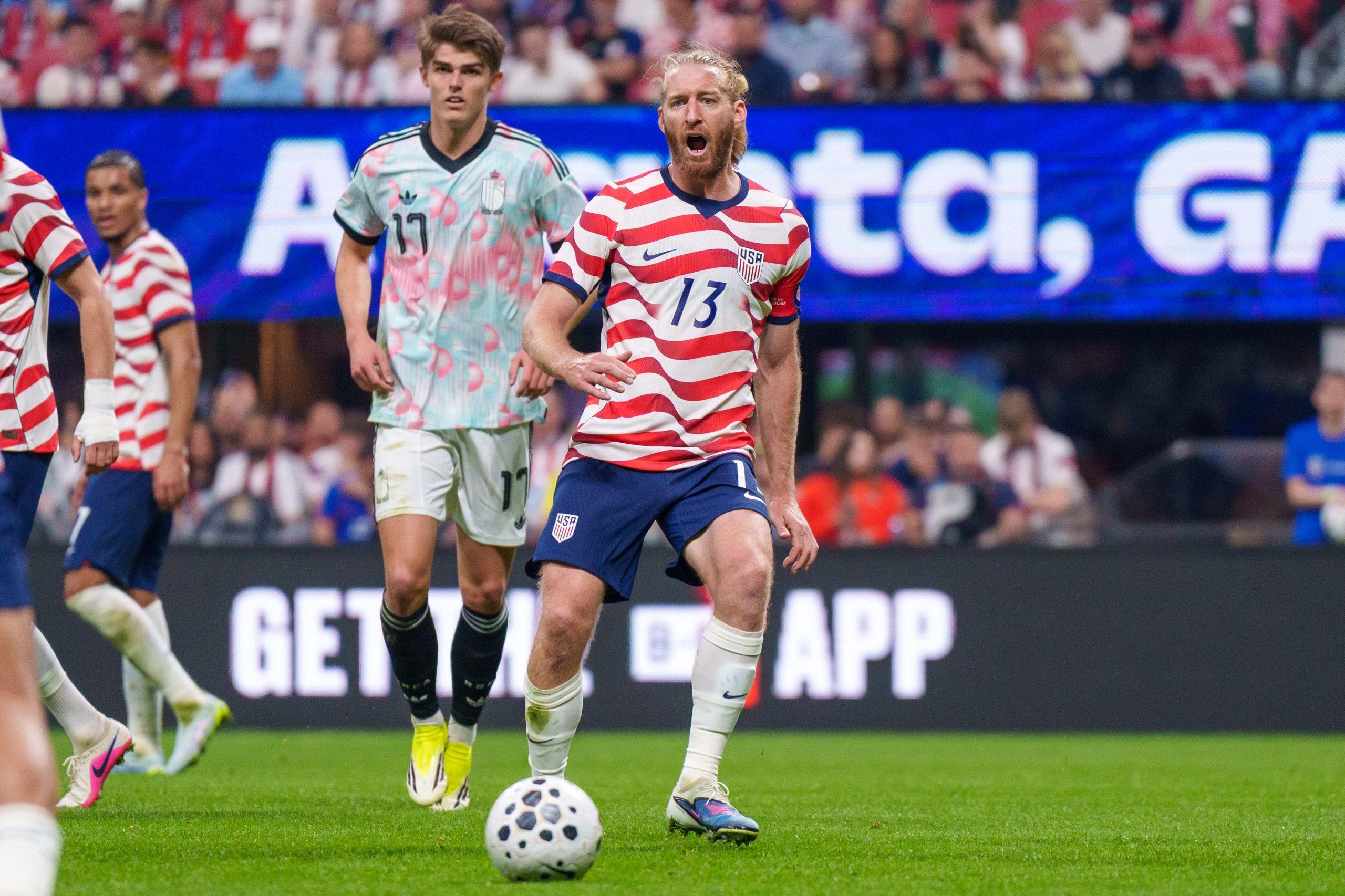
"It's a conscious decision. It's just an overall effort," captain Tim Ream said when asked why the U.S. faded so badly against Belgium at Mercedes-Benz Stadium. "It's not that guys don't want to do it. I think sometimes it's like ’I’ve just made an effort,’ and now it's about making the second, the third, the fourth. And sometimes, that doesn't happen.
"That's something that’s non-negotiable, really," Ream continued. "It's something that we were doing really well in the fall last year. And it's something we have to get back to."
Pochettino noted on Monday that unlike last autumn, his players have been inundated with pre-World Cup media responsibilities this week. That wasn’t the case in November or in the two international windows that preceded it. Yet he also pointed out that it’s not a switch that can simply be turned on when the World Cup kicks off in June. That’s the big lesson from Saturday. It’s the mandate for Tuesday.
(Photo by Andrew J. Clark/ISI Photos/USSF/Getty Images)
The 2026 World Cup co-hosts still might not win the match. Portugal has a legitimate chance of hoisting the most coveted trophy in sports next July 19. Even at home, the U.S. would require a miracle even to reach the final four. Failure to rediscover their pugilistic spirit could end in catastrophe. As Pochettino asked rhetorically of whoever his team comes up against next summer: "Do you think that they are not going to fight?"
"There’s still time to realize that we need to compete," he reiterated on Monday. "The players need to believe in that."
We'll find out on Tuesday how much.
2026 FIFA World Cup: How To Watch
The World Cup will run from June 11–July 19, 2026. Spread across three countries, the tournament will culminate with the final on July 19 at New York New Jersey Stadium in East Rutherford, New Jersey. All 104 tournament matches will air live across FOX (70) and FS1 (34) with every match streaming live and on-demand within both the FOX One and the FOX Sports apps.
How Do You Stop Lionel Messi? Switzerland Focused On Simply Containing Argentina’s GOAT

Shohei Ohtani Out Of MLB All-Star Game, Will Also Miss Friday Night's Start

Mikel Merino Rescues La Roja Again: 4 Takeaways From Spain's Win Over Belgium

The Young Star vs. The Old Guard: What To Know For Spain vs. Belgium

2026 World Cup Bracket: Argentina Set To Face Spain In World Cup Final

The Lore Of Lamine Yamal: From The Lionel Messi Baby Picture To The 2026 World Cup
How to Watch the World Cup Today: Schedule, Times, TV, Streaming for Quarterfinal Two

Could Lamine Yamal Be Benched For Spain vs. France World Cup Semifinal?

The Summer Of Erling Haaland: Norway's Star Striker Enjoying All Of The USA World Cup



-
How Do You Stop Lionel Messi? Switzerland Focused On Simply Containing Argentina’s GOAT
Shohei Ohtani Out Of MLB All-Star Game, Will Also Miss Friday Night's Start
Mikel Merino Rescues La Roja Again: 4 Takeaways From Spain's Win Over Belgium
-
The Young Star vs. The Old Guard: What To Know For Spain vs. Belgium
2026 World Cup Bracket: Argentina Set To Face Spain In World Cup Final
The Lore Of Lamine Yamal: From The Lionel Messi Baby Picture To The 2026 World Cup
-
How to Watch the World Cup Today: Schedule, Times, TV, Streaming for Quarterfinal Two
Could Lamine Yamal Be Benched For Spain vs. France World Cup Semifinal?
The Summer Of Erling Haaland: Norway's Star Striker Enjoying All Of The USA World Cup





 Your Privacy Choices | Closed Captioning


