Milwaukee Bucks History: Top 10 Point Guards In Franchise History


The Milwaukee Bucks have had some skilled floor generals over the years, but who are the 10 best point guards in franchise history?
Mandatory Credit: Jerome Miron-USA TODAY Sports
If one thing can be said about the point guards who have suited up for the Milwaukee Bucks down the years, it’s that there was no shortage of variety among them in terms of style and personality.
Having not been blessed with the kind of talent that they’ve had at other positions in the team’s history, the Bucks are a somewhat rare beast in the NBA landscape when it comes to point guards.
With the position traditionally thought to be one of the most important and influential on the floor, even Milwaukee’s best point guards were rarely the leading light on their own team.
As such, any ranking of the best point guards ever to don a Milwaukee jersey ends up packed with a mixture of outstanding role players, great complementary pieces and projects and moves that just didn’t work out as had been originally planned.
As such, it’s unfair to rank point guards who have played for the Bucks on their careers as a whole, as what’s really most important to us are the contributions they provided during their time in Milwaukee.
Weighing up production, consistency, longevity and achievements as Bucks, I’ve put together a list of the top 10 point guards in franchise history.
Let’s get down to it!
10. Gary Payton
If this list was compiled based just on the greatest point guards to ever pull on a Bucks jersey, regardless of their contributions to the team, this man would likely be as high as second overall. No matter how much time passes, the sour taste from Payton’s ultra brief stop in Milwaukee remains though.
As an aging star arriving in Milwaukee, Payton was always going to have his work cut out for him in truly winning over the fanbase, but in leaving as a free agent at the end of his only season with the team his “legacy” in Milwaukee was sealed.
Still, what can’t be overlooked is just how well “The Glove” played in his 34 games in the Cream City. Payton averaged 19.6 points, 7.4 assists, 3.1 rebounds and 1.4 steals in the regular season, before notching up 18.5 points and 8.7 assists per game in a six-game series against the New Jersey Nets.
Memories of Payton will never be fond, but the contributions he was able to give at the age of 34 act as a testament to just how good he once was.
9. T.J. Ford
Not many point guards have become Bucks with the kind of expectation that T.J. Ford had to shoulder upon being selected as the eighth overall pick in the 2003 NBA Draft.
Having left college as the Naismith Player of the Year, many predicted Ford to kick on and thrive in the NBA thanks to the incredible vision that had made him a star at every level he had played the game up until that point.
A solid rookie season would see Ford named to the league’s All-Rookie Second Team, but it came at a cost. A spinal injury suffered towards the end of that year would lead to Ford missing the entirety of what should have been his sophomore year. Although he did return to play well in the following year, the Bucks had moved on with the wind already effectively taken out of Ford’s sails.
For his time as a Buck, Ford averaged 10 points, 6.5 assists, 3.8 rebounds and 1.3 steals. He would go on to have a solid career elsewhere, but ultimately ended up retiring early having failed to reach his potential.
8. Mo Williams
The man who replaced Ford, Williams was another whose star shone bright for the Bucks, albeit for a relatively short period of time.
Williams was never afraid of the limelight, and in spite of a rocky start to his time in the league with the Jazz, he wasted no time in taking the opportunities that fell his way in Milwaukee.
The former Alabama man came into his own as a Buck with no shortage of memorable moments (particularly the above game-winner against Indiana) and having signed a long-term deal to stay with Milwaukee it appeared as if he would be around for the long haul.
That turned out not to be the case though, as Williams ended up traded at the end of the following season in a salary dump from Milwaukee’s perspective that saw him end up in Cleveland for the first iteration of LeBron’s Cavs. As a Buck, Williams averaged 14.1 points, 5.7 assists and 3.5 rebounds.
7. Brandon Jennings
At the heights of early Brandon Jennings mania, it really looked as if the Bucks had found a star. Having skipped college play to play overseas prior to landing in the NBA, Jennings hit the ground running upon joining Milwaukee.
After only coming up an assist and a rebound short of a triple-double in his Bucks debut, Jennings went on to record a 55-point game just two weeks later. Although that would be a career high for any player to be proud of, it perhaps say something about Jennings’ career that he arguably peaked on that night.
Jennings’ boundless confidence was an important aspect of the beginnings of the Fear the Deer era, of course, leading to soundbites such as “win in 6” which gave us the name for our podcast. Unfortunately that unwavering confidence spilled over on to the court, in a backcourt with Monta Ellis where neither man really knew when to stop shooting.
Efficiency was never Jennings’ strong suit but having ultimately led to Milwaukee’s acquisition of Khris Middleton, Jennings eventually led the Bucks to a steady backcourt presence after all. As a Buck, he averaged 17 points, 5.7 assists and 3.4 rebounds.
6. Flynn Robinson
While the speed with which the Bucks won a championship upon their arrival in the NBA is often deservedly credited to the franchise-changing selection of Kareem Abdul-Jabbar, Flynn Robinson’s role in the first two seasons in Milwaukee shouldn’t be overlooked.
Robinson only played two seasons with the Bucks, having been traded away as a part of the deal that brought Oscar Robertson to Milwaukee, but his contribution in that time was very impressive.
Robinson was an All-Star in his second season as a Buck, and was famed around the league at the time for his ability to both score and distribute from the point guard spot. At a time when the Bucks were still finding their feet, the man known as the Electric Eye helped the Bucks to set the foundations for the ultimate success that followed soon after.
In his time as a Buck, Robinson averaged 21.1 points, 5.3 assists and 3.4 rebounds while playing the best basketball of his impressive career.
5. Jay Humphries
Jay Humphries had the misfortune of landing in Milwaukee at a time when the Bucks were really entering into a period of transition and coming to the end of their great spell of consistently challenging in the East. If anything, had he played for the Bucks a few years either side of when he actually did, he’d probably be more of a household name in Bucks circles to this very day.
Still, Humphries was a steady pair of hands at a time when the Bucks needed somebody who could hold the team together and lead confidently from the point guard spot.
After arriving in a trade with the Suns that saw sharpshooter Craig Hodges move in the opposite direction, Humphries thrived in the best spell of his career with the extended opportunities he was afforded by Del Harris.
For his time as a Buck, Humphries averaged 13.4 points, 6 assists and 2.7 rebounds in his four-and-a-half seasons in Milwaukee.
4. Eric Murdock
If Humphries was unfortunate in seeing his time as a Buck come while the team was fading away from their imposing peak of the 80s, then I’m not sure where that leaves Eric Murdock.
As the team struggled for any real identity or positives under the guidance of Mike Dunleavy, Murdock proved to be a central figure for his team in spite of only being in the early stages of his NBA career.
As a solid three-point shooter, Murdock was a crafty scorer, but it was really on the defensive end of the ball that the former Providence Friar thrived. Nicknamed as “The Man Of Steal”, Murdock averaged 2.0 steals per game as a Buck but never had the chance to taste post-season play.
Overall for his time in Milwaukee, Murdock averaged 14 points, 6.8 assists and 3.2 rebounds per game.
3. Quinn Buckner
Having spent his time as a Buck playing alongside talented playmakers at other positions, such as Sidney Moncrief and Marques Johnson, Quinn Buckner was the kind of consistent, steady and unselfish presence that the Bucks needed to tie everything together in the backcourt.
Without ever posting flashy numbers, Buckner consistently racked up impressive assist totals. So much so that he ranks fourth all-time among franchise assist leaders, and as the leading true point guard in that category.
During Buckner’s time with Milwaukee they experienced their share of ups and downs, as the last members of the championship team moved on and the dominant team of the 80s started to take shape.
During six total seasons in Milwaukee, Buckner averaged 10.3 points, 5.2 assists, 3.3 rebounds and 2.3 steals.
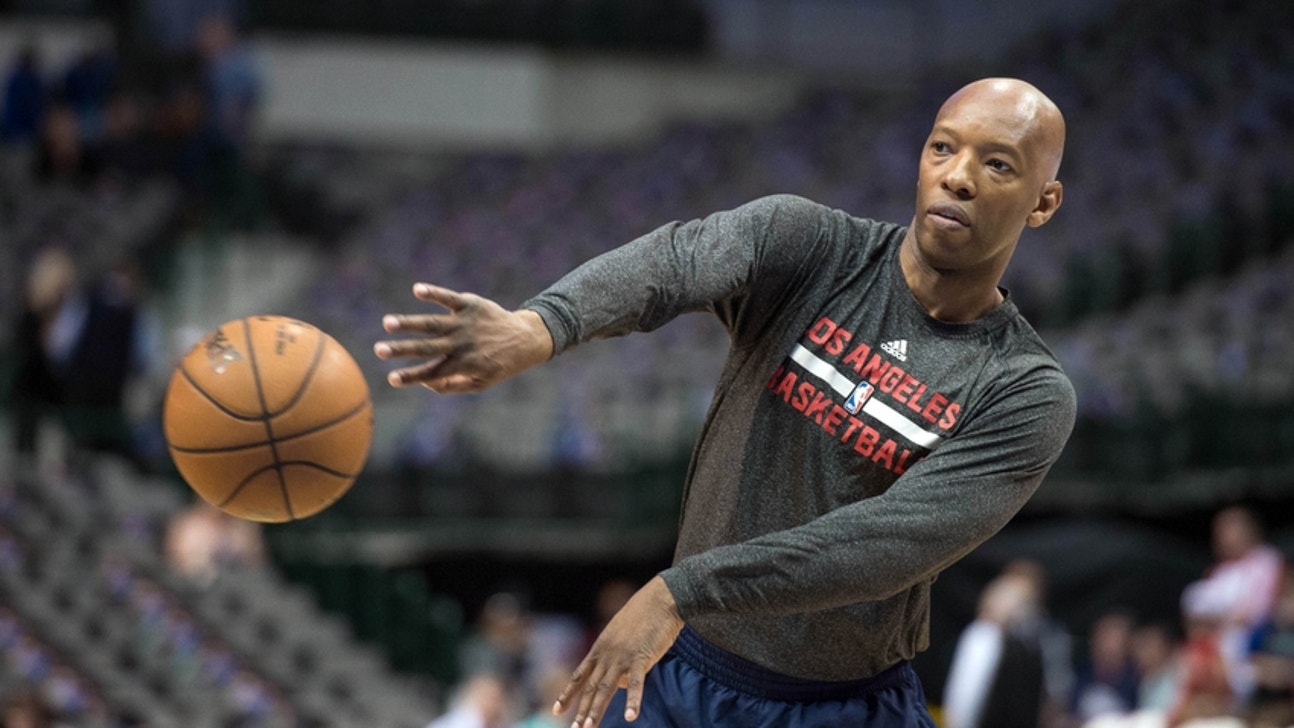
2. Sam Cassell
A key component of the most recent true contender that the franchise has managed to put together, the likeable Sam Cassell will always be fondly remembered, not only among Bucks fans, but everywhere he played.
Cassell had a knack for helping to elevate his teams to new heights, and his time with Milwaukee proved to be no exception to that rule.
In five seasons with the Bucks, Cassell took his scoring and distributing to new levels. Playing alongside the formidable Ray Allen and Glenn Robinson, it seems fair to say that Cassell likely doesn’t get the credit he deserves for his play at that time.
Of course, a conference finals appearance was the highlight (and arguably the lowlight) of Cassell’s time in Milwaukee, but with averages of 19 points, 7.2 assists and 4 rebounds per game overall, the former Florida State Seminole can look back on the entirety of his time with the Bucks with great pride.
1. Oscar Roberston
The Big O may not have put up the best numbers of his career during his time in Milwaukee, but there’s a real chance that without him the Bucks would still have zero championships to their name.
With a young Kareem Abdul-Jabbar entering his prime, the Bucks didn’t need Robertson to be much more than a complementary player, and with that mandate there weren’t many better in history.
As he did throughout his career, Robertson did a little bit of everything during his four seasons in Milwaukee. Even past his prime, there were very few players in the league who were a match for Robertson, and if only he had been slightly younger when he first became a Buck, there would have been no beating Milwaukee for multiple seasons.
Robertson finished his time as a Buck with averages of 16.3 points, 7.5 assists and 4.9 rebounds, and most importantly of all, he left with a championship ring.
More from Behind the Buck Pass
This article originally appeared on 

Who are the 10 best 3-point shooters in NBA history?

2026 NBA Draft No. 1 Pick Odds: Dybantsa Gains Ground on Peterson

NBA Draft History: Complete list of overall #1 picks since 1947

What are the 100 best athlete nicknames of all time?

NBA Champions by Year: Complete list of NBA Finals winners

How much money did Cooper Flagg make in NIL during his one year at Duke?

Who are the 10 best dunkers in NBA history?



-
Who are the 10 best 3-point shooters in NBA history?
2026 NBA Draft No. 1 Pick Odds: Dybantsa Gains Ground on Peterson
NBA Draft History: Complete list of overall #1 picks since 1947
-
What are the 100 best athlete nicknames of all time?
NBA Champions by Year: Complete list of NBA Finals winners
How much money did Cooper Flagg make in NIL during his one year at Duke?
-
Who are the 10 best dunkers in NBA history?