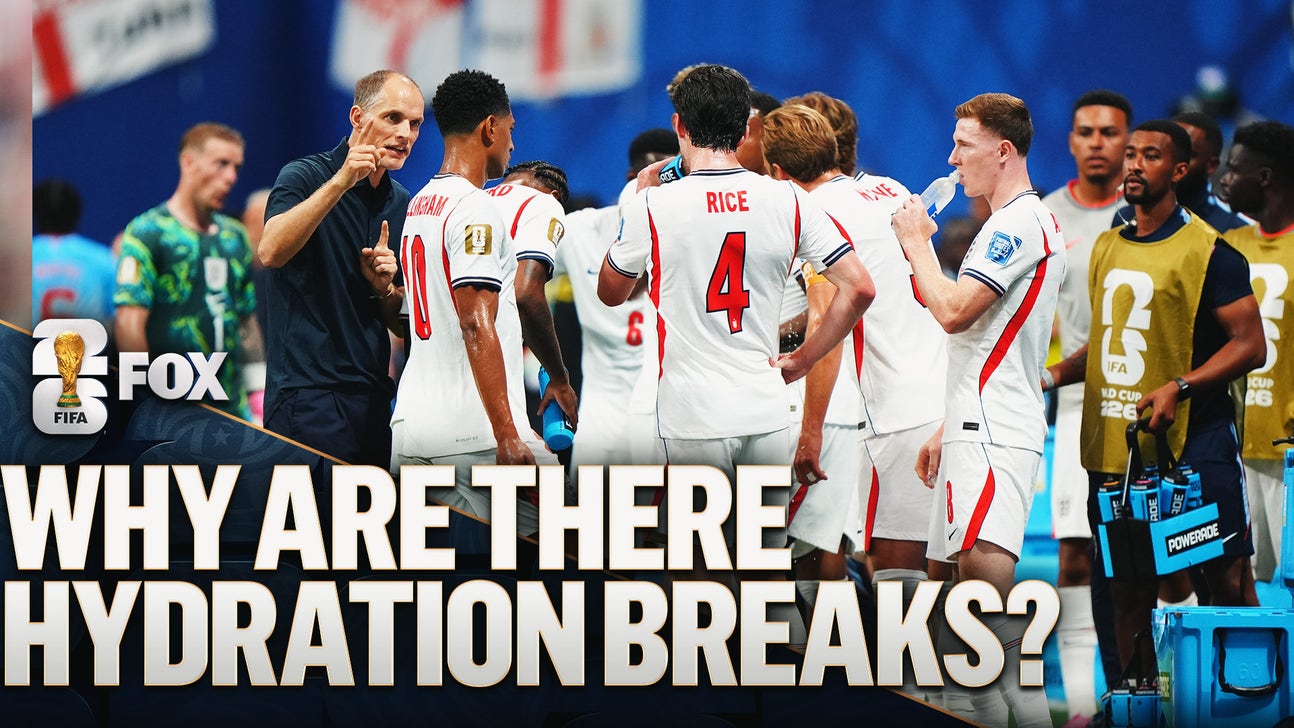
Why Are There Hydration Breaks At The World Cup? FIFA President Explains


The 2026 World Cup marked the first tournament that FIFA incorporated hydration breaks. But why did this tournament become the starting point for hydration breaks?
Jenny Taft spoke with FIFA President Gianni Infantino on the decision to officially include them.
"I know there's a lot of talk around these hydration breaks, and the truth of the matter is — that last year, we organized the FIFA Club World Cup here in the U.S., the first edition, and with the hydration breaks, as it was seen at the time, only for those matches where it was particularly hot. It was around 60% of the games," Infantino told Taft.
Hydration breaks are mandatory three-minute stoppages at the midpoint of each half, allowing the current lineup to regroup on the sideline for water. Different from the FIFA Club World Cup, every game in this tournament requires hydration breaks, no matter the temperature or environment.
Additionally, FIFA is aiming to avoid match congestion, especially with the expanded format of the tournament with 104 games compared to the previous format with 64 games.
"So, we determined — well before the tournament, and we communicated this as well — that every game should have hydration breaks," Infantino said of the decision. "Why? So that every team throughout the tournament has exactly the same conditions. This is a tournament that lasts 39 days. If you want to win it, you have to play eight games. It's a lot for these top professional players."
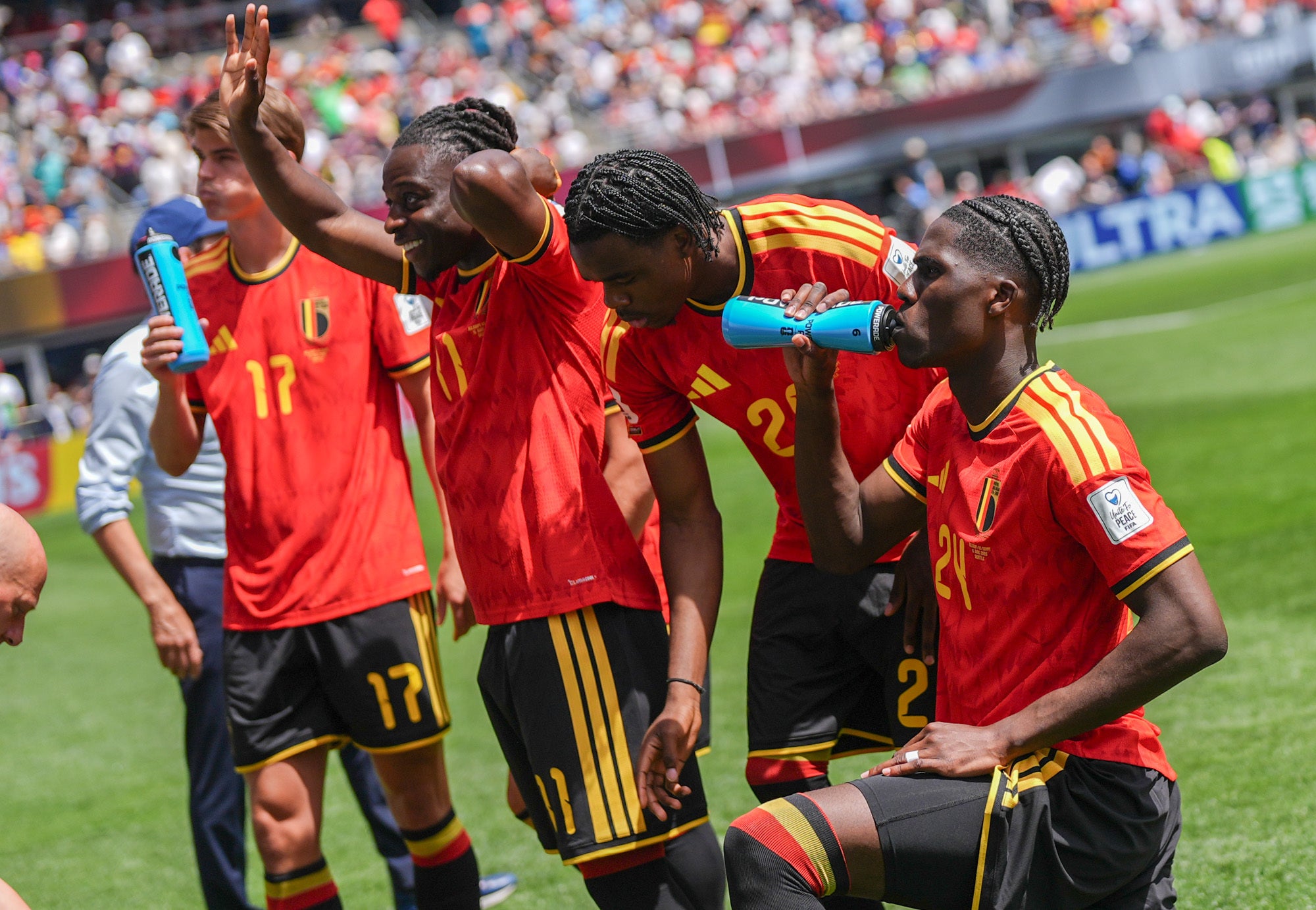
Belgium players take part in a hydration break during their match against Egpyt in the group stage of the 2026 World Cup. (Ercin Erturk/Anadolu via Getty Images)
While the breaks could be seen as an inconvenience to teams looking to build momentum throughout the half, Infantino addressed the breaks as a way to conserve the overall health of the players.
"To rest for three minutes ... it gives a lot of energy back. We see it in these games as well, especially in the last 20 minutes of the game," Infantino said. "They're played at an intensity that we've never seen before, in any game whatsoever. So, I think all of this helps a lot."
However, following the tournament, hydration breaks will be evaluated by FIFA to determine if they benefited the flow of the game or not.
"We, of course, will analyze after the World Cup, whether it was good or bad. But the flow of the game, the intensity of the game, has definitely increased a lot," Infantino said.





USA's Next Generation Lived Up To The Hype; Now The Real Work Begins

It's A Clean Sweep: 4 Takeaways From USA's Victory Over Canada

Cristiano Ronaldo Is Not Retiring, Blames Coach Jorge Jesus For Portugal Walkout

Messi's Final Match For Argentina Sees The GOAT Score One Last Time

Cristiano Ronaldo Reportedly Won't Play For Portugal Under New Coach Jorge Jesus

As Lionel Messi's Argentina Career Ends, How It Started Is Worth Remembering

Timeline: How Man City's Financial Case Went From Leaked Emails To Verdict

Balogun: Premier League 'Definitely' Still An Option After Collapsed Everton Move

Lamine Yamal Scores Golazo And Spain's Unbeaten Streak Continues





 Your Privacy Choices | Closed Captioning


