Who's In, Who's Out: Daytona 500 Qualifying, Explained


It's time to go racing with the 2026 Daytona 500 kicking off the NASCAR Cup Series season. The Great American Race is set for Sunday with the FOX Sports broadcast beginning at 11:30 a.m. ET ahead of the green flag at 1:30 p.m. ET.
How is the lineup set for the Daytona 500?
It can be a little complicated. Or a lot complicated. And we’re here to explain everything to you.
[DAYTONA 500 ODDS: Denny Hamlin, William Byron Among Favorites]
The Daytona 500 field will consist of 41 cars.
These are the drivers in the field:
— The 36 drivers of teams that have charters: AJ Allmendinger, Christopher Bell, Josh Berry, Ryan Blaney, Alex Bowman, Chase Briscoe, Chris Buescher, Kyle Busch, William Byron, Ross Chastain, Austin Cindric, Cole Custer, Austin Dillon, Ty Dillon, Chase Elliott, Ty Gibbs, Todd Gilliland, Noah Gragson, Denny Hamlin, Riley Herbst, Carson Hocevar, Erik Jones, Brad Keselowski, Kyle Larson, Joey Logano, Michael McDowell, John Hunter Nemechek, Ryan Preece, Tyler Reddick, Zane Smith, Ricky Stenhouse Jr., Daniel Suárez, Shane van Gisbergen, Bubba Wallace, Cody Ware and Connor Zilisch.
— Jimmie Johnson, driving a non-chartered (open) car, is guaranteed a spot in the field by using the open exemption provisional, which is available to an elite driver in motorsports who doesn't race full time. By electing to use the provisional (the rules changed from a year ago to require him to commit to using the provisional before the race weekend), he forfeits all points and purse.
— Corey Heim and Justin Allgaier, the two open entries that were the fastest in single-car qualifying Wednesday.
— BJ McLeod and Casey Mears earned the final two spots by being the top-finishing drivers in their qualifying races ("the duels") Thursday.
Those two spots are determined through the duels.

Will Jimmie Johnson, racing his non-chartered open car, win at Daytona in 2026?
Wednesday: Front Row Set
On Wednesday, drivers made single-car, single-lap qualifying runs. The order was selected by random draw, with the drivers who were in the top 20 in 2025 owner points filling the final 20 spots in the order.
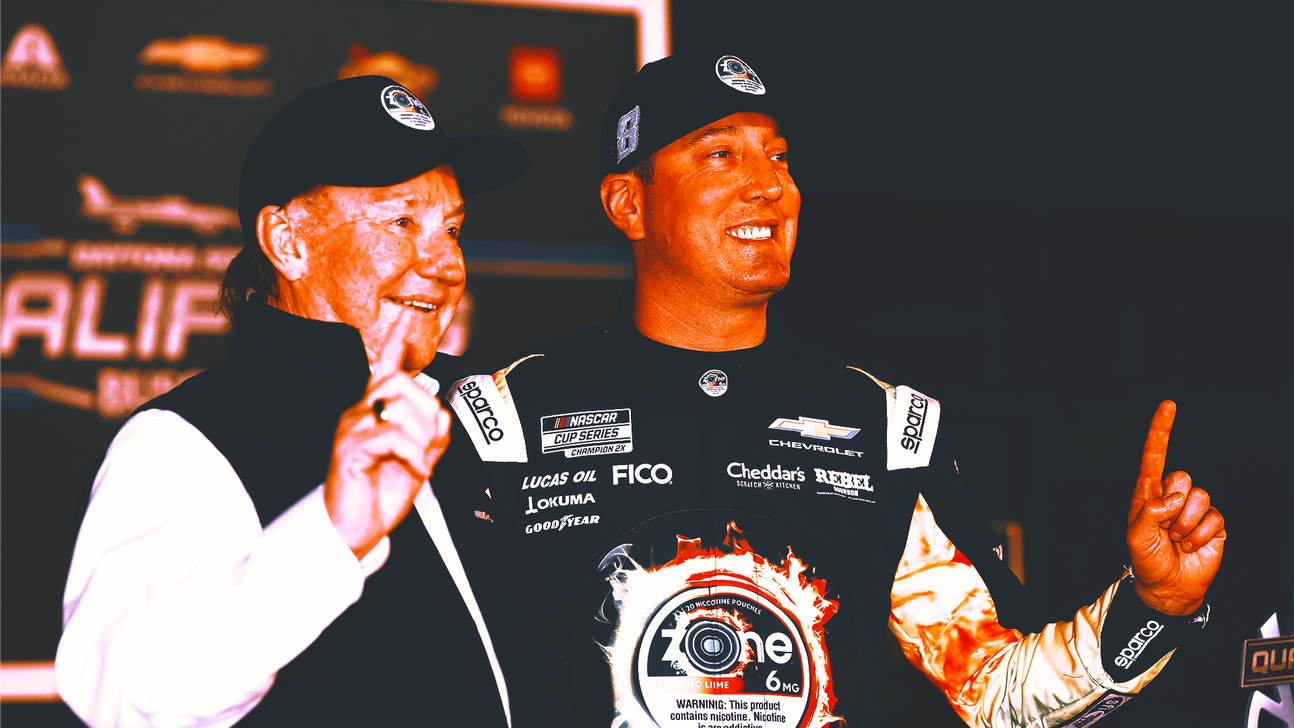
Busch was the fastest and will be on the Daytona 500 pole. Briscoe was second-fastest and will start on the front row for the Daytona 500.
Allgaier and Heim were the two fastest among the open drivers and know they will be in the Daytona 500. The other six drivers will have to earn a spot in the duels. In previous years, there was the possibility that the third-fastest and fourth-fastest cars could get in on their speed, but the rules changed for 2026.

Can William Byron make it three consecutive Daytona 500 wins?
Thursday: The Duels
Beyond the front row, the remainder of the field was set with two 150-mile qualifying races, commonly referred to as The Duels at Daytona.
The 45 cars were split relatively evenly, with 23 cars in the first duel and 22 cars in the second duel. The lineups were set by the qualifying times Wednesday.
The 36 charter teams, plus Johnson, were split among the two duels, with the first duel lined up with those ranking first, third, fifth and so on, from qualifying while the second duel having those ranking second, fourth, sixth and so on.
The eight open cars were split among the two duels, with Heim (locked-in), LaJoie, Chandler Smith and Mears (first, third, fifth and seventh in qualifying speed) in the first duel; Allgaier (locked-in), Anthony Alfredo, McLeod and JJ Yeley in the second duel.
The top-finishing open driver in each duel who was not locked into the field through qualifying made the Daytona 500: Mears in the first duel and McLeod — after Alfredo was disqualified — in the second duel. LaJoie, Chandler Smith, Alfredo and Yeley did not qualify for the Daytona 500.
The results of the first duel, using the finishing order for those who made the race, will set the Daytona 500 inside rows 2-21; the results of the second duel will set the Daytona 500 outside rows 2-20.



Kyle Busch Celebrated For His Wins On And Off The Track

Kasey Kahne Returning To NASCAR With Full-Time Truck Ride In 2027

Layne Riggs Among Regular-Season Champs Hoping To Rally At Charlotte

NASCAR Chase Contenders Learning What The Math Already Indicated: Wins Matter

NASCAR Contender Rankings: Will Anyone In The Chase Catch Kyle Larson?

NASCAR Legend Darrell Waltrip Stepping Away From Public Life For Health Reasons

Brad Keselowski Out As Driver At RFK: 'I'm In A Good Spot Now'

Inside The Garage: Can Denny Hamlin Win The Chase After Wild First Five Races?

2026 NASCAR Chase Odds: Pole-sitter Denny Hamlin Favorite For Las Vegas





 Your Privacy Choices | Closed Captioning


