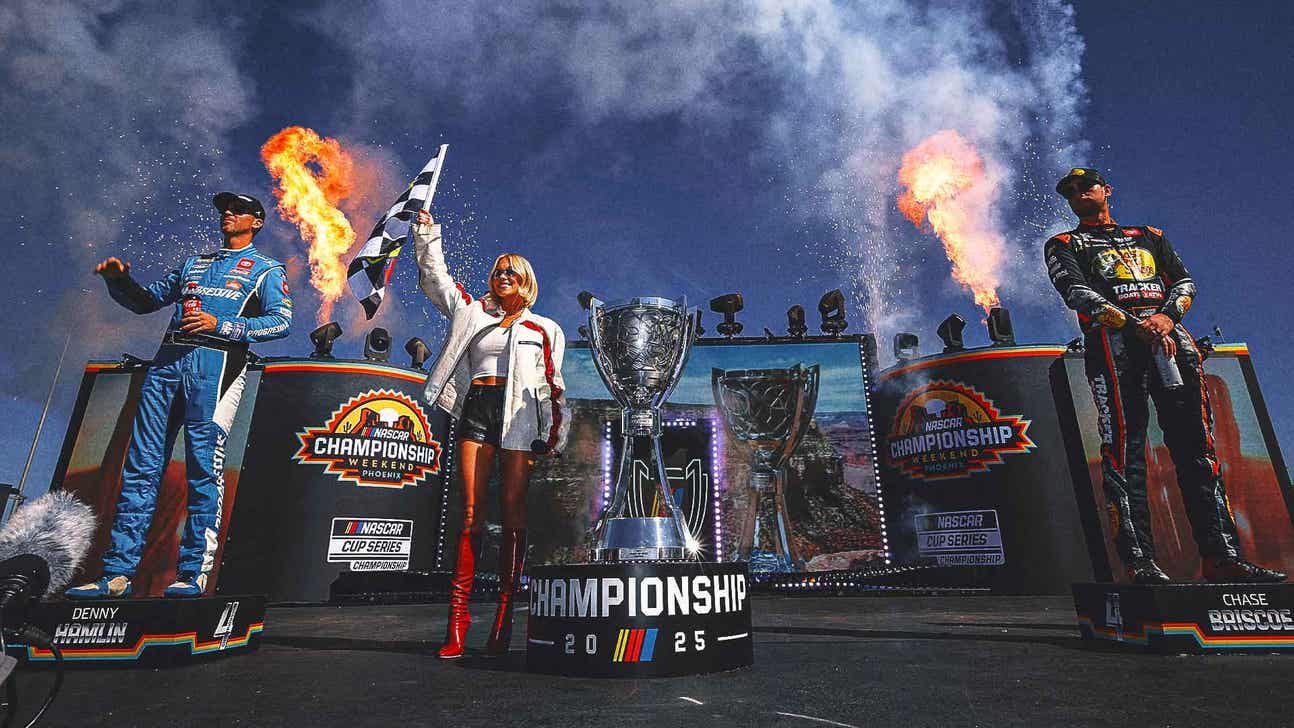
NASCAR Returns to Chase Format with Single 10-Race Championship Round


NASCAR will return in 2026 to its original "Chase" format, a 10-race postseason that will feature 16 drivers vying for the title with consistency playing more of a role than in recent years.
Instead of a win earning a driver an automatic berth into the playoff field, it will be the top-16 drivers based on points after the 26-race regular season. A win, though, will now be worth 55 points (not including any stage points earned during a race) instead of 40. Second place remains 35 points, third 34 points, etc.
When the field is reset for the 10-race postseason, the regular-season champion will start with 2,100 points. The runner-up will start with 2,075 points, third at 2,065 points, fourth at 2,060 points, fifth at 2,055 points and so on with five points separating each finisher in the regular-season standings through 16th, which will start with 2000 points.
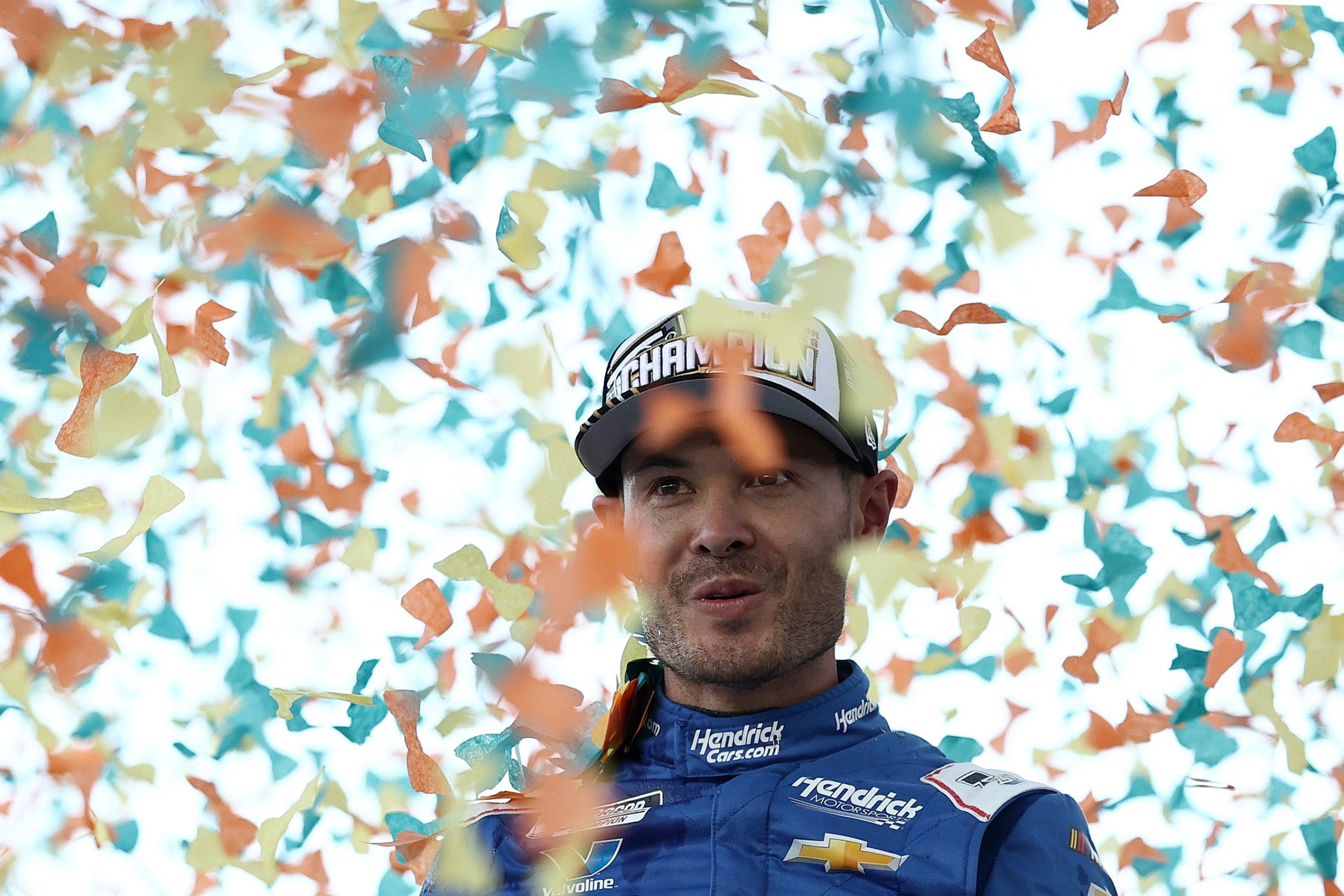
Defending Cup champion Kyle Larson captured a pair of titles under the recent playoff format.
[RELATED: Top 10 Most Memorable Cup Series Moments of 2025]
The decision culminates over a year of discussions on a new championship structure. NASCAR formed an advisory committee to get feedback on various formats, including going back to a traditional 36-race full-season points format where the driver with the most points during the season earns the title. It opted to go with the 10-race mini-season model used from 2004-2013 while ditching its model from the last 12 seasons that included eliminations culminating in a one-race final round.
"As NASCAR transitions to a revised championship model, the focus is on rewarding driver and team performance each and every race," NASCAR President Steve O’Donnell said in a statement. "At the same time, we want to honor NASCAR’s storied history and the traditions that have made the sport so special. Our fans are at the heart of everything we do, and this format is designed to honor their passion every single race weekend."
NASCAR Hall of Fame driver Mark Martin was among those on the committee and one who argued for a return to the 36-race point system. But he appeared at the news conference Monday and endorsed the return of the Chase.
"This is the most perfect compromise that you could ever ask for," Martin said. "It's going to require our 2026 champion to be lightning fast and incredibly consistent, and that's what we can all get behind.
"So I'm really excited. I think it's fantastic."
Martin noted that driver and sponsor contracts already have incentives for making the postseason, and this format alleviates any of those concerns.
Chase Elliott, the 2020 Cup champion, said he hadn't even thought about that, and he doesn't feel the new format impacts his chances of winning another title.
"I liked my odds before, but I like my odds now for sure," Elliott said.
Ryan Blaney, the 2023 Cup champion, said he feels it gives him a better shot at the title with a bigger sample size in the playoffs. But more importantly, he feels it eliminates some of the ethical choices that drivers had to make when going for a win.
"The excuse that grinds my gears the most is we've had a lot of finishes and a guy gets out and he's like, 'Well, I didn't want to do it, but I did it because I had to do it,'" Blaney said. "And I hate that excuse, but from their side, I get it because that's the format. … It didn't make the sport look good.
"It kind of made it look like a demolition derby at times in those little moments and I just hated that. The purity was kind of fading."
While the most pure racing format would be a full 36-race points system, O'Donnell said he felt they landed in a good place.
"There are a lot of vocal fans on social media," O'Donnell said. "Those aren't all of our fans, and there are a lot of fans who like playoffs or liked a playoff format as well.
"So we felt like this was a great balance. And it's simple."
Since 2014, NASCAR has used a system where its 10-race playoff was divided into four rounds — three three-race rounds where four drivers were eliminated and the points reset after each round, and then a championship one-race round where the best-finishing driver among the four finalists won the title.
The goal was to produce excitement and increase simplicity for someone tuning into the championship race — no math, just whoever finished best among those four drivers in one race was the champion.
And while the win-and-in advancing in the rounds and knockout races created great drama, a fan base used to seeing consistency rewarded got frustrated with sometimes a driver not having the best of seasons all of a sudden winning the title or being eliminated early after having a great season.
NASCAR also set its playoff field with a win automatically qualifying a driver for the postseason. That also frustrated fans who saw a driver who struggled much of the year have one great day (or lucky break) and advance to the postseason ahead of a driver who had much more consistent year.
There also was a lot of math — all the way up until the final race.
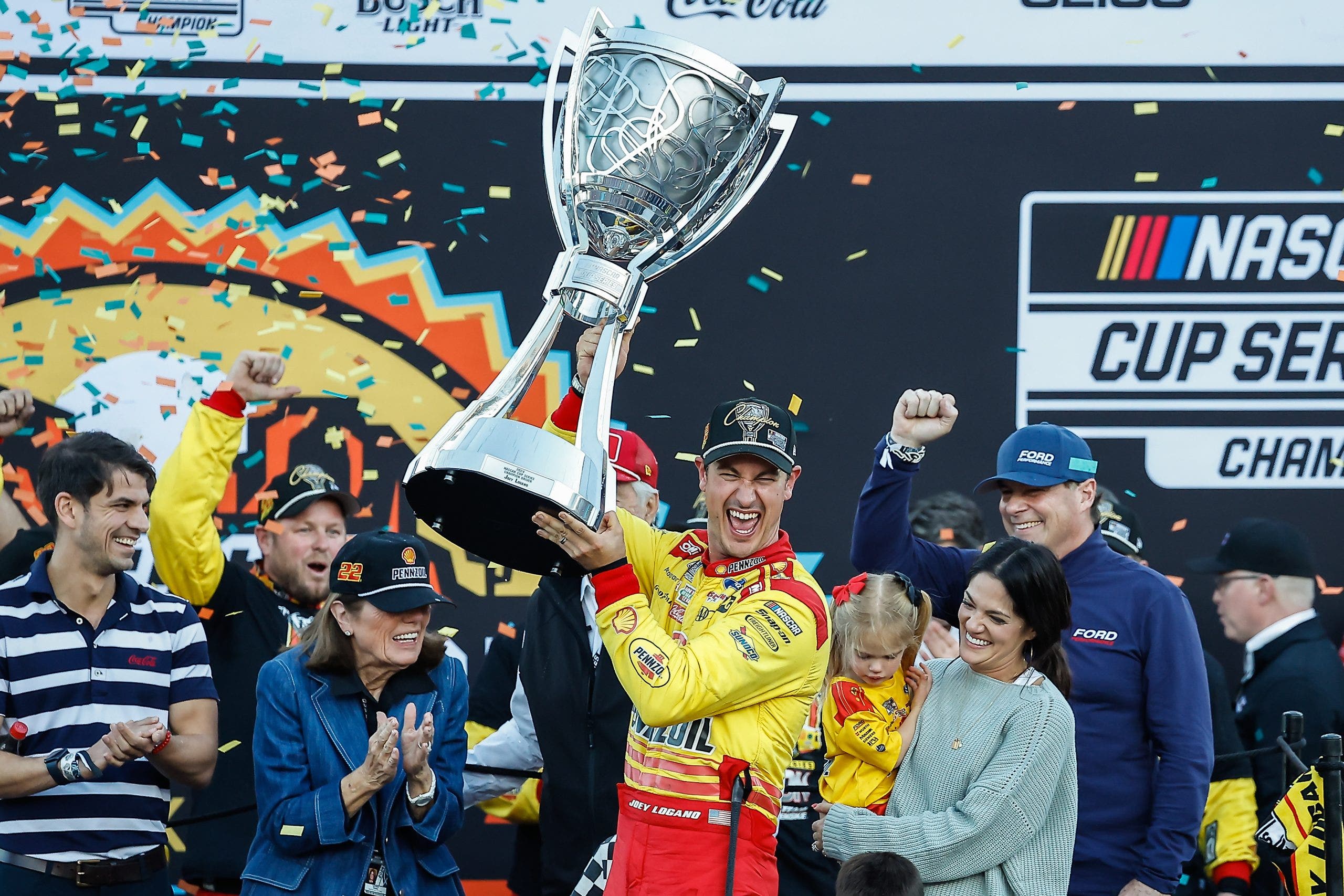
Joey Logano will be eyeing a third career Cup championship as NASCAR transitions to a new playoff format.
In 2017, NASCAR added stages with stage points and new "playoff points" that created the bonus structure for the points reset.
Stages remain but playoff points are no more. The only reset happens at the start of the 10-race playoff.
"We looked at this [2014-25 format], I think we all did, looking at more moments, more drivers, more drivers having the ability to go out there and win," O’Donnell said during the 2025 championship race weekend. "That maybe takes away from the one-driver story. It's probably harder to write just the one-driver story over and over again, but it does create a real star.
"I think that's something that, as you look at the future of the sport, making sure that a driver who has delivered all season long has the ability to be named a champion, and not have something maybe come down to one race, that's really been the focal point, is we want to reward winning. We're going to continue to do that."
The O’Reilly Auto Parts Series (formerly Xfinity Series) will have a nine-race playoff after 24 regular-season races with 12 drivers with their points reset in the same manner as Cup with 2,100 for first to 2,020 for 12th.
The Craftsman Truck Series will have a seven-race playoff after 18 regular-season races with 10 drivers with their points reset in the same manner as Cup from 2,100 for first to 2,030 for 10th.
Bob Pockrass covers NASCAR and INDYCAR for FOX Sports. He has spent decades covering motorsports, including over 30 Daytona 500s, with stints at ESPN, Sporting News, NASCAR Scene magazine and The (Daytona Beach) News-Journal. Follow him on Twitter @bobpockrass.

As Hendrick rules, Chase Elliott increasingly finds himself chasing teammate Kyle Larson

4 Takeaways From Darlington's Dominant Tyler Reddick, Michael Jordan Win

Romain Grosjean's No. 18 Car Will Have Kyle Busch's Font At The INDY 500

What's next for 23XI, Front Row on and off the track in lawsuit over charter deal

Chase Elliott After Nearly Winning 2026 Daytona 500: 'This really sucks'

What To Know About NASCAR Antitrust Lawsuit: Settlement Reached

Josh Williams suspended one race for viral on-track moment in Atlanta

2026 Daytona 500 Results: Michael Jordan's Racing 23XI Gets 3 Cars in Top 10

NASCAR playoffs elimination scenarios for Charlotte: Who will make the cut?




-
As Hendrick rules, Chase Elliott increasingly finds himself chasing teammate Kyle Larson
4 Takeaways From Darlington's Dominant Tyler Reddick, Michael Jordan Win
Romain Grosjean's No. 18 Car Will Have Kyle Busch's Font At The INDY 500
-
What's next for 23XI, Front Row on and off the track in lawsuit over charter deal
Chase Elliott After Nearly Winning 2026 Daytona 500: 'This really sucks'
What To Know About NASCAR Antitrust Lawsuit: Settlement Reached
-
Josh Williams suspended one race for viral on-track moment in Atlanta
2026 Daytona 500 Results: Michael Jordan's Racing 23XI Gets 3 Cars in Top 10
NASCAR playoffs elimination scenarios for Charlotte: Who will make the cut?




 Your Privacy Choices | Closed Captioning


