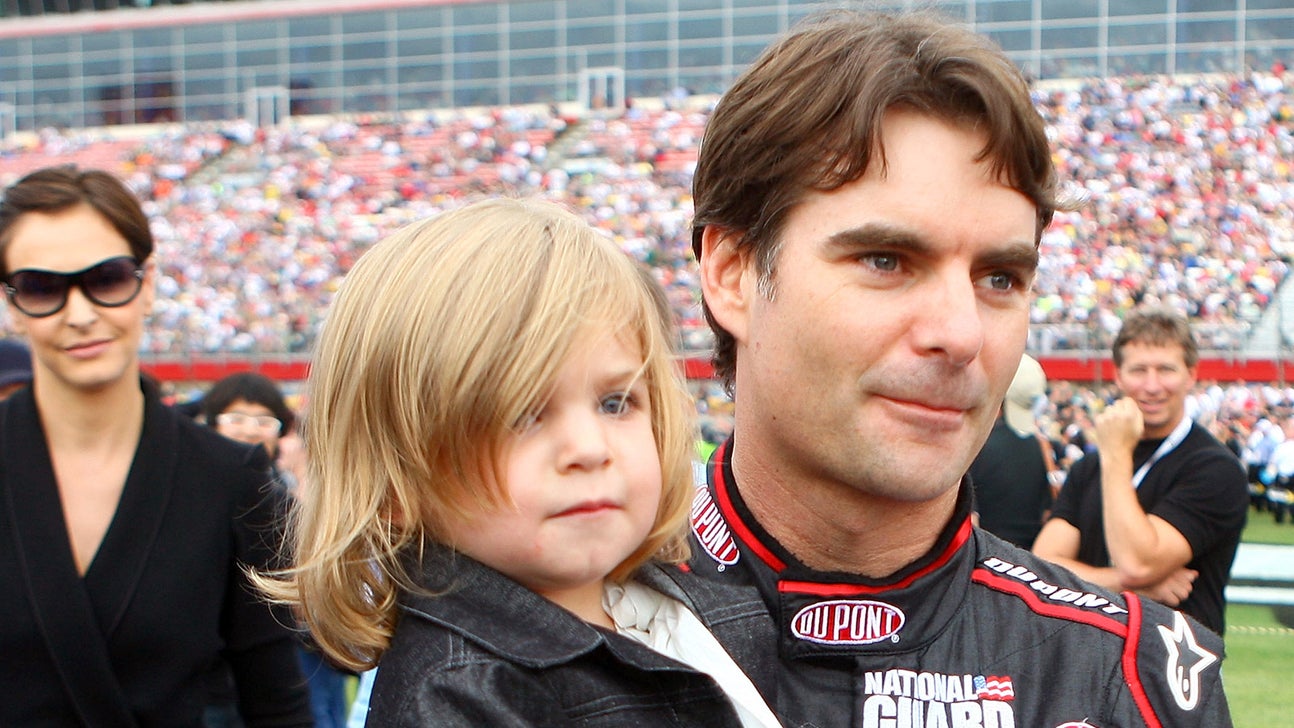
Column: Jeff Gordon will leave legacy that goes far beyond trophies


A few years ago, I was standing out in the NASCAR Sprint Cup Series garage at Charlotte Motor Speedway, bench racing with John Bickford, Jeff Gordon's stepfather. After some ups and downs, Gordon was again flashing the form that won him four Sprint Cup championships. He was running up front and things were going well for the No. 24 Hendrick Motorsports squad again.
We talked about the reasons for Gordon's recent resurgence for a couple of minutes and then Bickford looked at me, tilted his head and said -- and I'm paraphrasing here -- "You know, even if Jeff never won another race, he would always be a champion to me because of the man he's become."
And that, ultimately, will be Jeff Gordon's legacy: The man he's become.
Sure, Gordon left quite an on-track legacy.
He was unquestionably the single biggest agent of change in the sport in the mid-1990s, when he enjoyed tremendous success and proved you didn't have to be from the South or talk like a country bumpkin to be a champion.
As much as anything, Earnhardt vs. Gordon, Gordon vs. Earnhardt was responsible for NASCAR's meteoric explosion into mainstream America during its boom period. Ironically, while their fan bases were bitter enemies, Gordon and Earnhardt had tremendous respect for each other and both men loved to race the other.
On the track, Gordon piled up record after record. The record book details it: 92 victories, 77 poles, five Brickyard 400 victories, three Daytona 500s, four championships, wins in all the big money races.
Sure, he had some rough spots, including a high-profile divorce, and it took some time for Gordon to understand how to cope with all the attention being a superstar athlete brings.
But his marriage to Ingrid Vandebosch and the subsequent birth of children Ella, 7, and Leo, 4, bought Gordon great joy and contentment. In recent years, Gordon has donated tens of millions of dollars to pediatric cancer and traveled multiple times to Africa to fund the building of hospitals in impoverished areas.
Gordon is very private about his charity work. On numerous occasions I have asked his long-time public relations representative, Jon Edwards, if I could go with him to visit hospitalized children. Those requests have always been politely but firmly denied.
Gordon was honored with the Heisman Humanitarian Award in 2012 for his work with the Jeff Gordon Children's Foundation and, of course, he's been very active with the AARP Drive to End Hunger program in recent years.
Just last week, Gordon auctioned off one of his old race cars, a 1999 Chevrolet that he won a Busch Series race in Phoenix with, at Barrett-Jackson. The sale raised another $500,000 for his foundation.
Gordon used to be just a racer.
The man he has become is a racer, husband, father, philanthropist and citizen of the world. He is one of the sport's true good guys. And as we saw all of last year, he can still get up on the wheel of a race car and drive the living hell out of it. He also has an intense desire to win still. If you don't believe it, just ask Brad Keselowski.
The first time I ever interviewed Jeff Gordon was at Phoenix International Raceway in February 1991. He had just won the USAC Silver Crown race that was part of the old Copper World Classic, and he was a young, skinny kid with a mullet and pencil mustache.
Even then, people who knew racing, knew Gordon could drive.
But no one, especially Gordon himself, could have had any idea about the man he would become or the lives he would influence along the way. That's why to so many he will always be a champion.

Greg Biffle, Known for Passion of Racing and Helping Others, Dies at 55

Greg Biffle Tributes Pour in from NASCAR Community

Former NASCAR Driver Greg Biffle, Family Members Among 7 Killed in Plane Crash

Second Thoughts: Can Michael Jordan, Denny Hamlin, NASCAR Mend Relationships?

What To Know About NASCAR Antitrust Lawsuit: Settlement Reached

What's Next: With NASCAR Antitrust Lawsuit Over, Questions Linger

Michael Jordan's 23XI Racing Settles Lawsuit with NASCAR: 'Going to Grow the Sport'

NASCAR champions: Complete list of Cup Series winners by year

NASCAR Announces 2026 Schedule: Chicagoland, San Diego Added; All-Star To Dover


-
Greg Biffle, Known for Passion of Racing and Helping Others, Dies at 55
Greg Biffle Tributes Pour in from NASCAR Community
Former NASCAR Driver Greg Biffle, Family Members Among 7 Killed in Plane Crash
-
Second Thoughts: Can Michael Jordan, Denny Hamlin, NASCAR Mend Relationships?
What To Know About NASCAR Antitrust Lawsuit: Settlement Reached
What's Next: With NASCAR Antitrust Lawsuit Over, Questions Linger
-
Michael Jordan's 23XI Racing Settles Lawsuit with NASCAR: 'Going to Grow the Sport'
NASCAR champions: Complete list of Cup Series winners by year
NASCAR Announces 2026 Schedule: Chicagoland, San Diego Added; All-Star To Dover