Simulating INDYCAR's Unknown: Inside Drivers' Prep For New Street Courses


In Driver's Eye with James Hinchcliffe, the six-time INDYCAR winner will bring you inside the mind of a racer while breaking down the nuts and bolts of the sport for fans.
As INDYCAR continues its mad dash to the season's checkered flag, the next two stops on the calendar represent a unique challenge: brand-new street circuits.
Now, this concept isn’t new for the teams and drivers in the series. It’s not even new this year, after we went to Arlington, Texas, for the first time back in March. But having this many in a season — and two back-to-back in Markham, Ontario, and Washington, D.C. — is certainly outside the norm.
So naturally, you might want to know: How does a driver prepare for a brand-new, temporary street circuit?
The answer is the Driver In The Loop simulator, or the DIL.
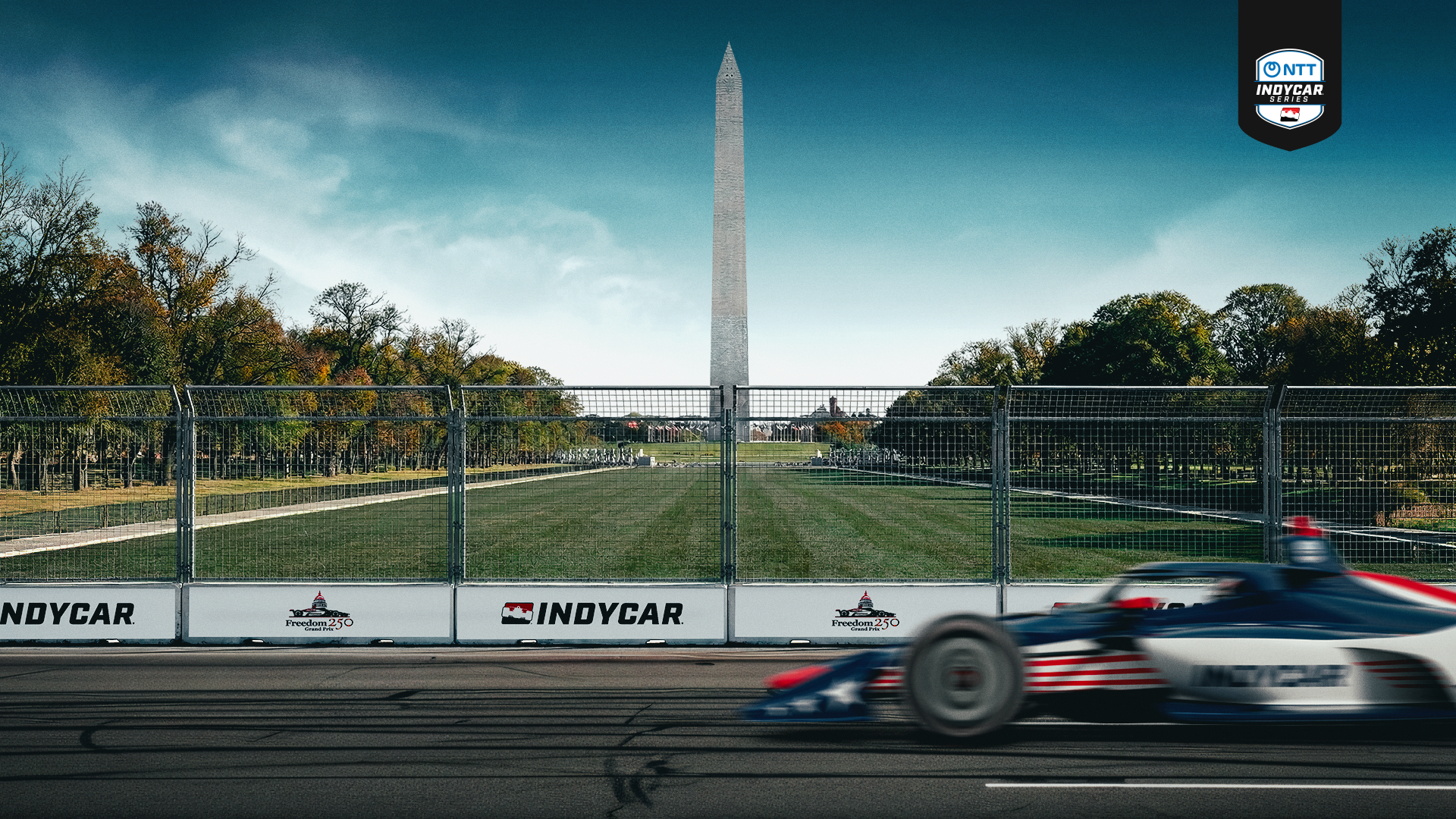
(Render courtesy of INDYCAR)
The DIL is a frequently used and massively helpful tool for drivers and engineers alike in preparation for any race. But it has extra importance when coming to a new, temporary track.
Why do I keep emphasizing the "temporary" part? Because if you’re going to a track that is new for you, but not brand new, there are other things you can look at to prepare.
Drivers will look at on-board videos from other motorsports series that have raced there. Engineers can look at data sets from a completely different race car, then use offsets they know — based on how that type of car performs against an INDYCAR at a track that they have both been on — to try and determine rough performance parameters.
But when it’s a brand-new track, the DIL simulations are the best — really, the only — tool you’ve got.
Chip Ganassi Racing and Alex Palou recently posted a video online of him doing some sim laps around the upcoming D.C. venue that gives you a sense of what this is like for the driver. Behind the wheel, it provides drivers with a general literal and figurative feel for what to expect when they won't be on the track until race weekend.
For a new track, the online model used in the sim is built from laser scanning the roads the track will be run on and building out corner radii based on CAD files used to assemble the track. Think architectural drawings that show where each line, curb and wall is.
Part of that scan should give you a rough idea of the level of grip in each corner and also highlight things like bumps in the road. These can all vary greatly on a street track from the sim to real life, so they have to be taken with a grain of salt.
The sim is most useful for drivers getting an idea of where a new track turns left or right, for car placement in corner sequences and for the general rhythm of a track. Things like braking points and minimum speeds and gear selection should be close, but not perfect.
So again, you have to understand that this is a high-level introduction to the circuit. If you take what you feel in the sim as fact, it can bite you!
I remember one year ahead of going to a new track, my teammate and I did a sim day to prepare. We got comfortable and confident. But when we showed up to the real track, the grip level was so different that we had to relearn every braking point and throttle point! The whole morning of the test day was a waste because we were undoing bad habits we had built in the sim.
That level of judgment comes with experience, and INDYCAR drivers this year have already experienced this process in 2026 with the streets of Arlington. So they know a bit about what to expect from the sim's accuracy.
THE GOOD, THE BAD AND THE FAST: MARKHAM
Before INDYCAR tackles D.C., we have the streets of Markham on Sunday.
Will Power posted a similar video from the DIL showcasing what the series has in store for it in the Great White North. And I have to say, it looks mighty impressive — even if you set aside perhaps a little bias on my part with the course practically in my childhood backyard.
There is one major standout feature of the new Markham track: The entire 2.19-mile circuit was repaved ahead of the race. While commonplace in F1, I can’t remember a time when INDYCAR arrived at a street track with the entire surface newly repaved.
This has two significant impacts on a street track.
First, it means the grip will be largely consistent across the whole track. One of the staples of street racing is having to navigate multiple different surfaces — asphalt, concrete, patches, new repairs, old and weathered sections — which inevitably have different levels of grip.
The car might perform in a particular way in one corner and a completely different way in another, owing to the different surface type or age. It’s a challenging but fun trait of street courses.
Another formidable, yet often less fun, element of racing on city streets is bumps. Any transition from one surface to another can create a bump. Normal wear and tear from 362 days of civilian traffic can create bumps. Harsh weather — or the response to it, like salted wintery roads — certainly contributes to that as well.
With a fresh repave, you’d expect far fewer bumps than the old surface, which will affect how teams set up the cars.
You’ll be able to run the car stiffer and lower to the ground. But to throw a bit of a wrench in everyone’s plans, the track layout for the sim model was scanned before the repave, so what drivers felt for grip level and bumpiness will be completely wrong!
The second notable and advantageous impact of the complete repave on a debut course is more options on track layout.
Since you are repaving everything, there are areas you can now drive an INDYCAR that maybe you couldn't previously. So we now have a unique and challenging layout that isn’t just a sequence of simple 90- or 180-degree corners that you see on some street circuits.
Add in a bit of elevation, which is not always a trademark of street racing, and you’ve got a recipe for a highly entertaining inaugural Ontario Honda Dealers Indy at Markham.
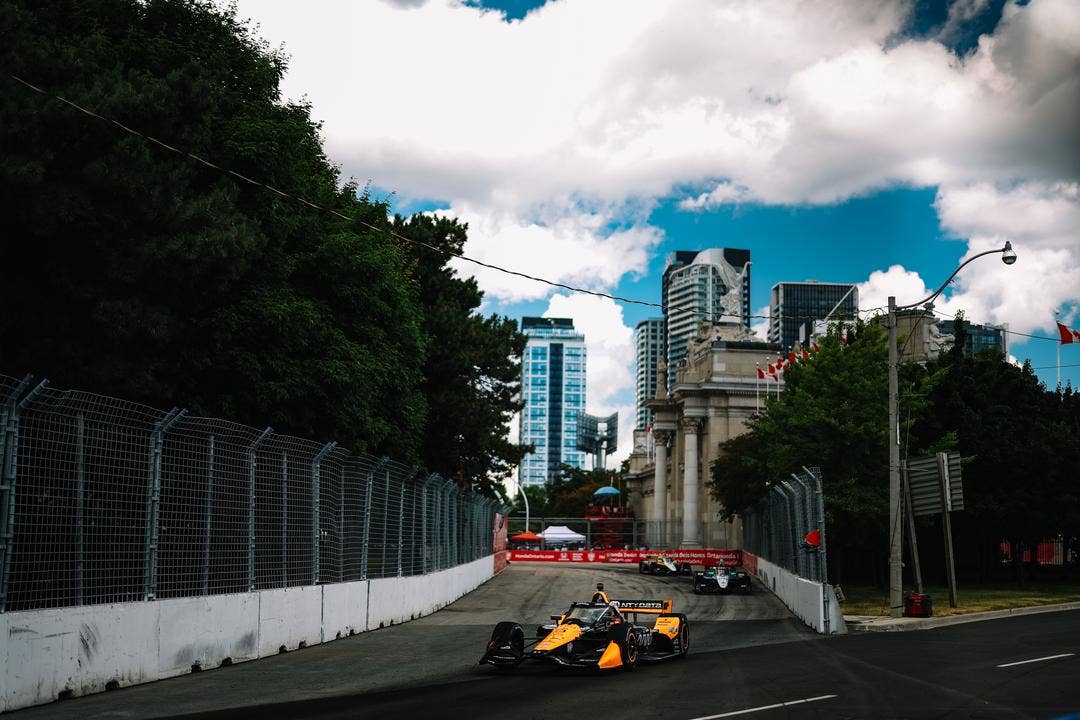
Pato O'Ward during the 2025 Ontario Honda Dealers Indy Toronto, the last INDYCAR race on the old circuit. (Joe Skibinski/Penske Entertainment)
And while this weekend will be the first INDYCAR race in Markham, it is certainly not the first in the greater Toronto area.
For 40 years, the race was held in the heart of downtown Toronto, along the water beside the city's landmark Exhibition Place. It was a venue that hosted some incredible races where many in the current generation of Canadian INDYCAR fans — myself included! — first fell in love with the sport.
1 FOR THE ROAD
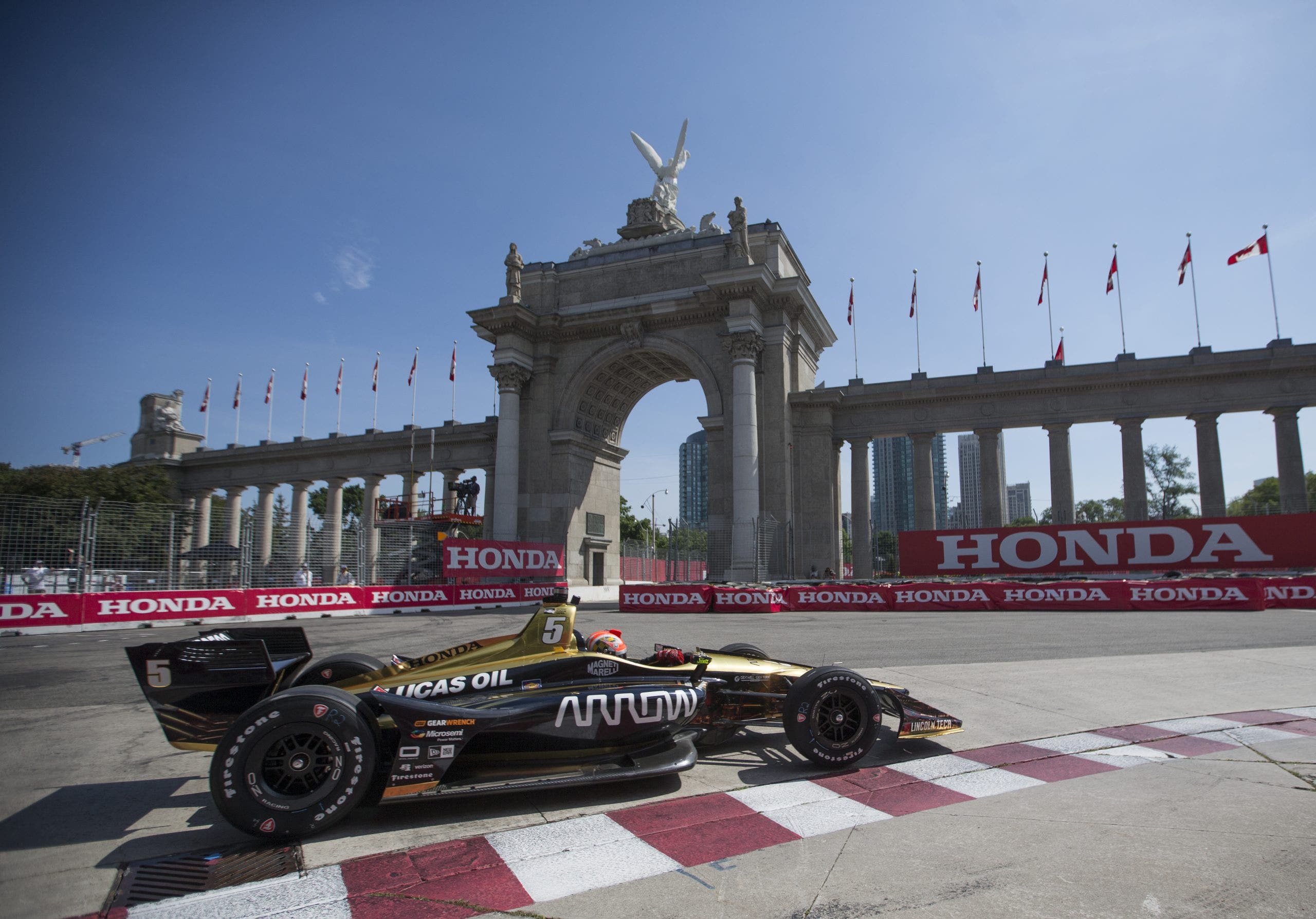
Me in 2018 going through Turn 1 at the Princess Gate during practice on the previous course. (Rick Madonik/Toronto Star via Getty Images)
I want to sign this week's column honoring the four decades of great races, lives lost, and fans captured down at Exhibition Place. The circuit had a phenomenal run, but this was the perfect time to pass the baton to Markham. I cannot wait to start the next chapter of INDYCAR history in Canada, where the next generation of Canadian INDYCAR fans will no doubt begin their love affair with the sport.
MORE DRIVER'S EYE:
- 3 Keys To Alex Palou's Dominance As The INDYCAR Driver Chases History
- How INDYCAR Drivers Quickly Bounce Back From In-Race Mistakes At 200 MPH
- INDYCAR vs. Formula 1: The Differences Between The Open-Wheeled Series
- Race Car Drivers Are Unquestionably Athletes. Period.
- Why Crutches Don't Stop Injured INDYCAR Drivers From Racing At 200 MPH
- Inside The Indy 500's Dramatic, Terrifying And Impressive Side-By-Side Last Lap
- The Isolating But Thrilling Pressure Of Indy 500 Qualifying At 230 MPH
- Christian Lundgaard, INDYCAR Strategy And The 'Agony' Of Botched Pit Stops

INDYCAR's Unforgettable 2026 Season And The Bright Future It Signals

Jeff Gordon Sweeps IROC Races In D.C. As INDYCAR's Freedom 250 Appetizer

2027 Way-Too-Early INDYCAR Power Rankings: Surprise! Alex Palou On Top

INDYCAR Silly Season Tracker: Dennis Hauger Makes Move To AJ Foyt Racing

Inside The Garage: Kyle Larson Having Fun In 'Challenging' Year Despite No Wins

How to Watch 2026 INDYCAR Freedom 250 in DC: Start Time, Date, TV Channel, Streaming, Schedule
4 Takeaways From Pato O'Ward Victory Amid Rumored McLaren Shakeup




-
INDYCAR's Unforgettable 2026 Season And The Bright Future It Signals
Jeff Gordon Sweeps IROC Races In D.C. As INDYCAR's Freedom 250 Appetizer
2027 Way-Too-Early INDYCAR Power Rankings: Surprise! Alex Palou On Top
-
INDYCAR Silly Season Tracker: Dennis Hauger Makes Move To AJ Foyt Racing
Inside The Garage: Kyle Larson Having Fun In 'Challenging' Year Despite No Wins
How to Watch 2026 INDYCAR Freedom 250 in DC: Start Time, Date, TV Channel, Streaming, Schedule
-
4 Takeaways From Pato O'Ward Victory Amid Rumored McLaren Shakeup





 Your Privacy Choices | Closed Captioning


