INDYCAR vs. Formula 1: The Differences Between The Open-Wheeled Series


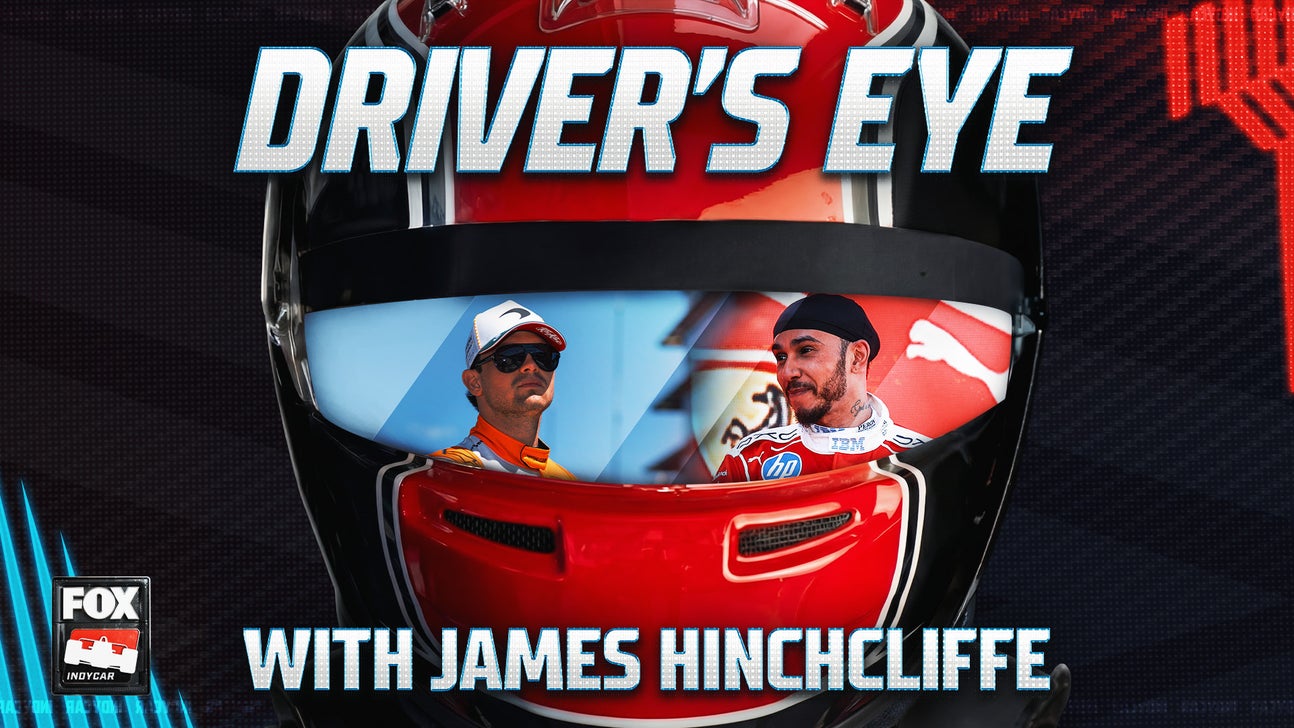
In Driver's Eye with James Hinchcliffe, the six-time INDYCAR winner will bring you inside the mind of a racer while breaking down the nuts and bolts of the sport for fans.
With Road America in the rear-view mirror and another thrilling race in the books — congrats, Christian Lundgaard, on a gritty, never-give-up kind of drive on Sunday! — the INDYCAR world has a much-deserved weekend off.
I, however, do not! Instead, I packed up, jumped on a plane and headed to Austria for this weekend’s Formula 1 race. This got me thinking about a question I get asked a lot: What’s the difference between INDYCAR and F1?
Simply put, there is not one difference, but rather many differences that make both series exciting in their own rights. So let’s break them down.
INDYCAR vs. FORMULA 1: BUILDING A CAR
First and foremost, the biggest difference is the technical regulations.

Josef Newgarden during a pit stop at Road America in Wisconsin last weekend. (Photo by Geoff Miller/Lumen via Getty Images)
In INDYCAR, there is a designated chassis manufacturer that builds the cars, and teams then purchase these cars from that manufacturer. Every team has the same car, the same base components. There are plenty of settings you can adjust to make your car faster or handle better, but very little that you can fundamentally change or develop on your own.
The only area of the car where this is allowed is the damper, or shock absorber, and teams spend an abundance of time and money trying to make theirs better than the competition.
Outside of that, you pick one of the two engines — either Honda or Chevrolet — and off you head to the track.
In INDYCAR, it’s all about taking the same pieces of a puzzle and making a prettier picture. Or, in this case, a faster car!

George Russell of Mercedes during a pit stop in F1's 2026 Barcelona-Catalunya Grand Prix. (Photo by Jakub Porzycki/NurPhoto via Getty Images)
In F1, each team has to design and build its own car, from scratch, every year. There are certainly regulatory boxes that each component must fit within — be it aerodynamics, suspension, electronics and other elements — but within those boxes is a lot of freedom to innovate and differentiate.
INDYCAR vs. FORMULA 1: IN THE GARAGE
We talk a lot about racing being a team sport and how, in INDYCAR, it takes every person on your team doing their job to get you into Victory Lane. That team can be anywhere from 20 to 50 people per car.
But because F1 has so much design and manufacturing freedom, you need a small army of people.
Nowadays in F1, the norm is to have more than 1,000 people on staff to make the whole thing happen! If any one of those people fail to perform their task, one of the other teams will pounce, and you will get beat. That’s teamwork to the extreme.
INDYCAR vs. FORMULA 1: PARITY AND SPEED
In F1, the designs can vary so much that often the teams that nail their engineering have a huge advantage over those that miss the mark.
Five different engine manufacturers supply the 11 F1 teams, and they, too, have more open regulations to develop their very complex hybrid power units compared with INDYCAR.
What this naturally means is that in INDYCAR — given that there is far less difference between the cars — there is usually a much tighter spread from the front of the field to the back.
This generally leads to closer racing and fewer periods of domination by a single team and driver, which I know sounds inconsistent with what we are currently experiencing with Alex Palou and Chip Ganassi Racing. But that just highlights how impressive what Palou is doing truly is!
INDYCAR vs. FORMULA 1: CHAMPIONSHIPS

Alex Palou after winning the 2025 INDYCAR championship. (Photo by Jake Galstad/Lumen via Getty Images)
With F1 teams building their own cars, the series has a constructors' championship that runs in conjunction with the drivers' championship. The drivers' title has a lot of pride attached to it, but the constructors' title is where the prize money is paid.
In INDYCAR, the drivers' championship is the one that wins you the novelty-sized check at the year-end banquet.
So, while some people might call INDYCAR a drivers' championship type of series and F1 a constructors' championship series, make no mistake: Both are incredibly difficult to win, and both series require a massive team executing at an elite level to achieve success.
INDYCAR vs. FORMULA 1: RACE TRACKS
There are a few other key differences, like the track types.
INDYCAR has a very versatile schedule, with races on permanent road courses (Barber Motorsports Park, Road America), street circuits (Long Beach, Detroit), short ovals (Phoenix Raceway, Milwaukee Mile) and superspeedway ovals (Indianapolis Motor Speedway, Nashville Superspeedway).

The start of the 2026 Indy 500 at Indianapolis Motor Speedway, a 2.5-mile oval. (Photo by James Gilbert/Getty Images)
All four are very different and challenging in their own right. They require unique setups on the cars and unique skillsets and racing style from the drivers.
In F1, they race on permanent road courses primarily, but also on temporary street tracks.
The big difference here is F1’s street tracks are paved all the way around and are often smoother than permanent facilities.
In INDYCAR, when they race on street courses, they race on streets. Bumps, surface changes, repair jobs and all!

Formula 1 drivers in 2025 at the Red Bull Ring in Austria. (Photo by Andrea Diodato/NurPhoto via Getty Images)
INDYCAR vs. FORMULA 1: PAINT SCHEMES AND LIVERIES
Another interesting rule in F1 that is very different from North American motorsports has to do with car liveries.
In North America — be it INDYCAR, NASCAR, IMSA, any series, really — cars on the same team often have different sponsors and different liveries, or paint schemes. This is good as it gives the drivers a bit more identity (and helps us broadcasters know who's who!), but it can sometimes be tough to associate the team with the drivers.
In F1, the rules state that both cars on the team — and I say both because there must be two cars, not one, not three, as can sometimes be the case in INDYCAR — have to be identical. Unified liveries allow teams to really lean into a brand identity, like Ferrari and red, Mercedes and silver or McLaren and papaya.

Ferrari drivers Lewis Hamilton and Charles Leclerc during F1's MSC Barcelona - Catalunya Grand Prix. (Photo by Gongora/NurPhoto via Getty Images)
There are plenty more small differences, but those are some of the big hitters. The result in both styles of racing is exciting, fast, highly competitive races with some of the best drivers and athletes in the world.
1 FOR THE ROAD
While we are talking about some of the best drivers in the world, tip of the hat to Christian Lungaard and his team on a thrilling comeback drive at Road America last weekend.
Contact on Lap 1 dropped them to the back of the field. But through a combination of great strategy, some fancy driving and a bit of luck, they grabbed the W when all looked lost in the first turn.
That said, I’ve got to give a shout-out to Marcus Armstrong on what was, without a doubt, his most competitive weekend in his INDYCAR career from start to finish.
He had been on it from first practice and was doing everything he needed to do to take his first win in the series, leading the race with three laps to go, when a mechanical failure ended his hopes. A crushing blow when you are so close to victory, but still a ton to be proud of as it really seems like he and his Meyer Shank Racing crew are hitting their stride.
I'm at F1's Austrian Grand Prix this weekend, but can’t wait for INDYCAR's return to Mid-Ohio!
MORE DRIVER'S EYE:
- INDYCAR Drivers' Midseason Report Cards, From A's To Needs Improvement
- Race Car Drivers Are Unquestionably Athletes. Period.
- Why Crutches Don't Stop Injured INDYCAR Drivers From Racing At 200 MPH
- Inside The Indy 500's Dramatic, Terrifying And Impressive Side-By-Side Last Lap
- The Isolating But Thrilling Pressure Of Indy 500 Qualifying At 230 MPH
- Chasing Alex Palou, INDYCAR Drivers Have 2 Choices: Acceptance Or Anger
- Christian Lundgaard, INDYCAR Strategy And The 'Agony' Of Botched Pit Stops

Jeff Gordon Sweeps IROC Races In D.C. As INDYCAR's Freedom 250 Appetizer

Inside The Garage: Kyle Larson Having Fun In 'Challenging' Year Despite No Wins

4 Takeaways From Scott McLaughlin Snapping 35-Race Winless Streak At Laguna Seca

INDYCAR Silly Season Tracker: Dennis Hauger Makes Move To AJ Foyt Racing

How to Watch 2026 INDYCAR Freedom 250 in DC: Start Time, Date, TV Channel, Streaming, Schedule

Why INDYCAR's Season Finale Stakes Are Still High, Despite Alex Palou's Title Win

2027 INDYCAR Schedule Tracker: First 8 Dates Announced

Don't Put Alex Palou On INDYCAR's Mount Rushmore Just Yet

How to Watch 2026 INDYCAR Laguna Seca: Schedule, Start Time, TV, Stream



-
Jeff Gordon Sweeps IROC Races In D.C. As INDYCAR's Freedom 250 Appetizer
Inside The Garage: Kyle Larson Having Fun In 'Challenging' Year Despite No Wins
4 Takeaways From Scott McLaughlin Snapping 35-Race Winless Streak At Laguna Seca
-
INDYCAR Silly Season Tracker: Dennis Hauger Makes Move To AJ Foyt Racing
How to Watch 2026 INDYCAR Freedom 250 in DC: Start Time, Date, TV Channel, Streaming, Schedule
Why INDYCAR's Season Finale Stakes Are Still High, Despite Alex Palou's Title Win
-
2027 INDYCAR Schedule Tracker: First 8 Dates Announced
Don't Put Alex Palou On INDYCAR's Mount Rushmore Just Yet
How to Watch 2026 INDYCAR Laguna Seca: Schedule, Start Time, TV, Stream





 Your Privacy Choices | Closed Captioning


