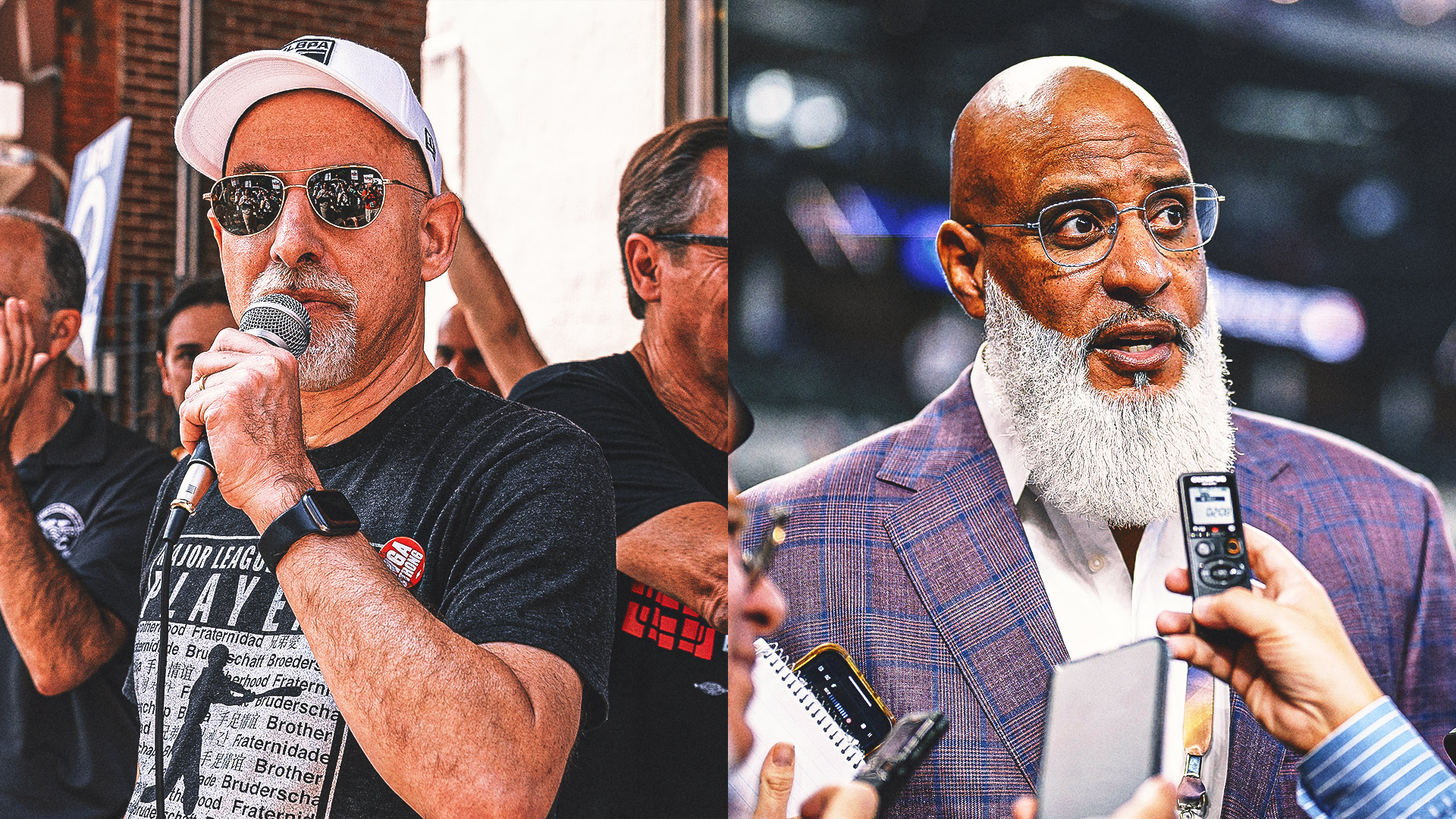
What’s Next: Where Things Stand With MLBPA Leadership After Tony Clark’s Resignation


SURPRISE, Ariz. — The Major League Baseball Players Association was still without an acting executive director when MLBPA officials began their annual spring training visits with teams on Wednesday morning. By Wednesday afternoon, that had changed.
One day after Tony Clark's abrupt resignation, MLBPA deputy executive director Bruce Meyer was voted unanimously by the players to fill Clark's vacancy as the union leader on an interim basis. Meyer will again lead negotiations at a crucial time, with the current collective bargaining agreement set to end on Dec. 1 and a potential lockout looming if a deal is not reached by that date.
Meyer joined the union staff in 2018 and served as the union's lead negotiator for the current CBA, which was ratified after a 99-day lockout in March 2022. That time, MLB and the MLBPA came to an agreement before missing games.
The union’s executive board of player representatives met Tuesday afternoon with MLBPA staff and outside counsel to discuss next steps following Clark’s ouster but did not come to a vote on a successor at that time. The vote, however, eventually took place one day later after player reps met with their teams.
Clark, who had led the MLB players union since 2013, resigned from his role on Tuesday after an internal investigation reportedly revealed an inappropriate relationship with his sister-in-law, who was hired as a union employee in 2023. Separately, a federal investigation into Clark and the union’s handling of finances remains ongoing.
Clark was scheduled to join union officials on Tuesday to begin the MLBPA’s first camp visits with the Guardians before that meeting was canceled.
Meyer said the information that led to Clark’s resignation did not come to light until the last "72 hours or so."
"Just on a personal level, I think we were all fairly devastated by things that have happened in the last 48 to 72 hours," Meyer said. "I’m not going to go beyond that in terms of personal feelings, but it’s fair to say we were all personally upset, concerned about Tony. But I think this was something players determined had to happen at this particular point in time, and we’ll move forward and again be strong as we always are."
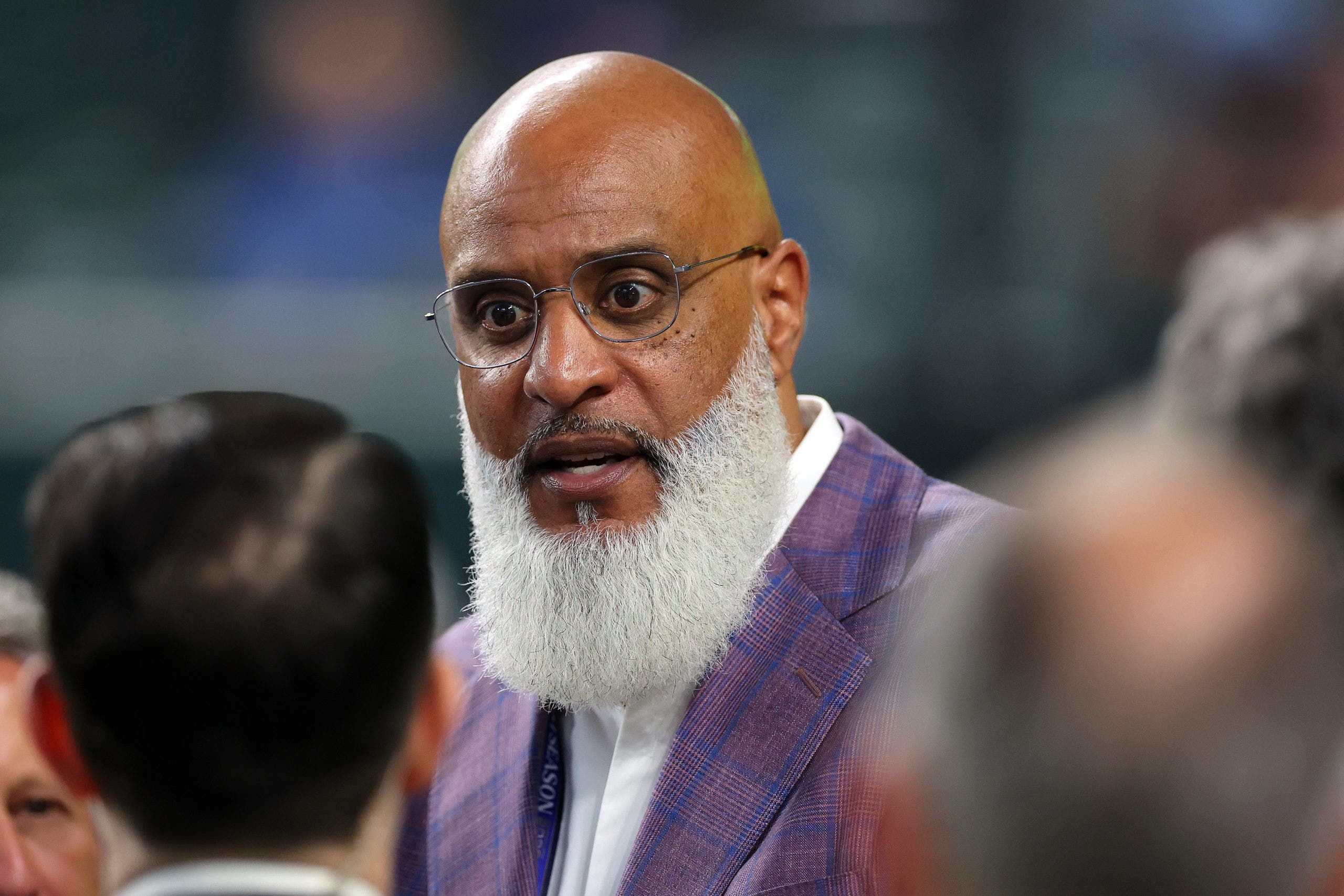
(Photo by Stacy Revere/Getty Images)
What’s next at the top of the MLBPA
As the former deputy executive director, Meyer was the most logical option to replace Clark given the time constraints with the current CBA set to expire in less than a year. Matt Nussbaum was named the interim deputy executive director, taking Meyer's former role.
Before joining the MLBPA, Meyer was a senior adviser at the NHLPA. A longtime lawyer, Meyer also has experience negotiating for the players' associations of the NFL and NBA. Nussbaum has been with the MLBPA since 2011 and was promoted to general counsel in 2023.
"We want the union to be in a good place," Meyer said. "We want the union to remain strong. That’s all any of us care about."
Meyer will now continue his role as the union’s lead negotiator ahead of what is likely to be a contentious labor battle. He was voted in by the 72-member executive board, which includes the eight-member executive subcommittee, 30 player representatives and 34 minor league positions.
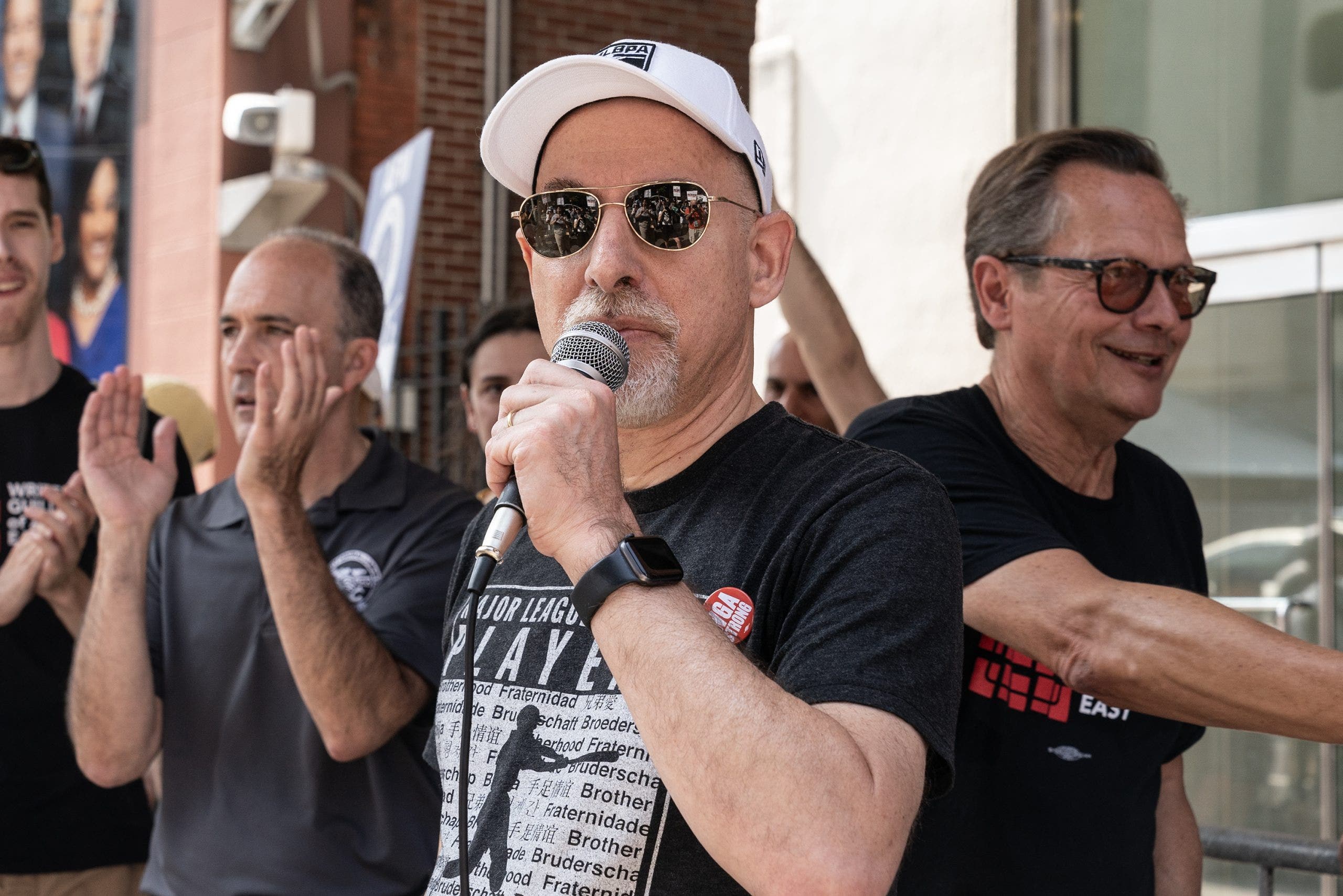
(Photo by Lev Radin/Pacific Press/LightRocket via Getty Images)
What’s next for the unity and strength of the MLBPA
The current MLB collective bargaining agreement expires on Dec. 1, after which the owners could decide to lock out the players if a deal hasn’t been reached.
That made the timing of the director vacancy particularly troubling. Meyer, after speaking to Royals players on Wednesday morning as MLBPA officials began their annual camp visits — and before he had been voted in as the new executive director — remained adamant that any delay wouldn't impact negotiations with the league.
"We don’t expect anything to change in terms of bargaining," Meyer said. "We’ve been preparing for bargaining for years. Players have been preparing. Players know what’s coming. At the end of the day, leadership is important, and leadership comes and goes, but what remains is the players. At the end of the day, it’s the players who determine the direction of the union. At the end of the day, it’s the players who determine our priorities in bargaining. Those priorities obviously have not changed and will not change."
Meyer went on to say he doesn’t think Clark’s resignation will weaken the union.
"Anybody who’s going to assume that and act on that is really making a mistake," Meyer said. "I’m not going to say this is a great thing. This is unforeseen. There have been some issues hanging over, as you know, and in some respects it’s good to get them out of the way sooner than later.
"I’m not going to say this is like a nothing and that there’s not going to be some disruptions, but at the end of the day, bargaining is the most important thing, it’s always been the most important thing, and our team that’s been preparing for that for years remains in place."
[MLB Spring Training Buzz: Dodgers RHP Brusdar Graterol Not Yet Ready for 2026]
What’s next for the timeline of negotiations
Meyer doesn’t anticipate Clark’s ouster to impact the timing of negotiations, which are expected to begin at some point after Opening Day, likely in April.
"For reference, I checked, last time we started on April 20," Meyer said. "There’s no hard and fast rule, but we’ll be ready, and I anticipate that it will operate on a normal schedule starting sometime in the spring."
The question looming over the upcoming negotiations is how far owners will go to enforce a salary cap, which is a concept the players have always strongly rejected.
"We have a duty to the players and otherwise to listen to anything the league offers," Meyer said. "We will evaluate, analyze anything that’s offered. We will report to our players and give them our recommendations. Our position, and the historic position of this union for decades on a salary cap, is well-known. It’s the ultimate restriction. It’s something that owners in all the sports have wanted more than anything, and in baseball in particular there’s a reason for that — because it’s good for them and not good for players."
Last spring, MLBPA officials met with teams to discuss bargaining and the upcoming 2026 negotiations. They then went on a summer tour with teams, something they hadn’t done before, meeting with each team individually on the road to continue discussing bargaining.
"We got great participation in that, great engagement," Meyer said. "We had a fantastic board meeting in December. In between, talking to players, not just me but our former players on staff. So, guys are engaged. Guys are locked in. Guys appreciate the importance and significance of what’s coming."
Rowan Kavner is an MLB writer for FOX Sports. He previously covered the L.A. Dodgers, LA Clippers and Dallas Cowboys. An LSU grad, Rowan was born in California, grew up in Texas, then moved back to the West Coast in 2014. Follow him on X at @RowanKavner.

Atlanta Braves Clinch 8th Playoff Berth In 9 Years With Win Over Astros

Yankees' Aaron Judge Has Injury Setback, Back To IL

Dodgers Closer Edwin Diaz Returns After Missing Month With Neck Injury

Shohei Ohtani Making 'Productive' Swing Progress, Hasn't Faced Pitching Yet

2026 MLB Rookie Of The Year Odds: McGonigle, Stewart Favored

Mets' Jared Young Has Scary Collision With Nolan McLean; CT Scan Negative

2026 MLB Playoff Picture, Standings: Dodgers' NL West Dominance Continues

Misiorowski Powers Brewers To A 4th Straight NL Central Title

Dodgers Clinch 5th Straight NL West Title, Making It 13 In Past 14 Seasons


-
Atlanta Braves Clinch 8th Playoff Berth In 9 Years With Win Over Astros
Yankees' Aaron Judge Has Injury Setback, Back To IL
Dodgers Closer Edwin Diaz Returns After Missing Month With Neck Injury
-
Shohei Ohtani Making 'Productive' Swing Progress, Hasn't Faced Pitching Yet
2026 MLB Rookie Of The Year Odds: McGonigle, Stewart Favored
Mets' Jared Young Has Scary Collision With Nolan McLean; CT Scan Negative
-
2026 MLB Playoff Picture, Standings: Dodgers' NL West Dominance Continues
Misiorowski Powers Brewers To A 4th Straight NL Central Title
Dodgers Clinch 5th Straight NL West Title, Making It 13 In Past 14 Seasons





 Your Privacy Choices | Closed Captioning


