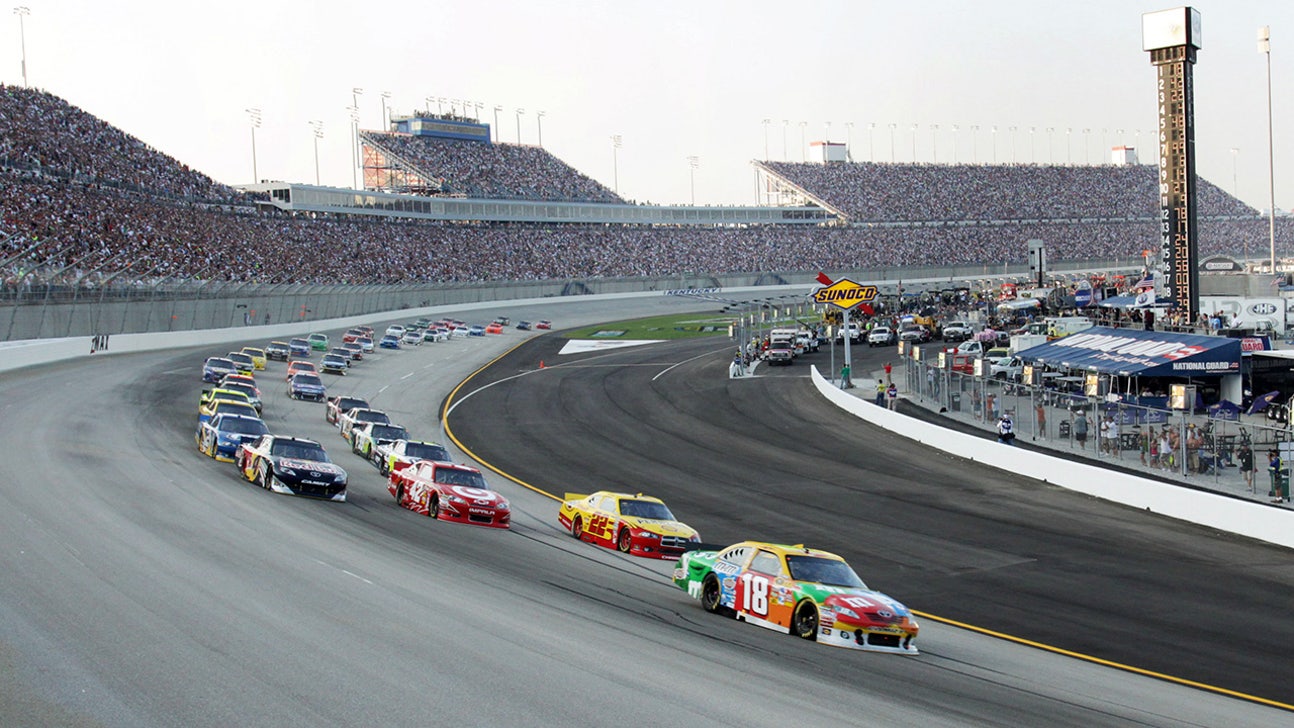
Throwback Thursday: When the mother of all traffic jams happened at Kentucky


No matter what happens at Kentucky Speedway in the future, it will be awfully hard to eclipse the story of the track's inaugural NASCAR Sprint Cup Series race in 2011 and the massive traffic jam that accompanied it.
Outside the track on Interstate 71, traffic was backed up for 15 miles before the race and an unknown number of unlucky patrons never even made it to the track.
In fact, some fans were asked to turn around after the race passed its halfway point so the track could start allowing those that did manage to make it in to leave.
So bad was the gridlock that NASCAR chairman and CEO Brian France bluntly declared, "This situation cannot happen again."
Kentucky Speedway general manager Mark Simendinger put out a statement after the race, saying the track "regrets" the traffic conditions and would work on a way to make amends with fans who never made it through the gates.
"We're committed to working with NASCAR, state and local officials and traffic experts to assure that this never happens again," Simendinger said.
But even track officials were surprised by the nightmare scenario.
"Did we know traffic was going to be heavy? Yeah," Simendinger said. "Did we know traffic was going to be distributed like that? I think we thought more people might take alternate routes anticipating heavy traffic. Is some of that on us? Yeah for not educating people the way we should have."
And even the drivers were unhappy with what went down.
"It's disappointing," said Jimmie Johnson. "I mean, the SMI group knows racetracks and does a very good job at all the racetracks they own. It's unfortunate we were unable to look ahead and see where these potential problems were."
"It's back to reality to see the other side of things,'' said Denny Hamlin. "Some guys around us had some problems. It's tough. ... You've got a lot of fans that want to watch the race but you can't do anything about a two-lane road."
The good news, of course, is that the situation's gotten a lot better.
But that first Kentucky race was a traffic nightmare no one wanted to see.
The Associated Press contributed to this story.

A Brawling Conundrum: Can NASCAR Encourage Passion While Not Condoning Fights?

Inside The Garage: Carson Hocevar Is Not The Only One Fighting At Spire

NASCAR Contender Rankings: Time To Start Believing In Joey Logano & Kyle Larson?

NASCAR CEO Announces No Penalties For Bristol Fight Between Hocevar & Blaney

Melee At Bristol: Carson Hocevar, Ryan Blaney's Wild Fight After Night Race

4 Takeaways From Joey Logano's Bristol Win & Hocevar, Blaney's Post-Race Brawl

Ty Gibbs Carries Kyle Busch Tribute Into Bristol With Iconic M&Ms Paint Scheme

2026 NASCAR Chase Odds: Pole-sitter Kyle Larson Favored For Bristol Night Race

Second Thoughts: Carson 'Hurricane' Hocevar Is Going To Have Fun No Matter What

-
A Brawling Conundrum: Can NASCAR Encourage Passion While Not Condoning Fights?
Inside The Garage: Carson Hocevar Is Not The Only One Fighting At Spire
NASCAR Contender Rankings: Time To Start Believing In Joey Logano & Kyle Larson?
-
NASCAR CEO Announces No Penalties For Bristol Fight Between Hocevar & Blaney
Melee At Bristol: Carson Hocevar, Ryan Blaney's Wild Fight After Night Race
4 Takeaways From Joey Logano's Bristol Win & Hocevar, Blaney's Post-Race Brawl
-
Ty Gibbs Carries Kyle Busch Tribute Into Bristol With Iconic M&Ms Paint Scheme
2026 NASCAR Chase Odds: Pole-sitter Kyle Larson Favored For Bristol Night Race
Second Thoughts: Carson 'Hurricane' Hocevar Is Going To Have Fun No Matter What





 Your Privacy Choices | Closed Captioning


