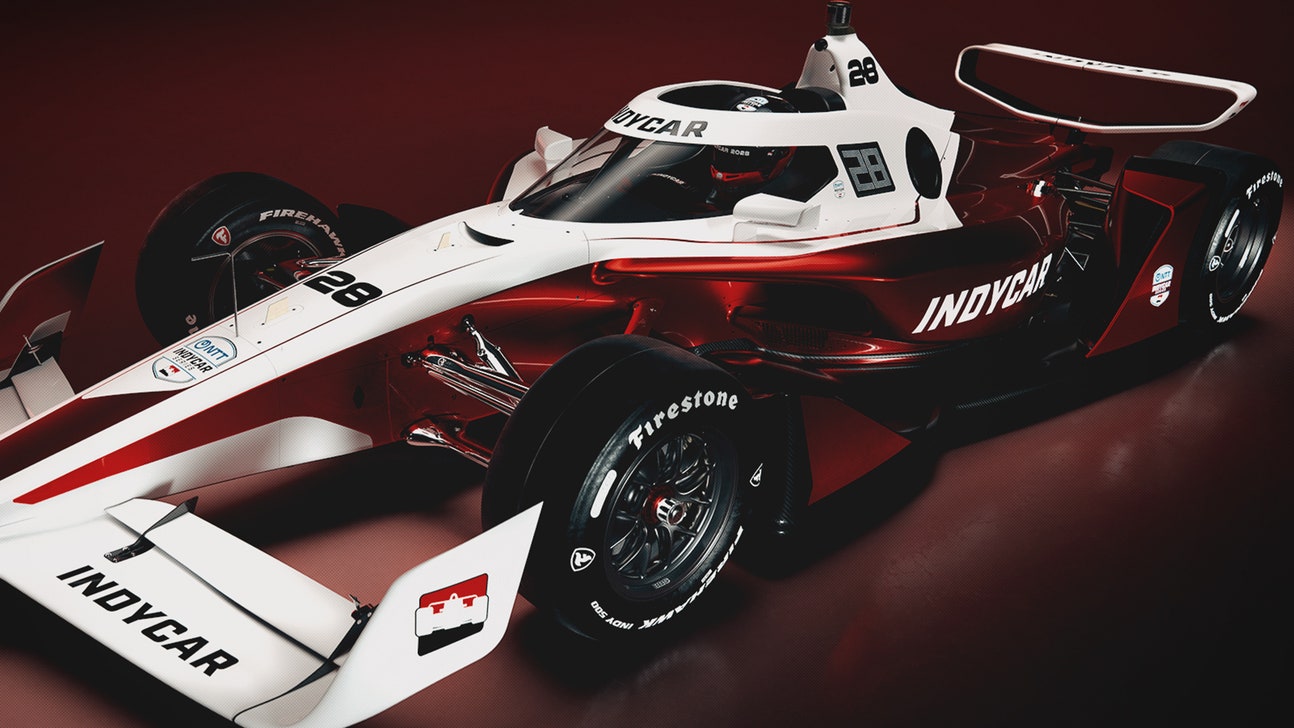
So Sleek & So Clean: 8 Elements To Like About INDYCAR's Newly Designed Ride


INDYCAR HEADQUARTERS (Indianapolis) — I got to see the 2028 INDYCAR. And there is a lot to like.
Well, it won’t be exactly what will run at the track starting in 2028. With 19 months to go before it actually is used to race, it will undergo more tweaks and adjustments.
Testing starts Saturday and Sunday, with Alexander Rossi in the car on Saturday and Alex Palou in it on Sunday. It won’t have the actual race engines, as Chevrolet and Honda are still developing their power plants. Instead, it will have a 2.4-liter V-6 engine that was developed a few years ago but never used.
It won’t have the hybrid system operational. But the tests over the next few months will inform INDYCAR about what might need to be changed before parts and pieces are started in mass production.
INDYCAR doesn’t expect full tests of the entire field until after the 2027 season.
"This weekend ... is just some very basic metrics that we need to get off the car," INDYCAR VP of Competition and Race Engineering Mike O’Gara told me and other reporters Friday afternoon when showing us the car. "Lap time is not even on our radar just yet. For a brand-new car, you really need to make sure it starts, it steers, and it stops. And then you start looking at more and more data and measuring more things.
"If we get through these next couple days with a car that we know the braking system and the steering system work fine and the new damper system is doing what it's supposed to, it'll be a good test."
But leave no doubt, this car is well into its development.
And for 2028, here are eight things that seem cool. Elements of the car that folks really might like. Things that are noticeable when taking a close look at the car. It's designed to be faster — without compromising safety. And also, it's about 100 pounds lighter than the current car used today.
We’ll get into more of the tech elements after the test, but this is more what strikes me at first look.
1. LED Lights
This was tried a handful of years ago. But trying to incorporate the system into an existing car produced too many problems with overheating and vibrations. It also caused issues with the car's ability to work properly overall.
But now the LED lights, which will show a car’s place during a race and potentially the time of the pit stop, should be good to go.
Used in other series including IMSA, it will help fans know what place the car is in while it races.
"Anti-vibration is built into it, everything in terms of the way that that carbon was built, so that it fits perfectly in there," INDYCAR Senior VP of Competition and Operations Mark Silba told me and the gathered media.
"There's also been technical advances that have happened, and we worked with Dallara on that to build a panel that would be more robust. ... That’s something we absolutely wanted to bring back for the fans."
2. Front Wing
The front wing still looks good. And for Indianapolis Motor Speedway, the design of the big curved sidepods should help with air flow to allow drivers who are third, fourth, fifth in line to be able to have an easier time making passes.
I’m not sure if it is just the way the nose now looks toward the ground, but the front wing is distinctly INDYCAR.
3. It's Sleek
The car appears a little more narrow. It still has that soda-bottle look. It looks cleaner than the current car, and frankly it should. The current car, which debuted in 2012, has had things bolted on and added for safety or aerodynamic reasons.
"There's been a conscious effort to look at the nose-up attitude of the car in different yaw situations and to reduce lift," O’Gara said. "The current car we've sort of piled all these things on. We have flaps on the tire ramps at the speedway, and we have flaps on the back of the under tray at the speedway.
"We ran a spine on the current car. This car has none of that. Because all of the learnings from what those have all helped the cars from blowing over. From trying to make them more stable when you're sideways or sliding backwards — we've seen those aero effects, and they've been integrated into the actual shape of the body of the car."
4. Aeroscreen & Halo More Crisp
The aeroscreen and halo, now incorporated into the car, definitely look better. It’s not as bulky. They describe it as having more of a fighter pilot look, and it is hard to argue with that.
"When you see the car head-on, the windscreen and cockpit, it just fits better," O’Gara said.
5. Clear Rear Panel
There is a clear panel at the rear of the car that will allow people to see the engine cover. It will allow for engine manufacturer branding to be seen through the panel.
There's also a small area where fans — when just looking at the car as it sits on the grid — can see a little bit of the suspension underneath the body.
6. Steering Wheel And Fewer Knobs
More of the controls will move to the steering wheel, giving the cockpit area a slightly cleaner look, while still boasting a steering wheel that looks cool. Plus, there’s a safety element.
"We've tried to limit the number of controls in the car, so you'll see a lot less knobs and buttons and levers and things like that," O’Gara said. "The anti-roll bars are electronic now in the car, so they're on electric actuators, and it’ll be up to the team to configure. But probably the thumb wheels that are on the steering wheel will adjust the anti-roll bars.
"It's going to allow the drivers to not pull their hand off the wheel when they're making these adjustments for one, but it's also less stuff in the cockpit for them to hit their hands."
7. Bigger Cockpit
The cockpit is bigger, allowing drivers of all sizes to be more comfortable in the car.
It will also potentially be cooler. And we’re not talking about the looks in this instance but about the temperatures inside.
"It's safer because there's more padding now around the driver," O’Gara said. "It allows for a wider range of drivers."
Also, the seat doesn’t adjust but the controls can be moved to come toward the driver.
8. Cool Factor
Which brings us to the last part of this piece. The cool factor when it comes to temperatures doesn’t mean it won’t be hot. The drivers, though, hopefully won’t feel that they are in an oven just baking throughout a race.
The infrastructure needs of the current cool suit system are part of the car and there are many other ways the car is designed to be more comfortable.
"The helmet cooling will be through the radiator ducts," O’Gara said. "There's cooling up top on the shock cover where we currently have cooling, and then underneath the car, there's an area where ... the bottom of the tub is sort of boat shaped, and at the very tip of that is a screen that comes right in under the steering column, blows air right on the driver.
"So a lot more cooling for the driver."
Whew. That’s a good thing.
It’s time to get started.
"Teams will start receiving cars in about June of next year," O’Gara said. "We're going to coordinate the testing with all the teams. So, initially, it'll be one car per team starting once the 2027 INDYCAR season finishes."

4 Takeaways From Pato O'Ward Victory Amid Rumored McLaren Shakeup

INDYCAR Unveils Sleek New Car For 2028: 'There Is A Wow Factor'

How to Watch INDYCAR Today: Nashville Race New Time, TV Channel, Stream

INDYCAR Mid-Ohio Results: Pato O'Ward Breaks Through For First Win Of 2026

INDYCAR To Debut Lighter Car In 2028 With More Power

INDYCAR vs. Formula 1: The Differences Between The Open-Wheeled Series



-
4 Takeaways From Pato O'Ward Victory Amid Rumored McLaren Shakeup
INDYCAR Unveils Sleek New Car For 2028: 'There Is A Wow Factor'
How to Watch INDYCAR Today: Nashville Race New Time, TV Channel, Stream
-
INDYCAR Mid-Ohio Results: Pato O'Ward Breaks Through For First Win Of 2026
INDYCAR To Debut Lighter Car In 2028 With More Power
INDYCAR vs. Formula 1: The Differences Between The Open-Wheeled Series




 Your Privacy Choices | Closed Captioning


