U.S. Soccer Spotlight: The 'Miracle' Inspiring Pochettino for the World Cup


Once again, Mauricio Pochettino was in tears.
The 53-year-old Argentine is, by his own admission, emotional. It's something fans of the U.S. men’s national team came to learn after a narrow loss to rival Mexico in the Gold Cup final in July, when Pochettino broke down while addressing his players.
But this time, his vulnerability wasn’t public. It occurred last month in Tampa after Pochettino sparred with reporters — full disclosure, I was one of them — about the idea of the U.S. team having "regular" players following a resounding 5-1 win over two-time world champion Uruguay.
It was when Scott Goodwin pulled him aside.
The post-match episode reminded Goodwin, one of the deep-pocketed donors who helped U.S. Soccer underwrite the former Chelsea, Paris Saint Germain and Tottenham Hotspur manager’s reported $6 million salary, of one of the most iconic tales in American sports. And one that was made into a Disney movie.
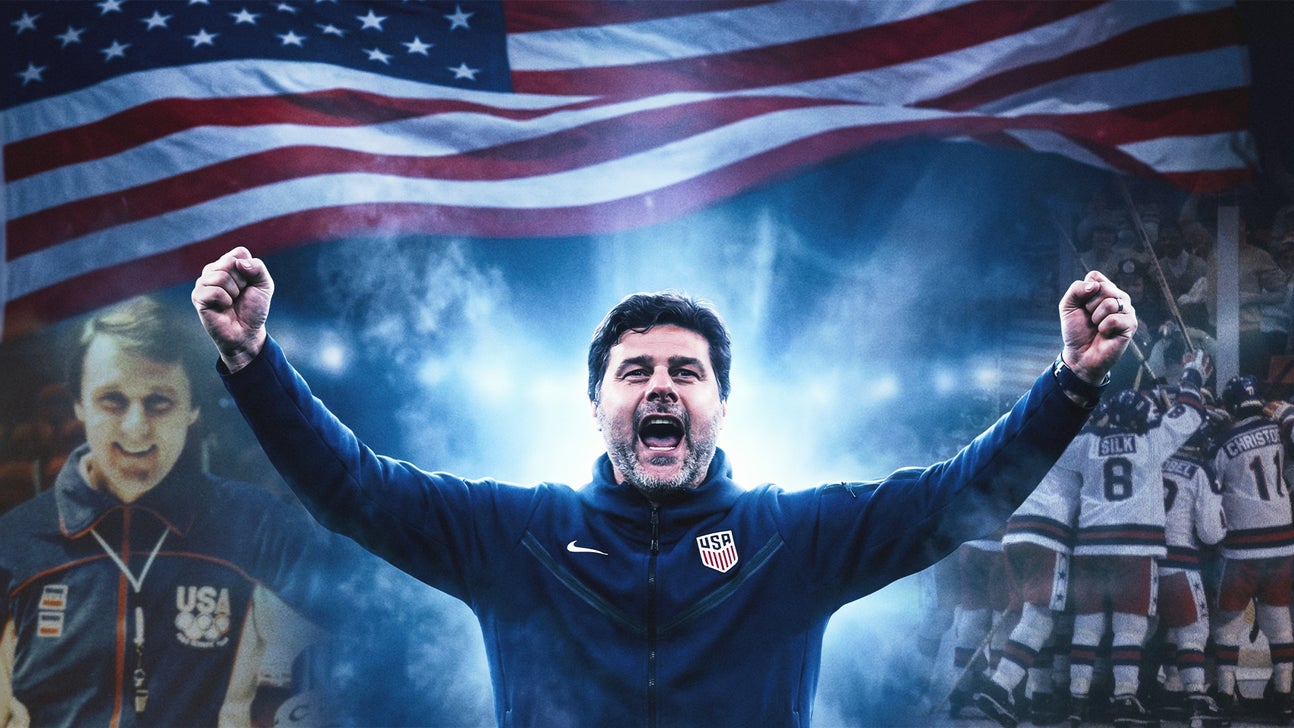
The 2004 film "Miracle" recounts the true story of the triumphant 1980 U.S. men’s Olympic hockey team. At those Games, a team comprised of amateur college players somehow defeated the fully professional four-time defending champion Soviet Union en route to the gold medal. Five decades later, the "Miracle on Ice" team and its story is still considered one of the greatest upsets in global sports history.
That squad was coached by Herb Brooks, a no-nonsense taskmaster who despised entitlement above all else and who demanded total sacrifice and buy-in from his players. He kept them guessing about who would make the final roster all the way until the eve of those Winter Olympics in Lake Placid, New York, lest anyone took their spot on the squad for granted.
In the film, Brooks was deftly portrayed by actor Kurt Russell, who delivered on those great movie scenes that make you want to run through a wall.
Pochettino, for all his obvious charm and warmth in social settings or in front of the cameras, is every bit as demanding on the training field — and, if necessary, as ruthless — as Brooks was on the ice.
"When Mauricio was mad at your question after the Uruguay game, he said something like, ‘These are the players today. It’s not the A players or the B players’ — that was a repeat of a scene from the film," Goodwin told me when I spoke to him this week. "I said, ‘Watch this movie on the flight home.’
"Well, he watched it. And right away he sent me back the quote, 'I'm not looking for the best players. I'm looking for the right players.' He picked up on that immediately."
Message Coming Through
Since he was hired to replace Gregg Berhalter almost 15 months ago, Pochettino has tried to remake the U.S. team in his own image. The Americans were coming off a historically poor performance at the 2024 Copa América, where they became the first host nation not to reach the knockout stage in that tournament’s century-plus-long history. With the all-important 2026 FIFA World Cup looming, the need for a world-class coach who could hold a group that had become far too comfortable to account and get the best out of them was obvious.
Having successfully managed the egos of bona fide superstars like Lionel Messi, Kylian Mbappé and Neymar over a 15-year European club career, Pochettino would not tolerate even the most decorated U.S. veterans putting themselves ahead of the greater good. He called in hungry newcomers, some of whom have risen to the challenge to become mainstays.
After losing to Panama and Canada in March, the U.S. ended the year on a five-game unbeaten streak (with four wins) — all against nations who have qualified for the World Cup next summer. It took some time, but Pochettino’s message has clearly gotten through. The goal, he said again after last week’s World Cup draw in Washington, D.C., is to win the World Cup — nothing less.
How far will USMNT go at 2026 FIFA World Cup™? 👀

Previous U.S. coaches didn’t dare set the bar so high publicly. Jürgen Klinsmann, a World Cup-winning player with Germany who helmed the Americans at the 2014 World Cup in Brazil, famously said flat out it was impossible beforehand. Bruce Arena did the same 12 years earlier despite repeatedly telling his players in private they’d beat a stacked Portugal in their 2002 opener in South Korea. They did, and Arena’s U.S. went on to reach the quarterfinals, still the country’s best finish on the men’s side since the inaugural 1930 event.
Although it might engender increased pressure and expectations — just eight countries have ever hoisted the World Cup — there’s a good reason Pochettino and his staff aren’t setting any limits on what the U.S. can accomplish on home soil. The current odds for the Americans lifting the trophy next July 19 in New Jersey are about 80-1. In just his second full season coaching in England’s Premier League, Leicester City overcame 5000–1 odds to win the title. Greece won the Euros in 2004 as a 150-1 underdog. (The 1980 Olympic hockey team’s chances of beating the Russians were as high as 1000-1, based on some estimates.)
There’s even a precedent with the U.S. team, which stunned pre-tournament favorite England 1-0 at the 1950 World Cup in Brazil — a result so unlikely some news outlets reported it as a 10-1 victory for the Three Lions, assuming the wire services were in error.
But to "do the impossible," as the coach likes to say, all of Pochettino’s charges have to believe that they can achieve what most clear-eyed outsiders are convinced they can’t.
"If we don't have this synergy and that energy in between 26 players, we can win one game," Pochettino told reporters last week after the U.S. drew Paraguay, Australia and a yet-to-be-determined European side as their World Cup opponents. "But [to win] a competition like the World Cup, it’s impossible."
Which is why he needs the right collective group of players — not necessarily the best individual ones.
"Good and right is completely different," he said, yet another reference to "Miracle."
‘American Story About Grit’
Speaking at U.S. Soccer’s Beyond the 90 Summit in New York City a few days earlier before the World Cup draw, it was clear the story had greatly influenced Pochettino.
"I’m in love with this movie," he told FOX Sports colleague Jenny Taft, who moderated the discussion. "I was watching, and I was nearly crying."
"Nearly?," Taft joked.
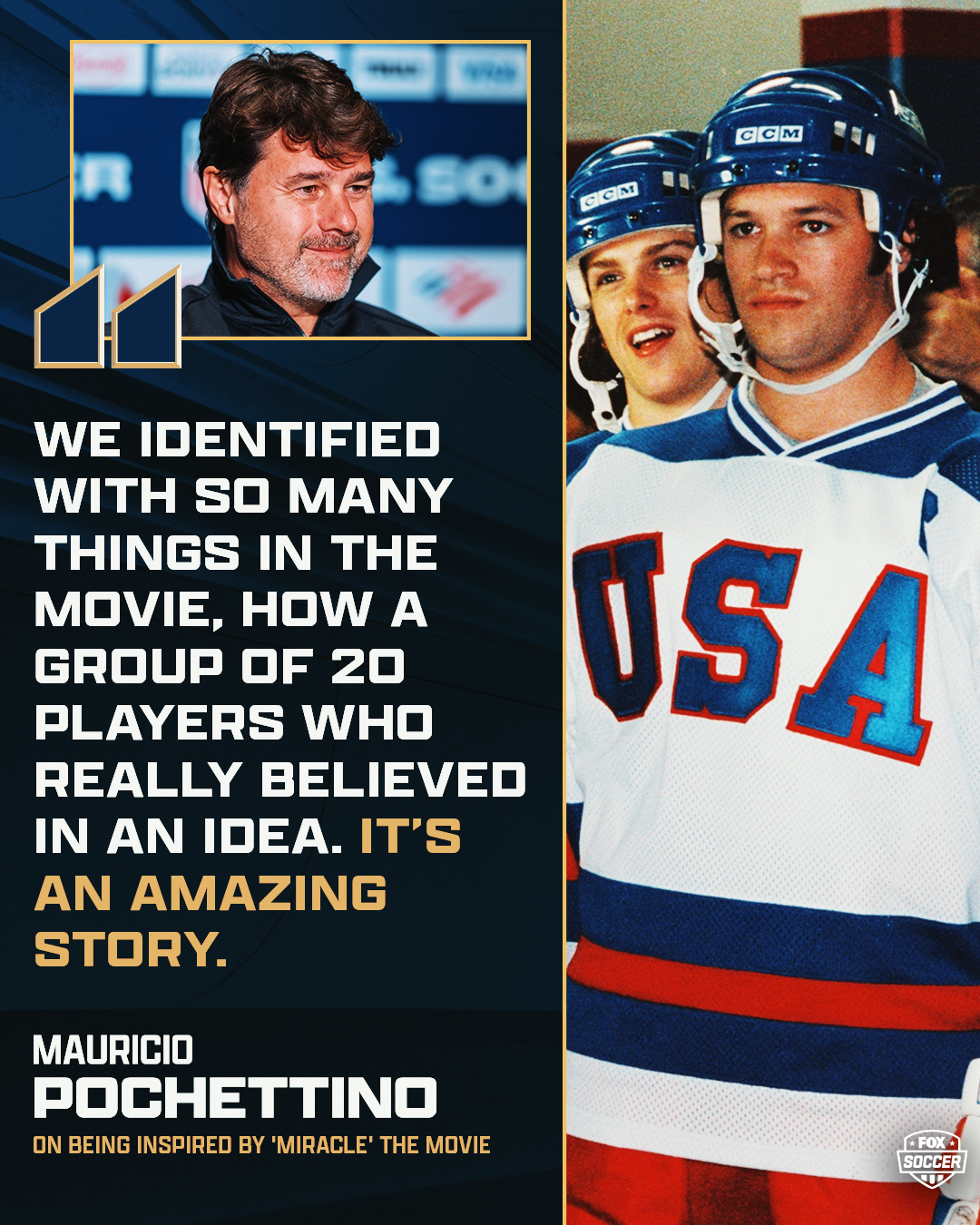
"OK, I was crying," Pochettino said. "We identified with so many things in the movie, how a group of 20 players who really believed in an idea [made it come true]. It’s an amazing story. I think it represents very well the culture of the USA — your culture."
Mauricio Pochettino REACTS to United States Landing in Group D 🌎🏆 'We need to be optimistic'
That was Goodwin’s idea when he made the recommendation.
"It’s an American story about grit," he said. "At Mauricio's first press conference, he talked about grit and confidence and belief, and that’s what he's tried to instill in this team.
"I thought the movie would allow him to connect with American culture more and understand a little bit more about our sports culture," Goodwin added. "Because in this country, sports is a lot of the culture. Some of the most patriotic moments in this country have been sports moments.
"So for him to get to see that, and know that this kind of thing happened in this country, it made him believe a bit more that the kind of passion and belief and grit that he says the Argentinian national team has also exists here."
Pochettino has tapped into that notion even more in the days since the draw. An avid consumer of American pop culture — music, TV shows — the country’s can-do spirit is one of the things that attracted him to the job. He’s talked openly about his desire to leave a legacy behind whenever he leaves. For him, the opportunity to try to make history with an underdog that also happens to be the home team at the biggest World Cup ever staged was too seductive to pass up.
Which is why Pochettino even attended a New York Rangers hockey game at Madison Square Garden – coincidentally, the team that Brooks coached from 1981-85.
"This is an unbelievable country, unbelievable people," said Pochettino during an appearance on the Pat McAfee Show on Monday, a day after the Rangers game. "When you are [invested], it's possible that you can achieve everything that you want. You arrived on the moon, you were the first. It’s the most powerful country in every single area. Why not in soccer?"
He has the same question for those who doubt that the U.S. can orchestrate its own miracle next summer: "Why not us?"
Doug McIntyre is a soccer reporter for FOX Sports who has covered United States men's and women's national teams at FIFA World Cups on five continents. Follow him @ByDougMcIntyre.
Want great stories delivered right to your inbox? Create or log in to your FOX Sports account and follow leagues, teams and players to receive a personalized newsletter daily!





 Your Privacy Choices | Closed Captioning


