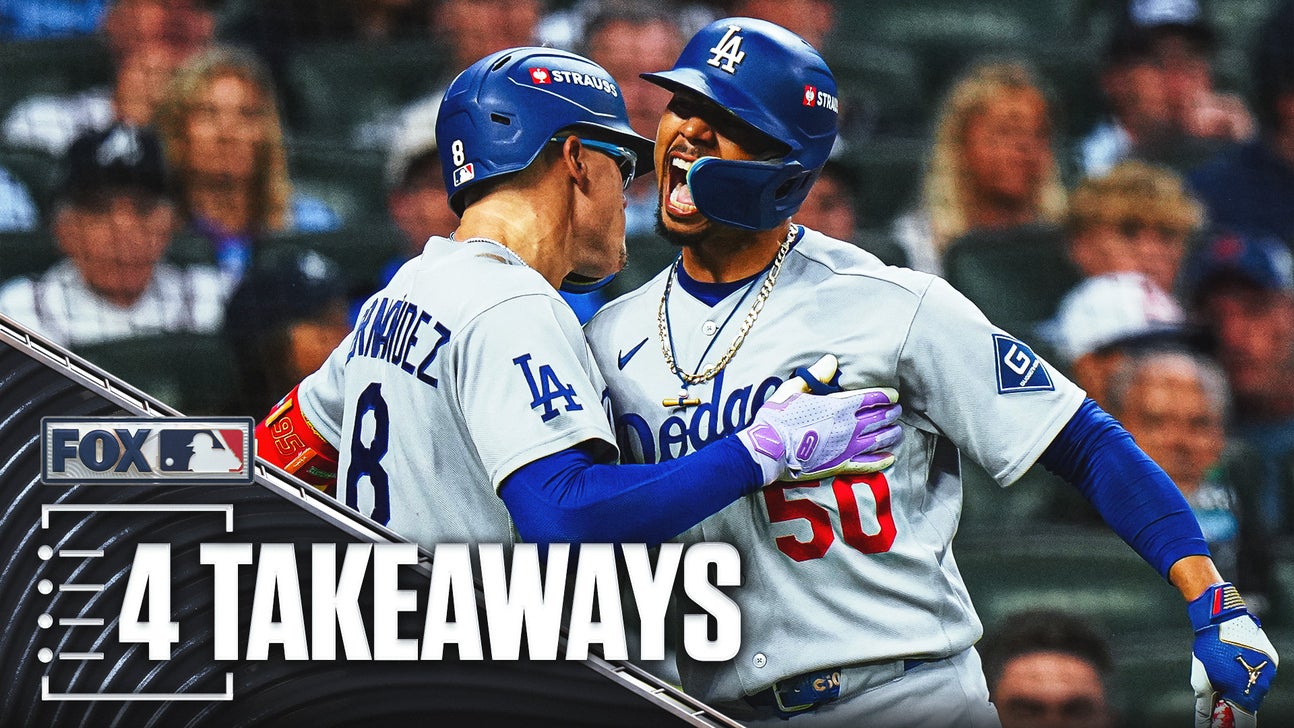
L.A. Is One Win Away: 4 Takeaways As Dodgers Take 2-1 Lead Over Braves In NLDS


The Dodgers’ lineup has been home run or bust to start the postseason.
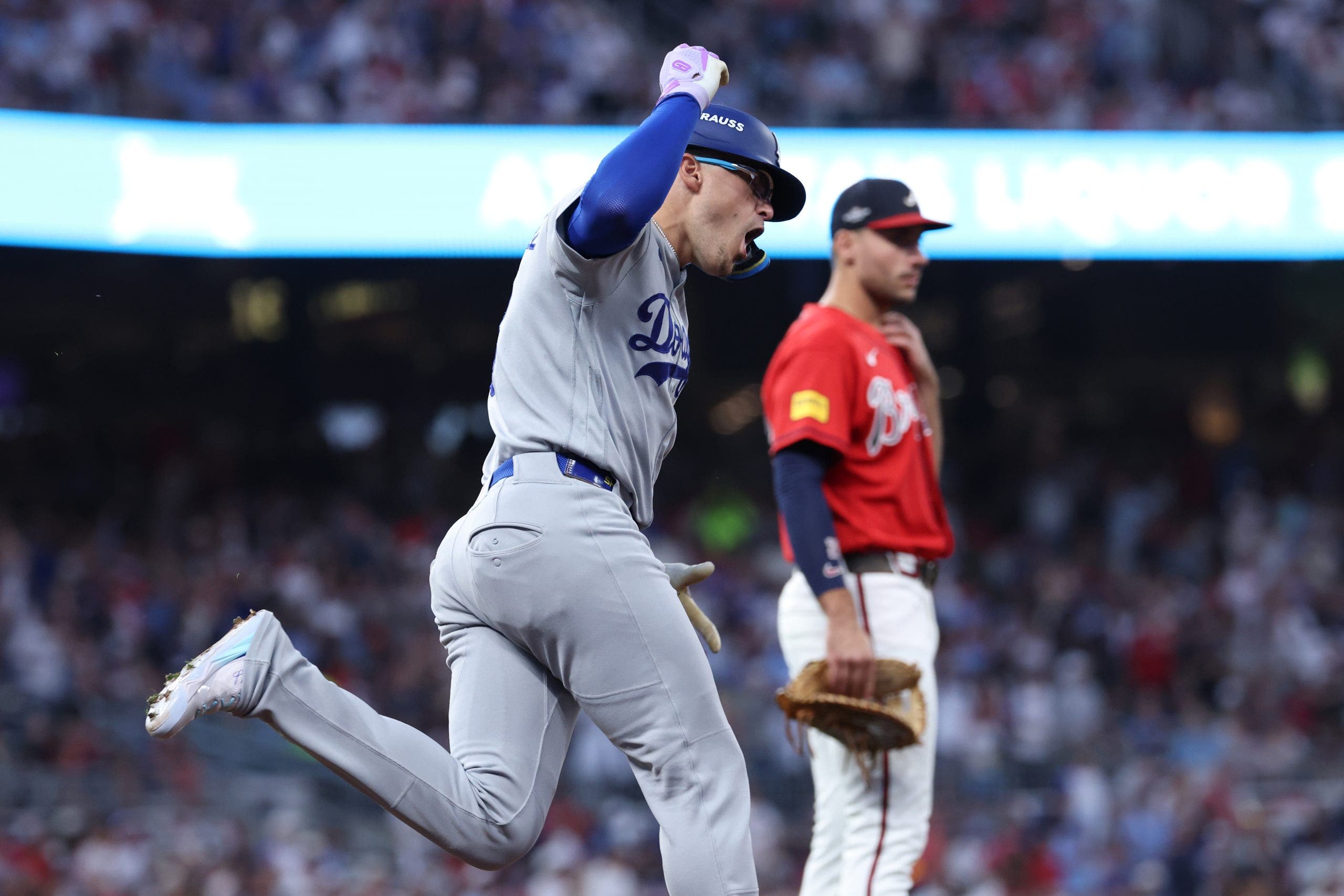
On Tuesday night in Atlanta, the formula worked as homers from Kiké Hernández and Freddie Freeman provided all the offense necessary for the Dodgers to move one win away from advancing to the National League Championship Series.
With Yoshinobu Yamamoto on the mound, it doesn’t take much.
Here are my four takeaways from the Dodgers’ 3-1 Game 3 win:
(Kevin C. Cox/Getty Images)
Hernández has been a slightly below league-average hitter over his 13-year regular-season career. But in the postseason, he is basically Aaron Judge.
Judge, who hasn’t played this postseason due to injury, has an .822 OPS and 17 home runs for his playoff career. Hernández, after going deep off Chris Sale with a two-run shot to start the scoring Tuesday, also has 17 homers along with an .832 career postseason OPS.
Hernández, it’s worth noting, has played in far more playoff games than Judge. In fact, no player in Dodgers history has played in more. Tuesday was his 94th with the franchise.
This is what he built his reputation by doing, taking his game up a notch in October.
Hernández has discussed in the past his use of visualization, a practice he began after a couple of years of postseason failure at the beginning of his career. Starting in the 2017 playoffs, every night before he went to sleep before a playoff game, Hernández envisioned every scenario he could think of happening on the baseball field and then imagined himself succeeding in that moment.
More often than not, he would, starting with his three home runs in Game 5 of the 2017 National League Championship Series. Since then, he has turned himself into an October legend.
For his regular season career, Hernández has homered roughly once every 28 at-bats. In the postseason, it is once every 17 at-bats.
Among players with at least 100 career home runs (regular season and postseason), Hernández is the only player in MLB history to have at least 10% of his career home runs come in the playoffs.
Two years ago, Hernández didn’t start any of the first three games of the Dodgers’ series in the NLDS as his team went down 2-1 to the Padres. Dodgers manager Dave Roberts remedied that decision in Game 4, choosing to go with the players he trusted with the season on the line. Hernández was inserted into the starting lineup for the elimination games 4 and 5. The Dodgers won both, and he started every game the rest of that playoff run.
He wasn’t in the starting lineup for Games 1 and 2 of this year’s NLDS — there are fewer ways this year for Roberts to work him in, given the roster construction — but Hernández again delivered with his opportunity.
(Photo by David J. Griffin/Icon Sportswire via Getty Images)
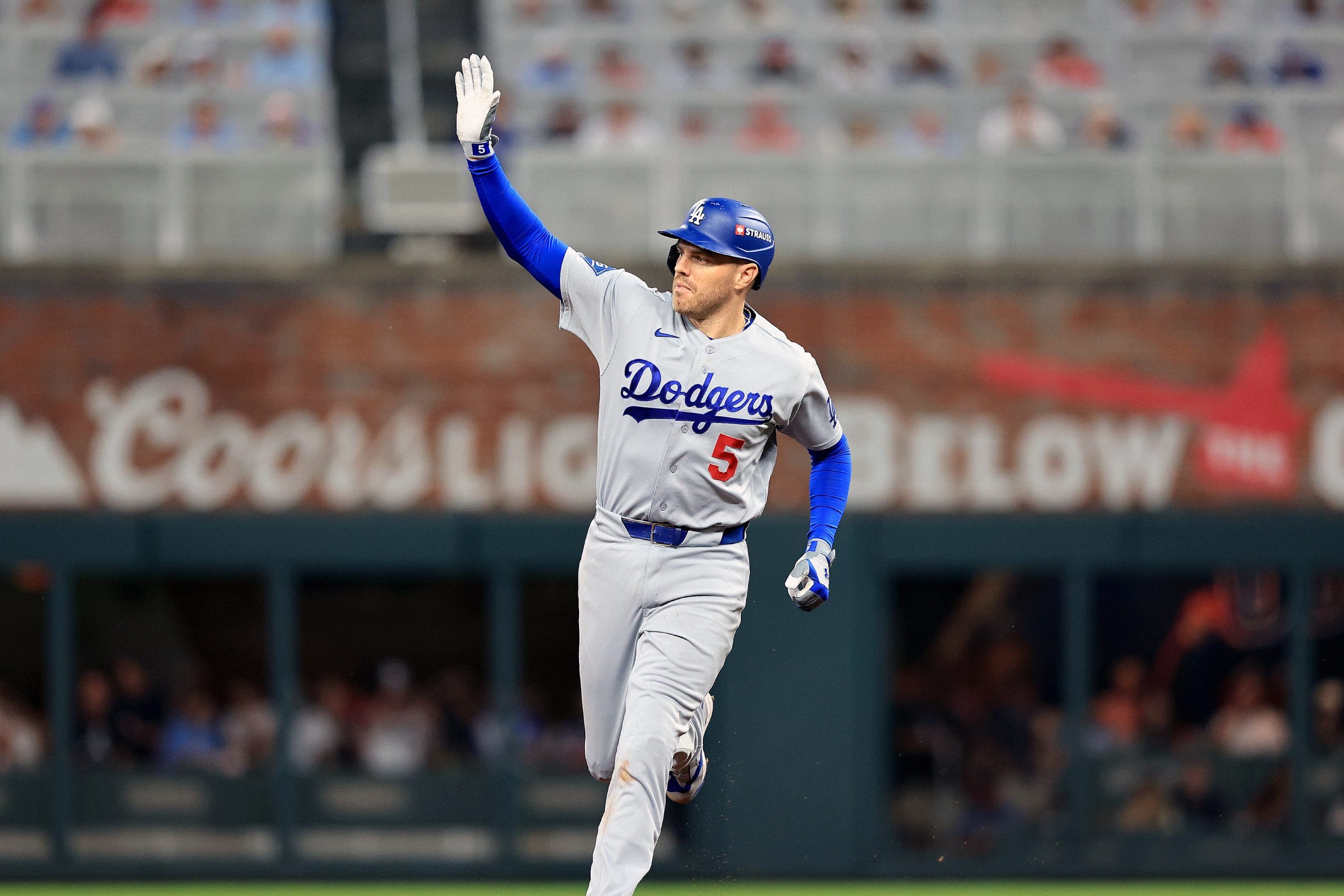
Hernández’s 17th career postseason home run matched teammate Freddie Freeman for the 17th most in MLB history.
Or, at least it did for a couple of minutes.
Two batters after Hernández went deep off Chris Sale in the fourth inning, Freeman did the same, moving the first baseman into an eight-way tie for 10th all-time with his 18th career playoff home run.
It was Freeman’s second home run this series after he went deep just once in the season’s second half. He was limited to one extra-base hit in all of September, clearly limited by a knee issue that sapped his power and got his swing out of sync.
Any concern about his health seems to be gone now that the calendar has flipped to October, where Freeman, much like Hernández, has developed a penchant for finding another gear.
Freeman has reached base in 25 consecutive postseason games with the Dodgers dating back to Game 1 of the 2024 World Series. That year, he persevered through an ankle injury to hit the first walk-off grand slam in World Series history. It was his first of four home runs in the series.
This year, he is 4-for-11 with two home runs to start the playoffs. He was feet away from another home run. In the third inning Tuesday, Freeman launched a ball 101.3 mph off the bat the other way that was robbed by left fielder Mauricio Dubón with a leap at the wall.
He hit three balls more than 100 mph off the bat in Game 3 and also helped defensively, capping the win with a sensational pick at first base on a throw from Mookie Betts to end the game.
(Photo by Daniel Shirey/MLB Photos via Getty Images)
Much of the discussion entering Tuesday centered on the Braves’ decision to save ace Chris Sale for Game 3, rather than using him in Game 2, after the veteran lefty threw 21 pitches in relief to finish the wild-card series on Oct. 1.
The choice to use Sale in that spot, for that long, to conclude the series win against the Phillies was a risky gambit, considering the potential tax it might have on his arm moving forward. But the decision appeared to work out swimmingly when the Braves stole Game 2 in Los Angeles, sending the series back to Atlanta tied at one game apiece with their ace on the mound.
The only problem?
The guy taking the ball for the opponent is the reigning World Series MVP.
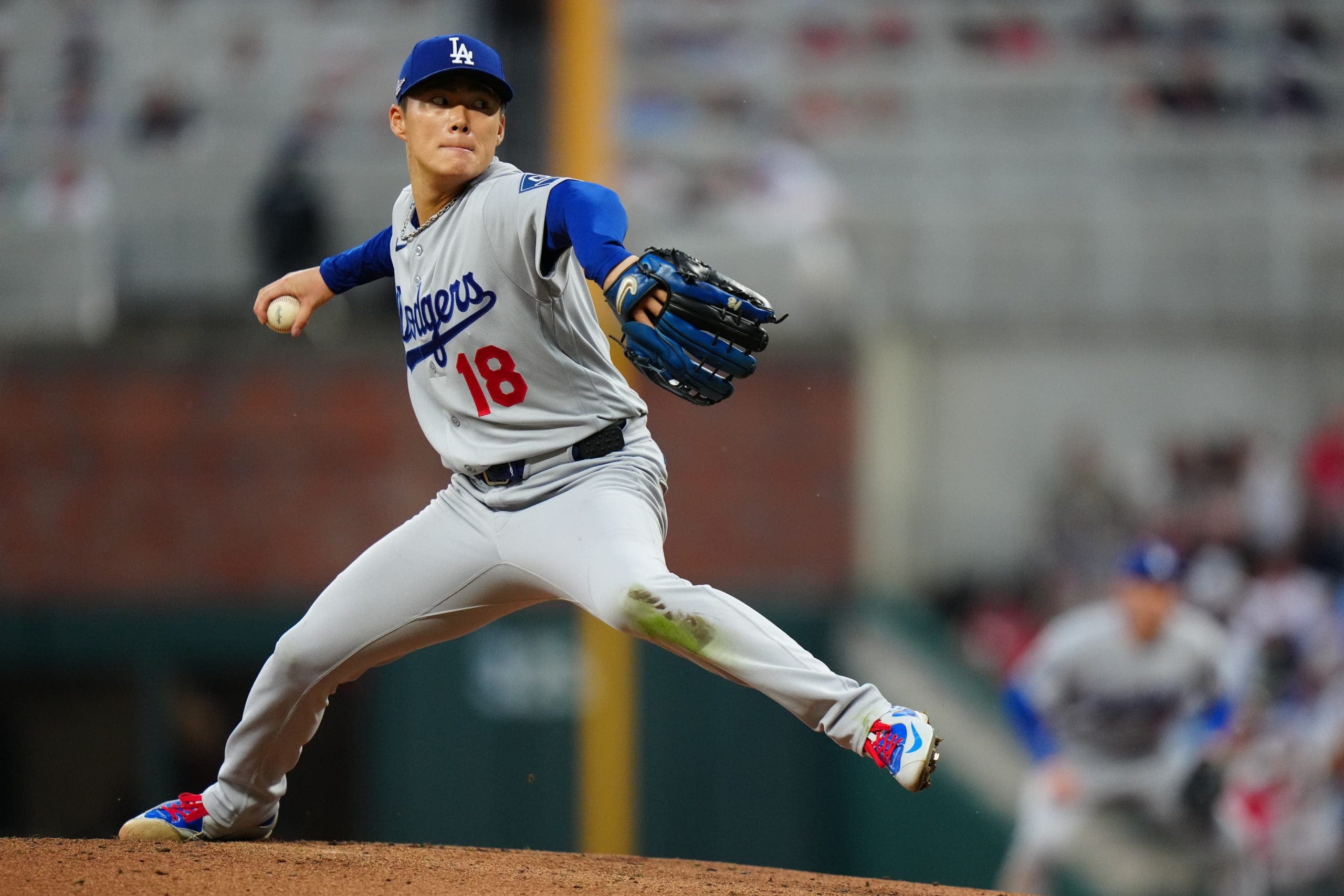
It was Yoshinobu Yamamoto who stole the show in the Game 3 matchup of aces, allowing just one run on four hits and a walk while striking out a postseason career-high 10 batters.
That feat is notable, considering last postseason Yamamoto became the first pitcher since Curt Schilling in 2001 to pitch back-to-back complete games in the playoffs. He would later etch his place further in postseason lore, throwing six innings of one-run ball in Game 6 of the World Series before returning one night later and throwing 2 2/3 innings of relief.
In case he needed any extra motivation on Tuesday, he had never beaten the Braves before, despite allowing just one earned run over 16 1/3 innings in three previous starts against them.
That changed in Game 3.
(Photo by Kevin C. Cox/Getty Images)
The Dodgers entered October uncertain who would close their games.
The most obvious choice was Tanner Scott, who led the club with 25 saves this year in a bounce-back season. But, ideally, Roberts would prefer to use Scott for a string of tough lefties.
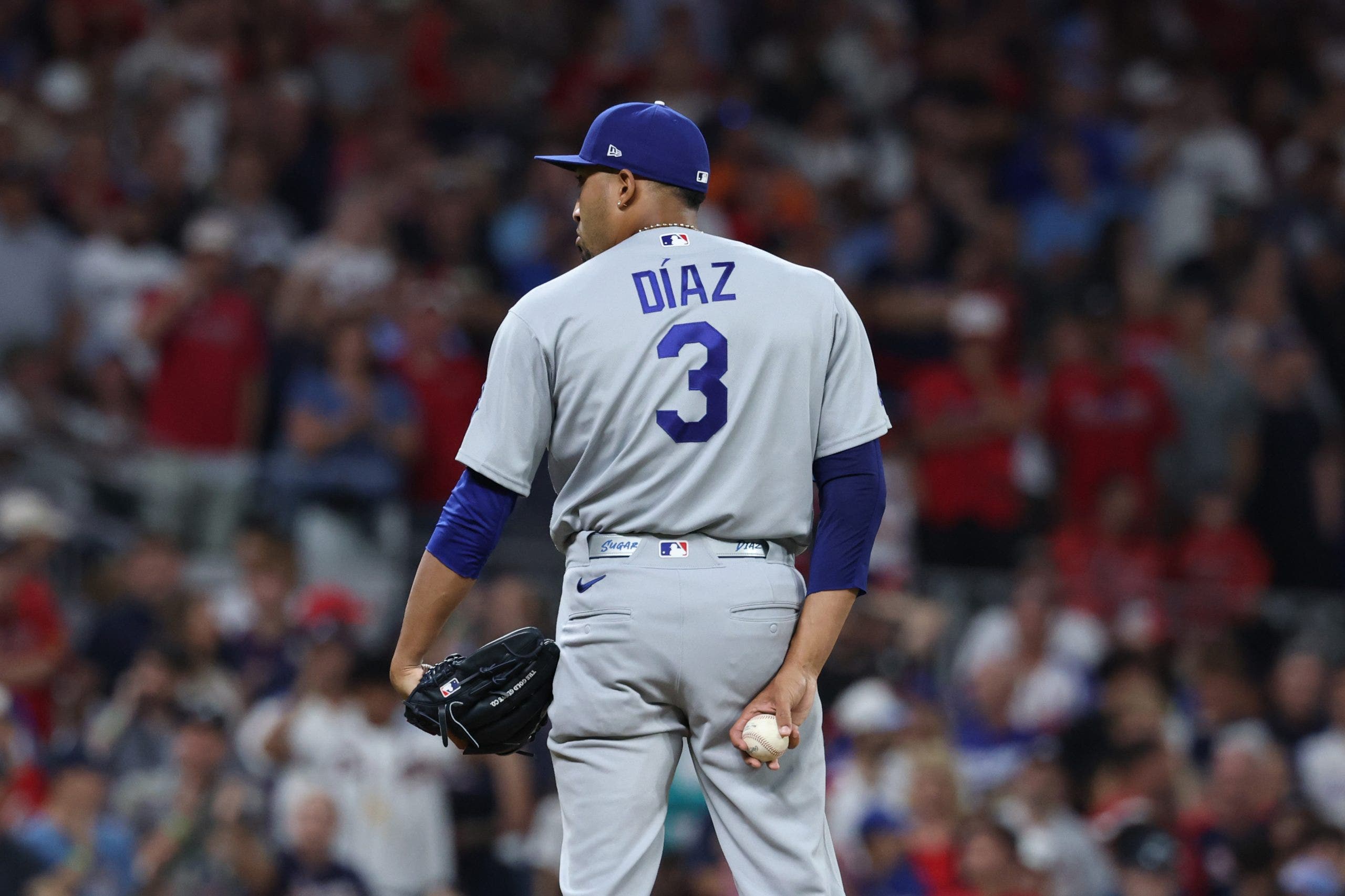
After allowing two runs in the ninth inning of Game 1, Scott followed Yamamoto in the eighth inning in Game 3. The ninth inning belonged to Edwin Díaz.
This was what the Dodgers envisioned when they gave Díaz three years and $69 million this offseason, before a disastrous 2026 season marred by injury and underperformance. Díaz posted a career-worst 8.68 ERA and missed time due to an elbow issue that required surgery and a neck issue that put him back on the injured list in August.
But he returned late in September looking more like the pitcher the Dodgers expected to get, throwing five scoreless outings to finish the season while striking out nine. His velocity and stuff ticked up, too.
After striking out two in a scoreless sixth inning in Game 1, Díaz got the call in the ninth in Game 3 and bounced back from a leadoff Ozzie Albies double to throw a scoreless frame.
The Dodgers may have found their ninth-inning answer in the guy they hoped it would be all along.
4 ½. What’s Next?
Tyler Mahle has given the Braves all they could have possibly asked for after acquiring him at the deadline from San Francisco.
Now, he’ll be tasked with trying to save their season against Dodgers starter Tyler Glasnow in Wednesday’s Game 4.
Worth watching: Braves manager Walt Weiss said postgame that Ronald Acuña Jr. jammed his knee in Game 2, which is why he served as the DH in Game 3. Acuña is just 3-for-21 to start the postseason.



MLB Division Series Roundup: White Sox, Rays Each Move One Win From ALCS

Why The Padres Can't Be Counted Out As They Stare At A Playoff Exit

Panic Time For Yankees? 3 Takeaways From ALDS Game 2 As Rays Go Up 2-0

White Sox Win Again: 3 Takeaways With The Guardians Now On The Brink

Aaron Boone Stresses Yankees Need To 'Get Up Off The Mat' vs. Rays

Braves Bounce Back: 3 Takeaways From NLDS Game 2 Win Over Dodgers

2026 MLB Divisional Series Odds: What To Know About Each Matchup

MLB Division Series Roundup: Chourio Walks It Off, Harris, Fuentes Lift Braves

Jackson Chourio Bests Mason Miller: 3 Takeaways From The Brewers' Walk-Off Win




 Your Privacy Choices | Closed Captioning


