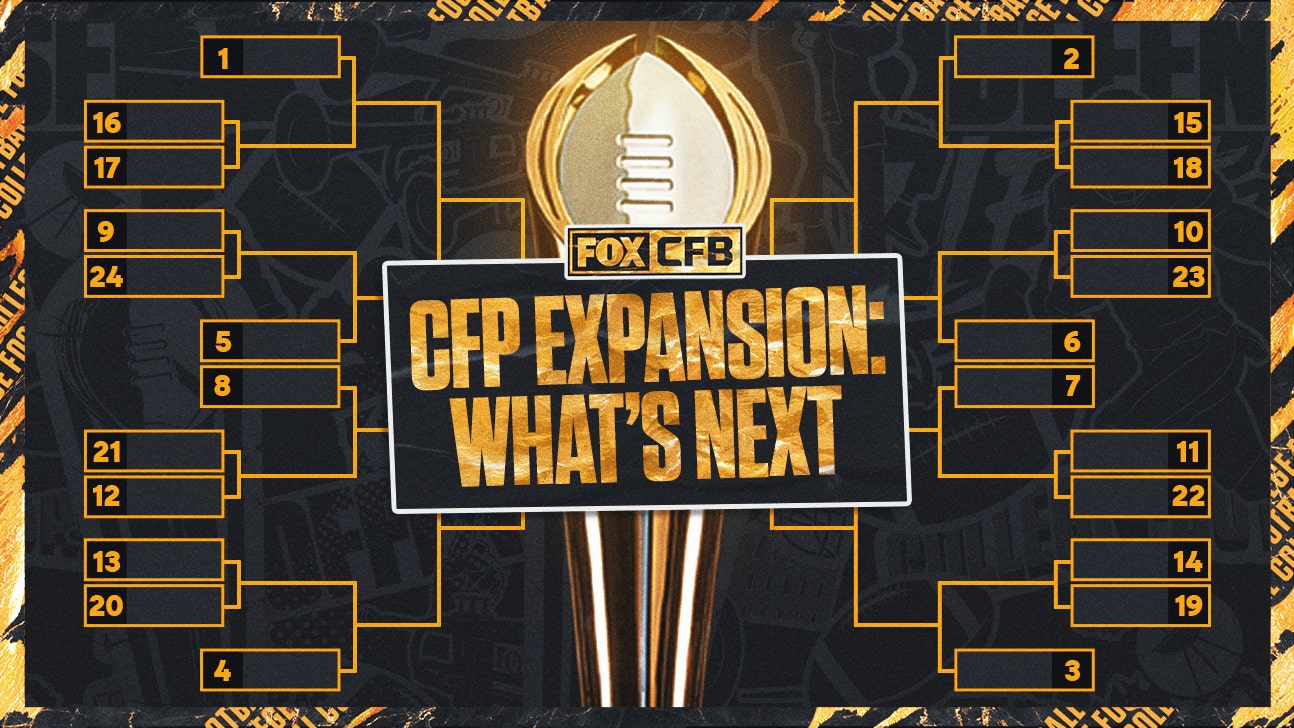
College Football Playoff Expansion: Where We Stand And What Comes Next?


College Football Playoff leaders are channeling their best Jerry Maguire this week.
"Show me the money!" they might tell you – or at least that's what they're asking their current television network partner.
Friday marks the end of a 30-day exclusive negotiating window between ESPN and the CFP around the rights to an expanded 24-team field. That won’t, however, be the end of all this.
While Friday could bring an offer from ESPN — also not guaranteed — if no deal is agreed to, the CFP is obligated to bring its own offer to ESPN. The network would then have five business days for negotiations to continue, likely leading to an actual deadline of Oct. 19 (Monday is a federal holiday).
The shorter version is this: CFP leaders are deciding whether to give ESPN the new inventory created by an expanded playoff, or take it to the open market and seek the highest bidder.
How does this all work? It’s complicated and nuanced. Here's what I'm hearing and where things stand:
What Would A 24-Team College Football Playoff Look Like?
Conversations about an expanded playoff have circulated for the better part of two years.
Initially the brainchild of Big Ten Commissioner Tony Petitti, he saw it as a way to add value to the regular season while also providing more postseason opportunities for his conference’s programs. Petitti’s initial pitch also included automatic qualifiers and other measures of guaranteed spots.
That won’t be the case here.
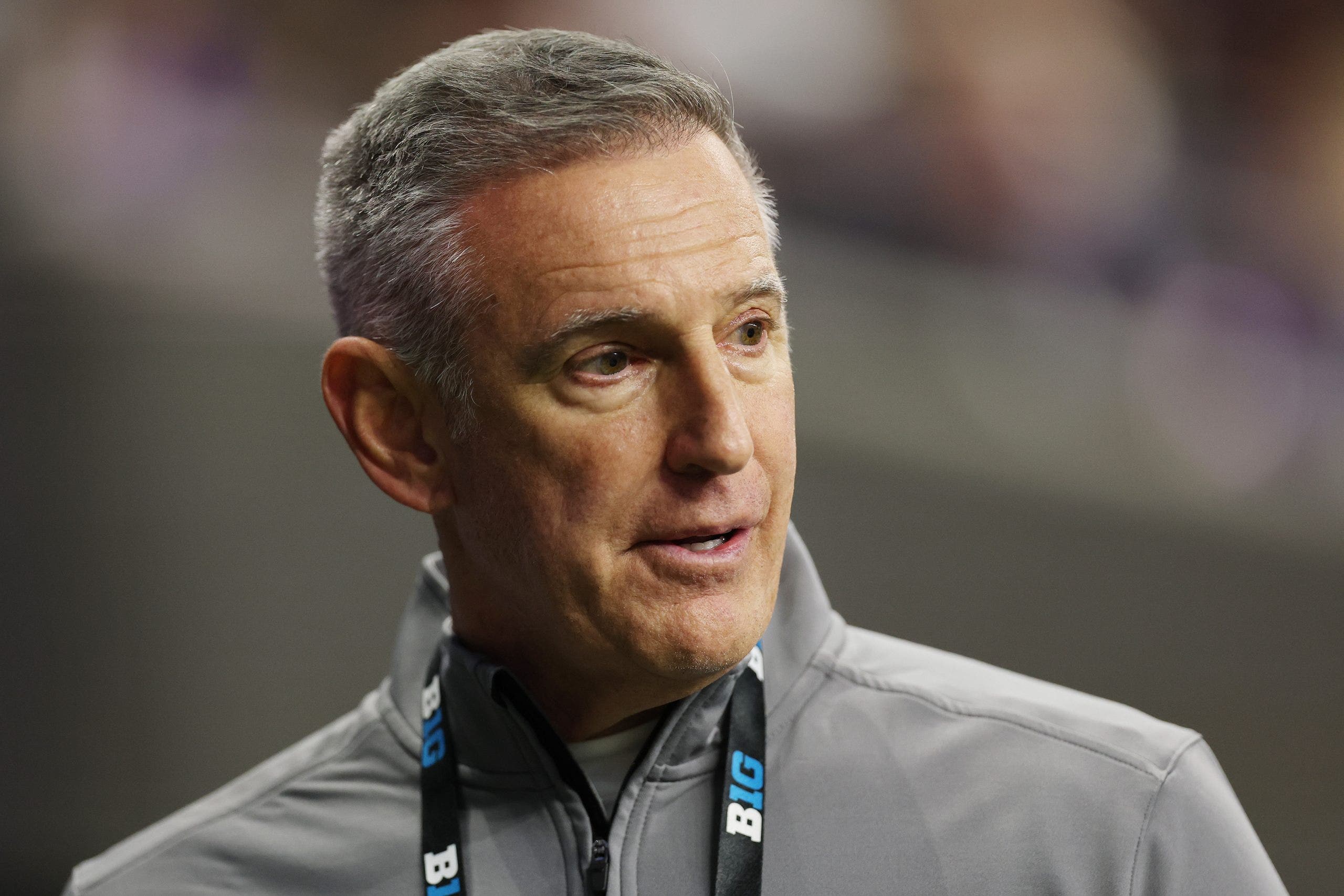
Big Ten Commissioner Tony Petitti is leading the push for a 24-team CFP. (Photo by Michael Reaves/Getty Images)
The current CFP contract guarantees ESPN maintains the rights for up to 14 teams without having to add any new money to the existing deal.
A 16-team format was also bandied about, but such a shift would almost certainly necessitate the elimination of conference championship games — contests that bring in between $200-250 million between the Power Four leagues — and adding just two new CFP games certainly wouldn’t bring that kind of value to justify the move.
Sources briefed on the matter told me the focus remains on a 24-team format that would be essentially all at-large bids and one guaranteed spot for the Group of Six.
The addition of 12 new teams would require an expansion of the first round and the creation of a second round, both of which would likely be played on campus, while the traditional New Year’s Six bowl sites would also be integrated into the quarterfinal and semifinal slots.
In all, expanding to 24 teams would bring a total of 10 new games to the market (eight first round, two second round).
American Conference Commissioner Tim Pernetti had been among those spearheading a push in recent months for an additional guaranteed spot for the Group of Six should the field size double, but sources involved in negotiations told me that almost certainly won’t happen.
As I reported earlier this week, an expanded CFP would also likely see the Army-Navy game moved to an exclusive window on what is now conference championship Saturday the first week of December, while first-round games could begin the second week of December.
What’s Happening With CFP Negotiations?
Conversations between CFP stakeholders and ESPN have basically centered on how much money adding eight new games to the field might fetch.
That said, there are layers of nuance to the discussion.
ESPN currently controls the bulk of the FBS conference championship games. That gives the network about $200-250 million that it’s already invested in the ecosystem. How much might be added on top of that? That’s less clear, and those involved have been tight-lipped.
For discussion’s sake, let’s do a bit of hypothetical, back of the napkin math.
Let’s say the eight CFP games — which are essentially extra first and second round games between teams ranked No. 13-24 — would fetch $500 million, a little less than half the value of the current deal. Between $200-250 million of that is already spoken for in making leagues whole on the conference title games.
The distribution of the extra $250-ish million becomes its own fight. The SEC and Big Ten shifted the finances of CFP distribution under the terms of the new CFP television deal such that they each receive around 29% of annual revenue, while the ACC (17.25%), Big 12 (14.75%) and Group of Six/Independents (9%) receive smaller cuts.
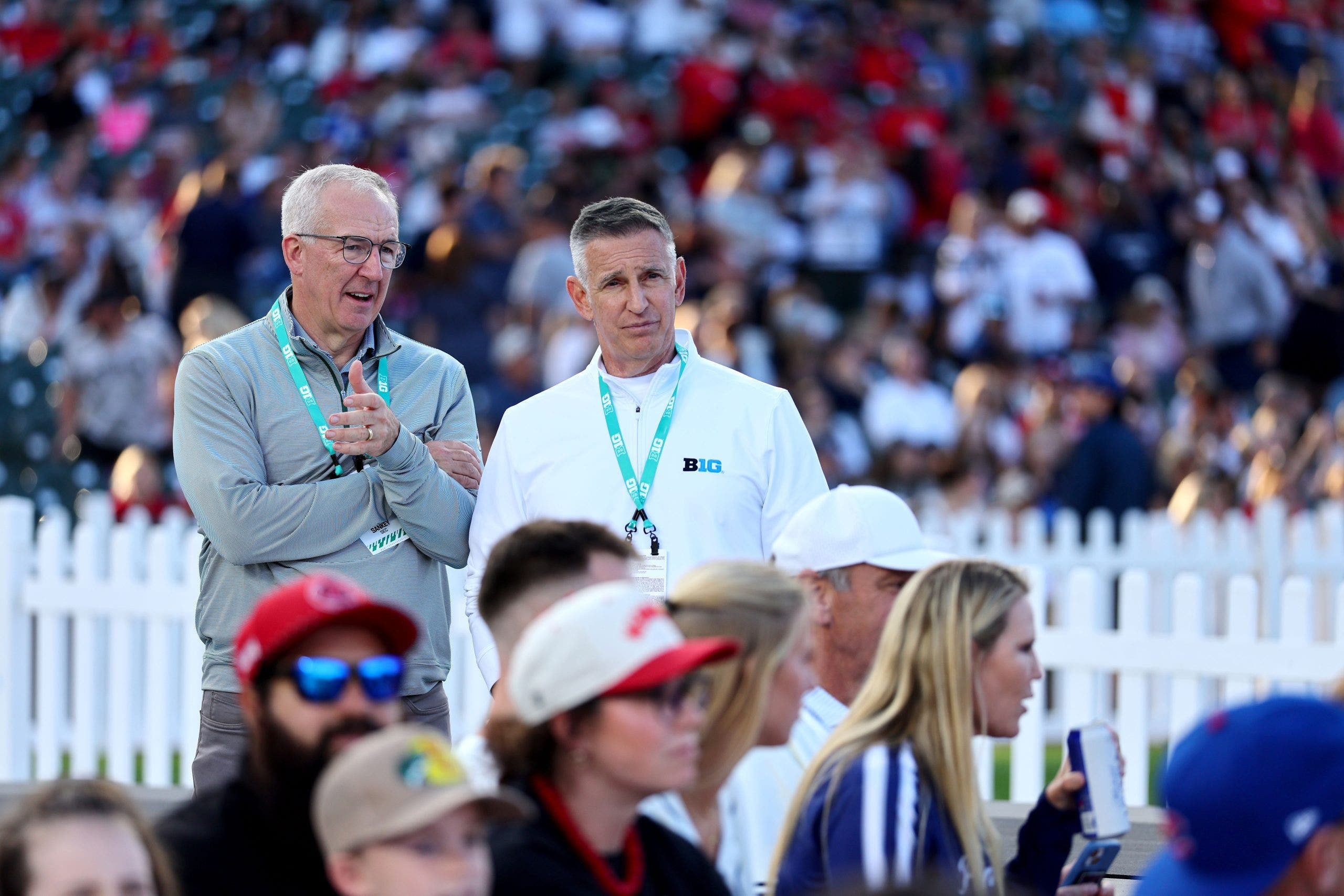
SEC commissioner Greg Sankey and Big Ten Commissioner Tony Petitti have the bulk of control over the future format of the CFP. (Photo by Jamie Schwaberow/NCAA Photos via Getty Images)
Sources suggest the Big 12 and ACC would, naturally, desire a more equal split of any new money. Whether the Big Ten and SEC will actually go for that is a separate conversation for a later date and those involved aren't splitting hairs over cash that hasn't been promised yet.
There’s one other caveat in all of this. ESPN operates the CFP’s sponsorship program. If the games were to go out to another bidder, how might that work? That’s not altogether certain.
Sources briefed on the conversations told me ESPN had yet to bring forward an offer as of the middle of this week, while a call is currently scheduled on Friday among CFP leaders to discuss any potential deal. The CFP also technically has until Dec. 1 to make any changes to the field in time for the 2028 rendition, though that deadline could be moved if extra time is needed.
A decision may not actually be made on Friday given the subsequent five-day window, but we might finally have an answer that has eluded decision makers for months: How much are eight new CFP games worth?






Nebraska's Matt Rhule Is Taking On Everyone, From Superheroes To Indiana

Coaching Progress Report: 1st-Year Coaches Meeting, Exceeding Or Below Expectations?

Heisman Rankings: Jeremiah Smith Overtakes Kamario Taylor On RGIII's List

Ohio State Legend Urban Meyer: Michigan Is A 'Train Wreck'

Arch Manning vs. John Mateer: Inside The Red River Rivalry QB Battle

Favorite 'Dogs: Back Kentucky To Upset LSU; Giants To Continue Hot Start

Michigan TE Zack Marshall Apologizes For Leaked Texts Criticizing OC Jason Beck

Trend or Panic? Is College Football’s Play-Caller Carousel Spinning Out Of Control?

Top-10 CFB Showstoppers From Week 5: Who Can Stop Jeremiah Smith?





 Your Privacy Choices | Closed Captioning


