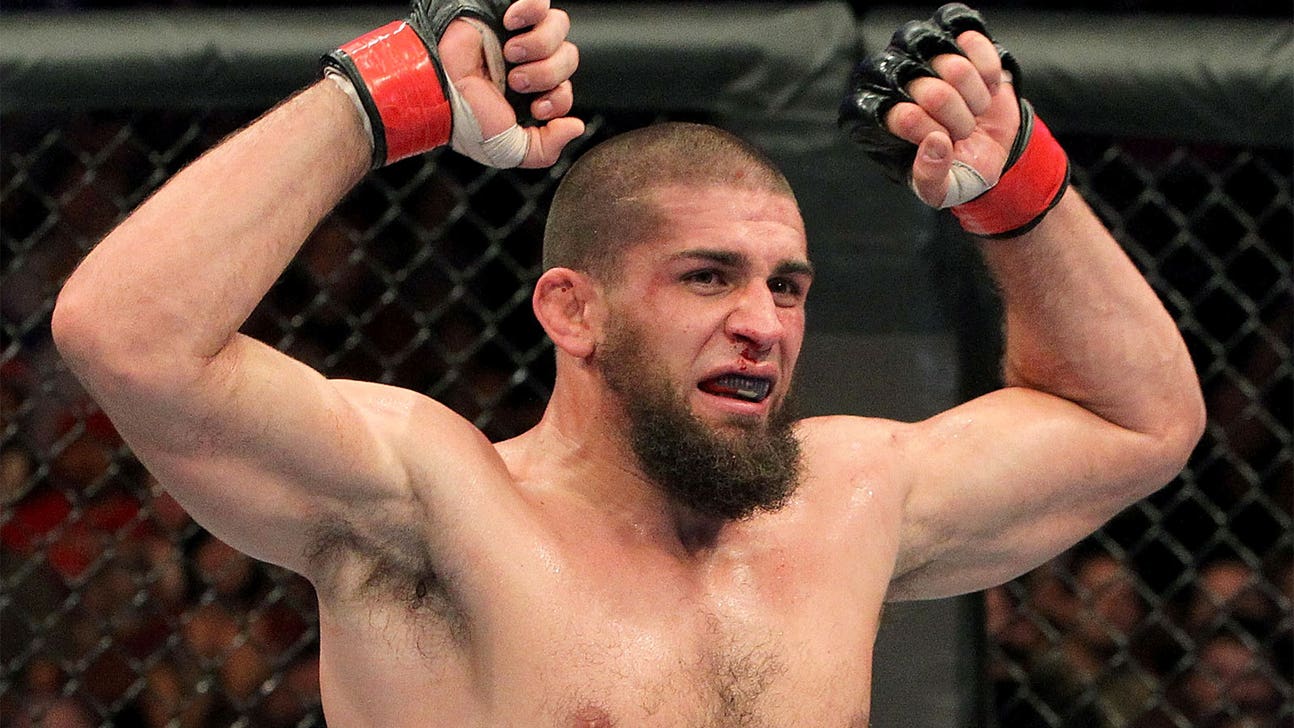
Court McGee wants to give hope and direction to those afflicted with addiction


The 15 minutes Court McGee spends in the UFC Octagon when he fights is nothing compared to the eight minutes he laid dead just nine years ago after overdosing on a mix of alcohol and drugs.
Five years after McGee overdosed and nearly lost his life, he was standing in the middle of a cage with UFC president Dana White handing him a trophy to award him as the winner of "The Ultimate Fighter" season 11.
McGee knew at that moment that his victory was shared with coaches and teammates who got him ready for the fight, but he was also very aware that none of this would have been possible without the recovery program that got him back on his feet and off drugs once and for all.
"I overdosed on a table and died for some eight minutes and being brought back and five years later winning 'The Ultimate Fighter', I attribute all of that to recovery. Had I not got sober or had the opportunity to get sober, none of that would have ever happened. I would have just been a statistic like there are everyday in the United States," McGee said when speaking to FOX Sports.
"I just thought I've been inspired by people who speak from all different walks of life and I thought it would be selfish of me to not share my story. Recovery has given me everything."
During his spare time away from training camps, McGee would spend hours of his day responding to people on Twitter or Facebook, answering calls and emails and even going into recovery centers or local high schools to share his story with people who have been afflicted by drugs or know someone going through similar problems.
"To give some hope or give some direction -- that's greater than anything I've ever accomplished. Since I did 'The Ultimate Fighter' my story came out and since I've been off having all these surgeries, I was able to record my autobiography and just go through my whole life story and all these stories, the response I got was just overwhelming," McGee said.
"I get messages all the time either with a congratulations or they're saying they know somebody dealing with addiction or they are addicted themselves. So I get these questions like 'how do I help my mom?' or 'how do I help my son?', 'where do I go?' or 'what do I do?' and I always tried to get back to all of them but the response was just overwhelming. I felt a responsibility to help somebody because I've been through that experience!"
McGee found that his story was particularly touching because he wasn't raised around drugs or alcohol, his parents have been married for almost 40 years and he had all the love and support any teenager could ever want from his family. Yet, McGee still found himself pounding booze, shooting heroin and in trouble with the law just two years removed from high school.
The problem McGee faced was reaching all of the people who wanted help or needed advice about getting help.
When he was suffering through his own bout of addiction, McGee says his parents had no real idea how to get him help or what kind of help he actually needed. Rehabilitation for drug addiction isn't the same for everybody and each case requires individual attention.
Eventually, McGee found his way into the right program to get him clean and now 3,335 days later he's still sober, but it wasn't easy and it certainly wasn't a color by numbers that he was able to just pick and choose the people who could help him.
During the past year while McGee has been dealing with injuries and several surgeries that have kept him out of action in the Octagon, he's spent his time off building an online community called Hope361.com -- a social network for recovery -- where people who might be addicted or know someone who is addicted can find information on getting help, read and watch stories of recovery or just meet other people going through the same kind of personal trauma that isn't always easy to talk about with the outside world.
On Tuesday, McGee launched a Kickstarter program to help fund his new project as he hopes to expand the message of recovery to anybody and everybody who might need assistance. It's a place where like-minded people can gather and help each other without judgment or persecution because McGee knows the kind of negative connotation that goes along with just saying the word 'addict'.
"One of the biggest parts is the stigma around addiction and people are embarrassed," McGee said. "We're not bad people. We're sick people and we're trying to get well. So the stigma is 'what do we do with them?'. Well, let's get them treatment. There's 23 million of us out there and we need a voice. I want to be one of those voices."
McGee is planning on being fight ready again within the next few months with his hand and wrist finally healed, but he plans on spending as much free time as possible putting work into Hope361.com and making it the destination for anybody needed help with addiction.
"I want to be able to do big things but it starts with the one guy in a rural community outside a big city reaching out. I want to be able to be that hand when he's reaching out for help. That's what Hope361 is," McGee said.
"Drug addiction isn't biased. It doesn't matter who you are or what you have, it affects everyone."





 Your Privacy Choices | Closed Captioning


